
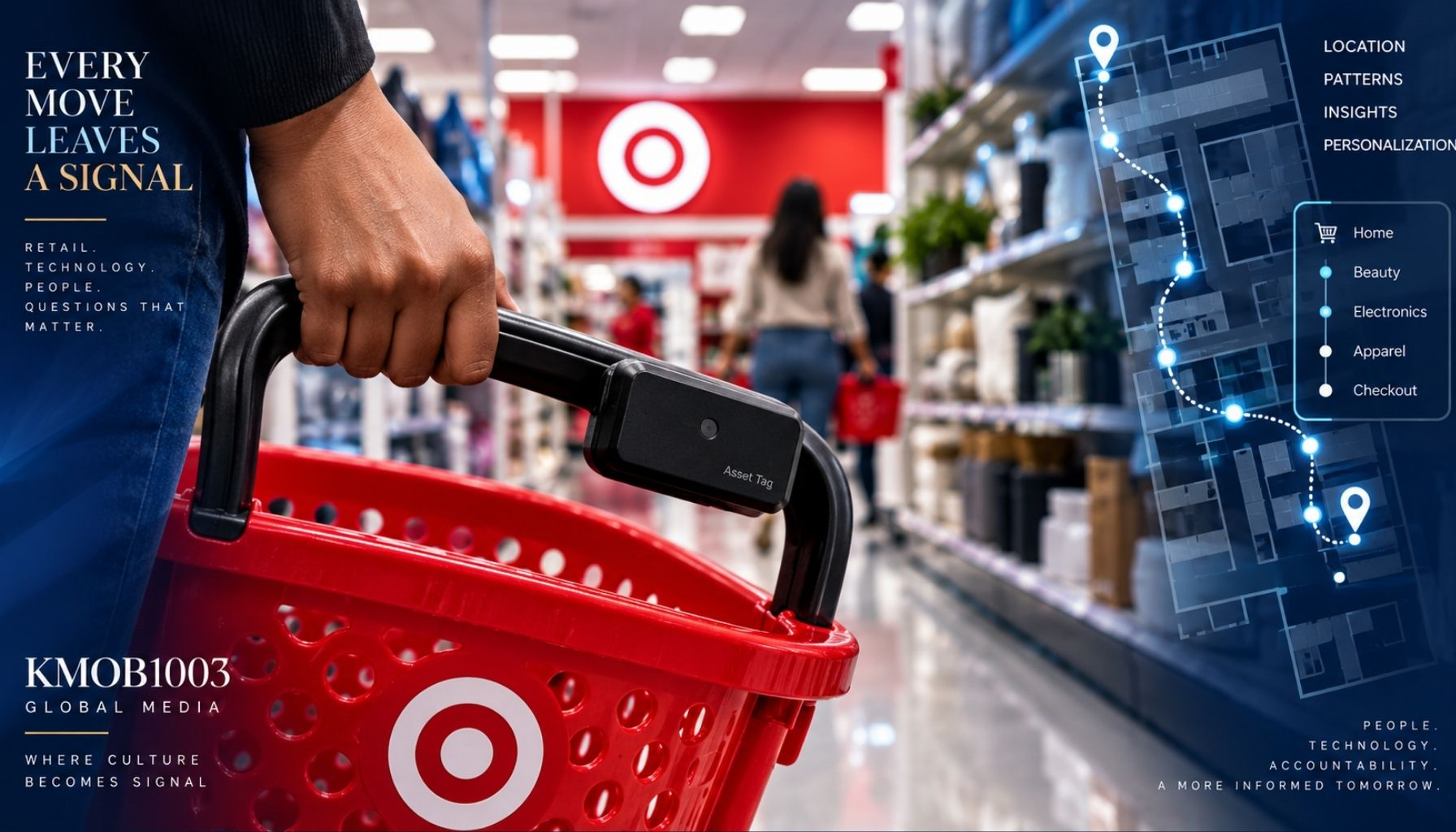
Target Basket Tracking Device: What Target’s Patent Reveals About Privacy
A Target employee’s viral warning raised a simple question about a small device on a shopping basket. Target’s own patent and privacy disclosures show why the answer is more complicated.
The viral claim goes farther than what is proven about one black box. But Target has documented sophisticated location-aware shopping technology — and shoppers still deserve to know what this specific device does.
September 3, 2026
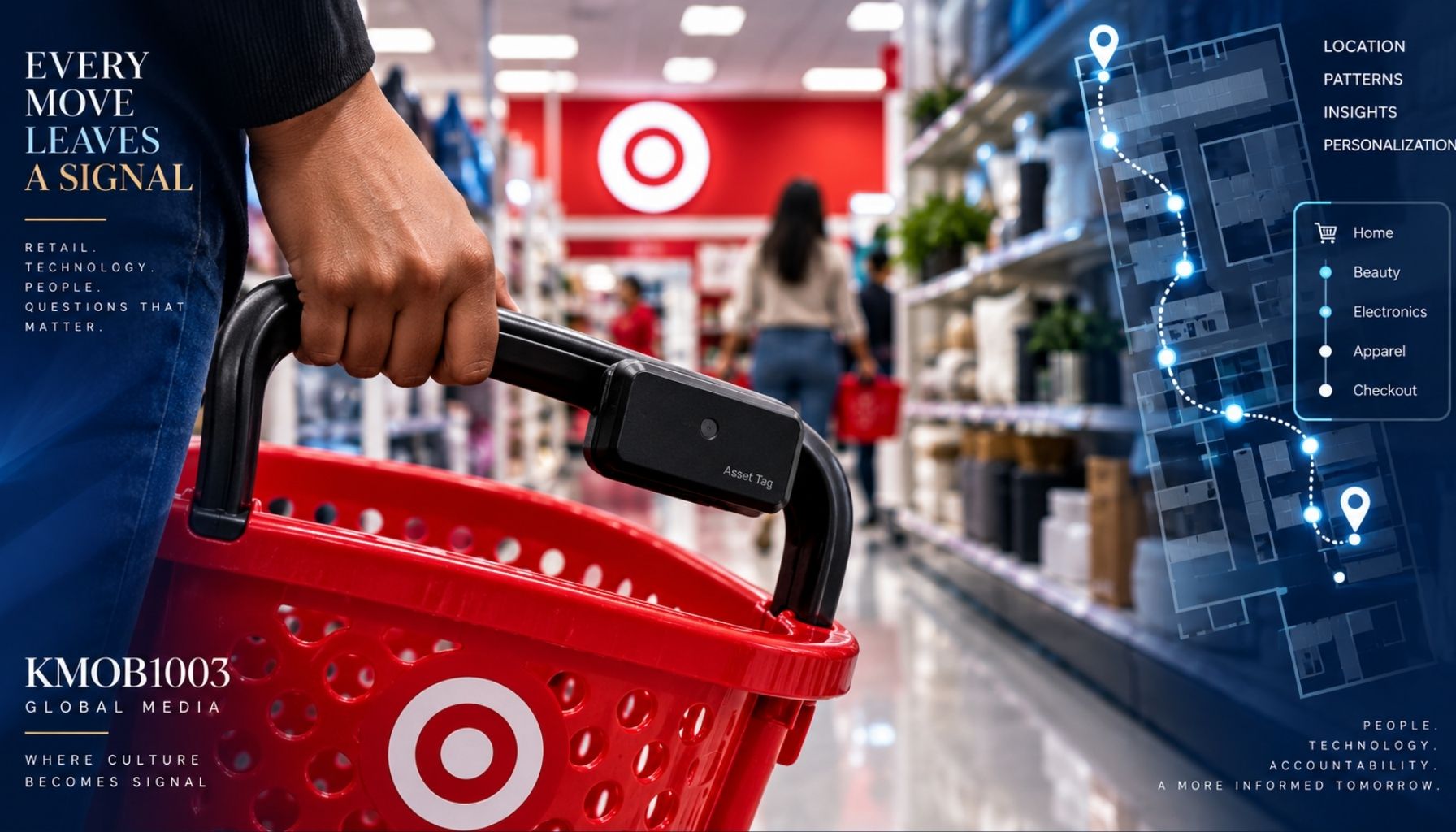
The Target basket tracking device story began when an employee pointed to a small black electronic unit attached to a shopping basket and told millions of viewers they were being tracked. That claim goes farther than what has been proven about the hardware itself. But Target’s patent records and privacy disclosures show that location-aware retail technology is sophisticated enough that the more useful question is not whether the box exists. It is what the surrounding system can know — and what shoppers are told about it.
What This Article Is Actually About
This Target basket tracking device story is not a claim that Target secretly identifies every shopper carrying a basket. It is also not a dismissal of the employee who raised the question. The physical device, the capabilities documented in Target’s patent and related systems, and Target’s actual current use of data are three different things. The first is visible. The second is documented. The third remains incompletely explained. That gap is the story.
Signal One
The Employee Put the Question in Public
A Target employee pointed directly at a basket-mounted device while working inside a store, sending millions of shoppers looking for an explanation.
Signal Two
Target Documented Location-Aware Cart Technology
Target’s patent describes a cart-and-mobile-device architecture built around location-based item verification. A patent documents technical capability, not current deployment.
Signal Three
The Missing Piece Is Disclosure
Target’s privacy policy acknowledges in-store geolocation and related data categories, but Target’s public materials reviewed by KMOB1003 do not explain the specific basket-mounted unit in the viral discussion.
Inside the Target Basket Tracking Device Video
On September 1, a Target employee posting as @user60342208753 (identified in the video, per secondary reporting, by the first name Elijah) filmed himself inside a store, picked up a red shopping basket, and pointed at a small black electronic device attached to the handle. On-screen text read: “target is now tracking YOU even more while shopping.” “You are now being tracked at Target,” he said. “These baskets, this thing, that’s a tracker.” He added that Target was tracking shoppers “for supposedly consumer habits.”
Secondary reporting placed the video at approximately 3.4 million views, 392,300 likes, and more than 11,800 comments. A separate TikTok account, posting under the name Legislate, followed up by citing an FCC filing (2ADCB-ATG2, registered to hardware maker Acuity Brands Lighting) and a U.S. patent. That patent lead is what actually holds up under checking — and the exact identity of the basket hardware itself remains unconfirmed. This piece does not claim the physical device is FCC ID 2ADCB-ATG2, and does not claim it runs Acuity’s Atrius platform; those remain open questions, not established facts.
What Target’s Patent Says About Location-Aware Shopping Carts
This is the part of the Target basket tracking device story worth actually checking rather than taking on faith from a TikTok screen-record, and it holds up. U.S. patent publication US20230368216A1, “Shopping Cart with Location-Based Item Verification,” was filed by Target Brands, Inc. on May 5, 2023 and published November 16, 2023. The filing describes a smart cart that pairs with a shopper’s mobile device, uses sensors including infrared, sound, and weight to detect items entering or leaving the cart, and cross-checks a scanned item’s location against where that product is normally found in the store.
The patent’s own language goes further than item verification alone. It states directly that a cart’s location “can be continually determined” as it “moves through the retail environment,” and that the system can determine “the cart’s path through the environment.” The filing describes the identical capability for the paired mobile device itself. Some embodiments also allow a shopper’s purchase history and an internal “reputation score” to factor into automated-checkout decisions.
The patent’s stated retail purpose is item verification and checkout-fraud prevention — letting stores offer automated checkout without an employee re-checking every bag. It does not describe itself as a marketing-surveillance program. A patent documents a system Target sought to protect. It does not establish that the basket in the viral video implements that system, or that the system is deployed across Target stores today.
Target Has Used Indoor Positioning Before
Target publicly rolled out Bluetooth-based indoor positioning in 2017. TechCrunch reported in September 2017 that Target had installed Bluetooth Low Energy beacons in store LED lighting, calling the resulting feature “GPS for your shopping cart.” The system was app-based: it let a shopper using the Target app see their own position update on an in-store map and get guided to products and nearby deals, per an on-record quote from Target’s then-Chief Information and Digital Officer, Mike McNamara.
This does not establish that the current basket device uses the 2017 system, or that the two are connected in any way. What it establishes is narrower and still worth knowing: indoor Bluetooth-based shopper positioning is not a hypothetical capability someone is speculating Target might build. It’s something Target has already built, shipped, and named publicly, years before this video.
Target’s Privacy Policy Adds Another Piece
Target’s current privacy policy lists categories of information the company says “may be collected when interacting with Target,” including geolocation data (“e.g., latitude or longitude, in-store location”), device and internet or network activity, commercial information such as products purchased, and inferences drawn from that data. The policy separately names technologies Target says may be used to determine in-store location.
Target’s privacy policy establishes that in-store geolocation exists within the retailer’s disclosed data environment. It does not establish that the basket-mounted device supplies that information. The disclosure is made at the level of Target’s entire operation, not tied to any single basket, cart, or store — an important limit on what it proves about the specific device in the video.
“It’s Just Asset Tracking” Doesn’t Answer the Privacy Question
Most of the coverage of similar devices on shopping carts elsewhere has reached for a reassuring explanation: retailers lose carts and baskets constantly, so of course they’d want a way to recover them. That’s plausible, and this piece isn’t in a position to rule it out — a retailer can run more than one system for more than one purpose.
But asset tracking, even if that’s exactly what this is, doesn’t end the inquiry. A basket that moves with a shopper can produce a path through a store. Standing alone, that path may be anonymous. Its privacy significance changes if it is retained or associated with another identifier — and this piece has not established such an association. The unresolved issue is not whether Target has a legitimate reason to locate its equipment. It is what information this particular device produces, how long that information persists, and whether it ever connects to another part of the shopping relationship.
What We Still Don’t Know About the Target Basket Tracking Device
To be fair about the actual limits of what’s confirmed here, the open questions are specific: What does this device collect? Does it report location, and at what frequency? Is that location retained, and for how long? Is a basket session ever associated with a phone, a Target account, a transaction, or a payment event? Is the information strictly operational, or used for store-layout analysis, merchandising, promotion, personalization, or broader analytics?
KMOB1003 found no public Target explanation of the specific basket-mounted device as of publication.
What’s Confirmed
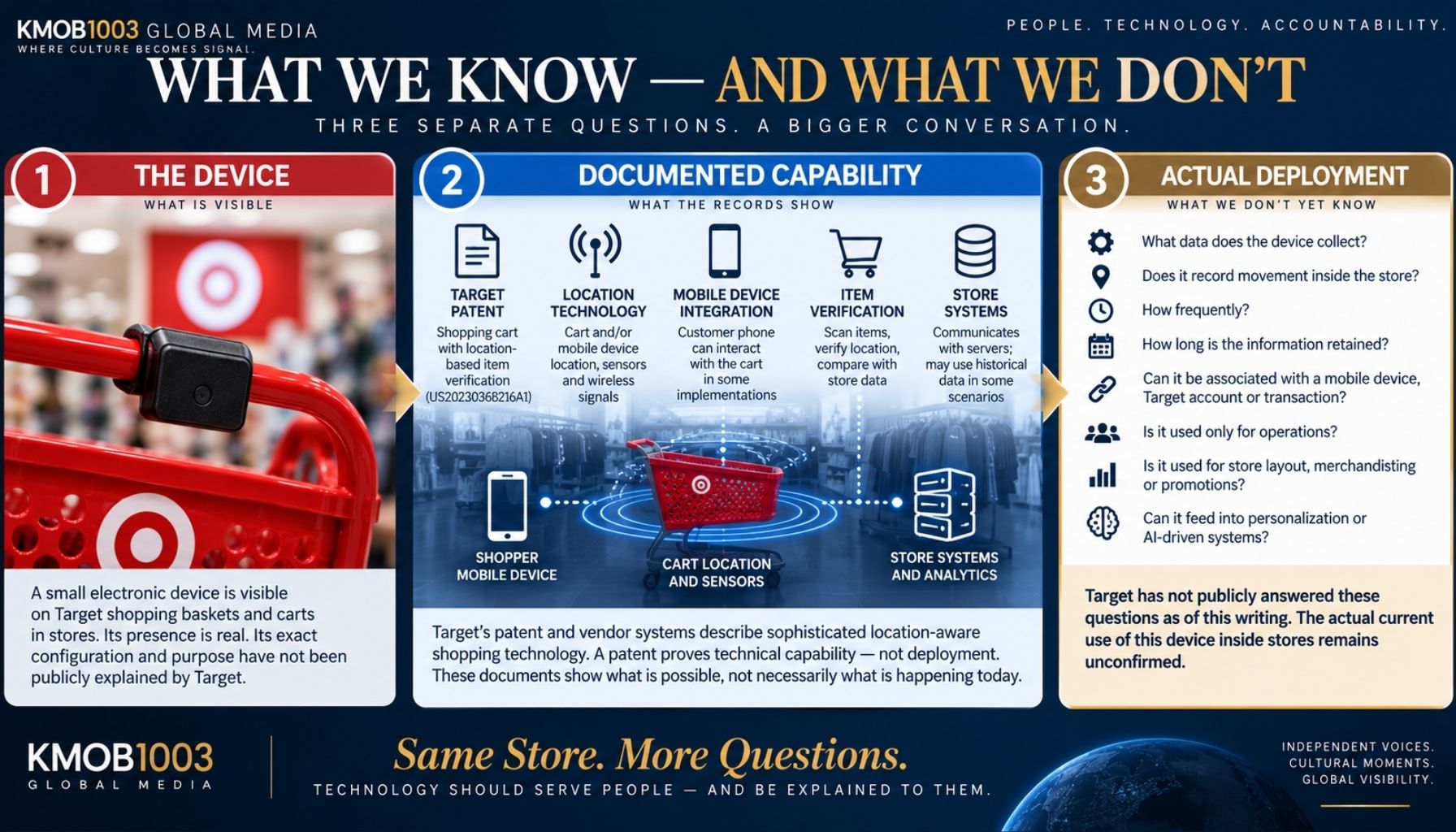
Confirmed: a Target employee publicly identified a basket-mounted device as a tracker; the video reached a large audience; Target Brands owns the published patent application; the patent describes a location-aware cart-and-mobile-device architecture; Target has publicly used app-based indoor positioning since 2017; Target’s privacy policy acknowledges in-store geolocation.
Not confirmed: that the exact basket hardware is FCC ID 2ADCB-ATG2; that the exact device is an Atrius product; that the exact device implements Target’s patent; that the basket automatically identifies a shopper; that basket data connects to a Target Circle account; that basket data feeds personalization or AI systems; that Target tracks every shopper through baskets.
KMOB1003 Framework
Four layers shoppers should keep separate
The Device
The physical electronic unit visible on the basket in the viral footage. Its exact configuration and purpose have not been publicly explained by Target.
The Capability
What Target’s patent and related technical records show modern retail systems can technically do.
The Data
What information Target actually records, retains, or combines during a real shopping trip.
The Identity Link
Whether an asset’s movement ever becomes associated with a particular device, account, transaction, or person.
Public debate becomes unreliable when the existence of hardware, technical capability, and actual deployment are treated as the same fact.
Signal Breakdown
Signal: A viral basket-device claim led to something more substantial than speculation: Target’s own patent documents sophisticated location-aware cart technology, while its privacy disclosures acknowledge in-store geolocation.
Impact: Shoppers increasingly move through retail environments containing connected systems that are difficult to understand from the hardware alone. The trust question is whether the function and data use are explained clearly.
Watch: Whether Target publicly identifies the basket-mounted device, explains what information it produces, and clarifies whether that information remains operational or connects to broader retail data systems.

Read Deeper
The Age of Surveillance Capitalism
Shoshana Zuboff
Why It Matters Here
The Target story is larger than one electronic device. Zuboff provides a structural framework for understanding what can happen when ordinary human behavior becomes a source of prediction, optimization, and institutional power.
KMOB1003 Partner Spotlight
NordVPN
Protect the Part of Your Privacy You Can Control
A VPN cannot stop a physical store from tracking a basket, operating cameras, or collecting information you intentionally provide to its systems. But your internet connection is a different layer. On public Wi-Fi or away from home, NordVPN encrypts internet traffic between your device and its VPN service.
Sponsored partner placement. KMOB1003 may earn a commission.
KMOB1003 After the Article
Continue the Signal
Choose what comes next — build your career, find something live, shop the KMOB1003 edit, or let the Culture Docent guide you.

KMOB1003 Artist Services
Artist Services
Visibility, strategy and media infrastructure for artists ready to move beyond the release link.
Put Your Release in Motion →
KMOB1003 Live Culture
Ticket Desk
Find concerts, sports, theater and live events through KMOB1003 access to Ticketmaster and StubHub.
See What’s Happening Live →

KMOB1003 Collection
The Global Collection
Curated tools, services, experiences and global partners selected for the way creators and culture builders move.
Shop What We’re Curating →

KMOB1003 Culture Docent
Culture Docent
Not sure where to go next? Start here. Tell the Culture Docent what brought you into the room and choose from six doors.
Tell Us What You’re Looking For →
Global Reach. Powerful Stories. Lasting Impact.
The story became public because an employee pointed at equipment shoppers were already carrying. The larger question is not one dramatic sensor. It is what ordinary signals mean once modern systems can combine them. Target’s patent documents location-aware cart technology. Its privacy disclosures acknowledge in-store location. What remains unconfirmed is how those facts connect to the basket at the center of the viral discussion. That gap is not proof of surveillance. It is a reason for clear disclosure.
More From Legacy & Insights


Privacy, Research & Responsible Communication
Tools for the operator side of this problem
This investigation is ultimately about what happens when technology is easier to deploy than it is to explain. These tools serve different parts of that problem: customer relationships, research, durable documentation, and clear public communication.
ClearCRM
First-Party Relationships
There is a difference between ambient signals and information a customer intentionally gives a business. ClearCRM helps operators organize customer relationships around information people knowingly provide — a model that is easier to explain and govern.
Genspark
Research Workflow
The strongest evidence in this investigation came from moving beyond social media and checking patents, privacy disclosures, historical reporting, and technical documentation. Genspark can support the research workflow behind that kind of source comparison.
Spines
Publishing & Institutional Knowledge
Technology policy should not live only in internal decks and legal language. For founders, researchers, and institutional leaders with something substantial to explain, publishing creates a durable public record of what an organization knows and is willing to stand behind.
CapCut
Public Communication
A short employee video turned an overlooked piece of store hardware into a public question. For organizations that need to explain products, systems, or policies clearly in short-form video, CapCut provides an editing workflow for producing that communication.
Disclosure: KMOB1003 may earn a commission from qualifying purchases through these partner links. Editorial coverage is produced independently.
The Operator’s Bookshelf
KMOB1003 READS
As an Amazon Associate, KMOB1003 may earn from qualifying purchases.
