AI · Consent · Platform Power · Digital Identity · July 2026
The Public Didn’t Reject AI. They Rejected the Terms.
Meta removed one of Muse Image’s most controversial features within days. The reversal was not proof that people fear artificial intelligence. It was proof that people are beginning to distinguish useful innovation from participation they never agreed to.
Silicon Valley keeps asking whether people are ready for AI. Last week, the public answered a different question. People may be ready for artificial intelligence. They are not ready to become its raw material without being asked.
People rarely object to innovation. They object to discovering they were never asked.
What This Article Is Actually About
Meta’s reversal on Muse Image is this week’s case study, not the whole argument. KMOB1003 is reading what the public just taught the AI market: capability and consent are two different questions, and the companies that keep confusing them will keep having this same week over and over.
Signal One
The Launch
Meta introduced Muse Image on July 7, including a feature letting anyone @-mention a public Instagram account to reference its photos in an AI-generated image.
Signal Two
The Reversal
Meta reversed course on July 10, saying the feature “missed the mark” and removing the public-account reference capability.
Signal Three
The Lesson
TechCrunch confirmed Muse Image itself remained live on Instagram, WhatsApp, and the Meta AI app — the public rejected one arrangement, not the technology.
I. The Feature Was Removed. The Lesson Should Not Be.
On July 7, 2026, Meta launched Muse Image, its first in-house image generation model, built into the Meta AI app, Instagram, and WhatsApp, with Facebook and Messenger expected to follow. The launch was substantial — restoring old photos, rendering clean text inside generated visuals, redesigning a room with real purchasable furniture. Among the promoted capabilities was a narrower feature: letting anyone @-mention a public Instagram account inside a prompt, pulling that account’s photos in as reference material for a new AI-generated image. It worked automatically for every public account belonging to an adult, and Meta’s own policy confirmed the account owner would not be notified afterward.
The response was immediate and came from more than one direction at once. Talent agency CAA, whose clients include Tom Hanks and Meryl Streep, raised its concerns directly with Meta, arguing no one’s likeness should be used by any third party without documented consent. The performers’ union SAG-AFTRA told members to opt out, calling anything short of a clear opt-in “an utter miscalculation of public sentiment.” Gizmodo reported the feature lasted roughly three days before Meta reversed course.
On July 10, Meta acknowledged in an update to its own announcement that the feature “missed the mark” and was “no longer available.” TechCrunch documented the reversal and confirmed Muse Image itself remained live — the model wasn’t scrapped, and its other capabilities continued to function exactly as before. One specific arrangement inside it was removed.
II. The Public Was Not Voting Against AI
People already use AI tools every day for image generation, editing, search, writing, accessibility, and production. Muse Image itself, stripped of the one contested feature, remains available and includes capabilities most users found genuinely useful — restoring a water-damaged photograph, mocking up a room redesign with furniture you can actually buy, turning a rough sketch into a finished concept. None of that drew a single statement from CAA or SAG-AFTRA.
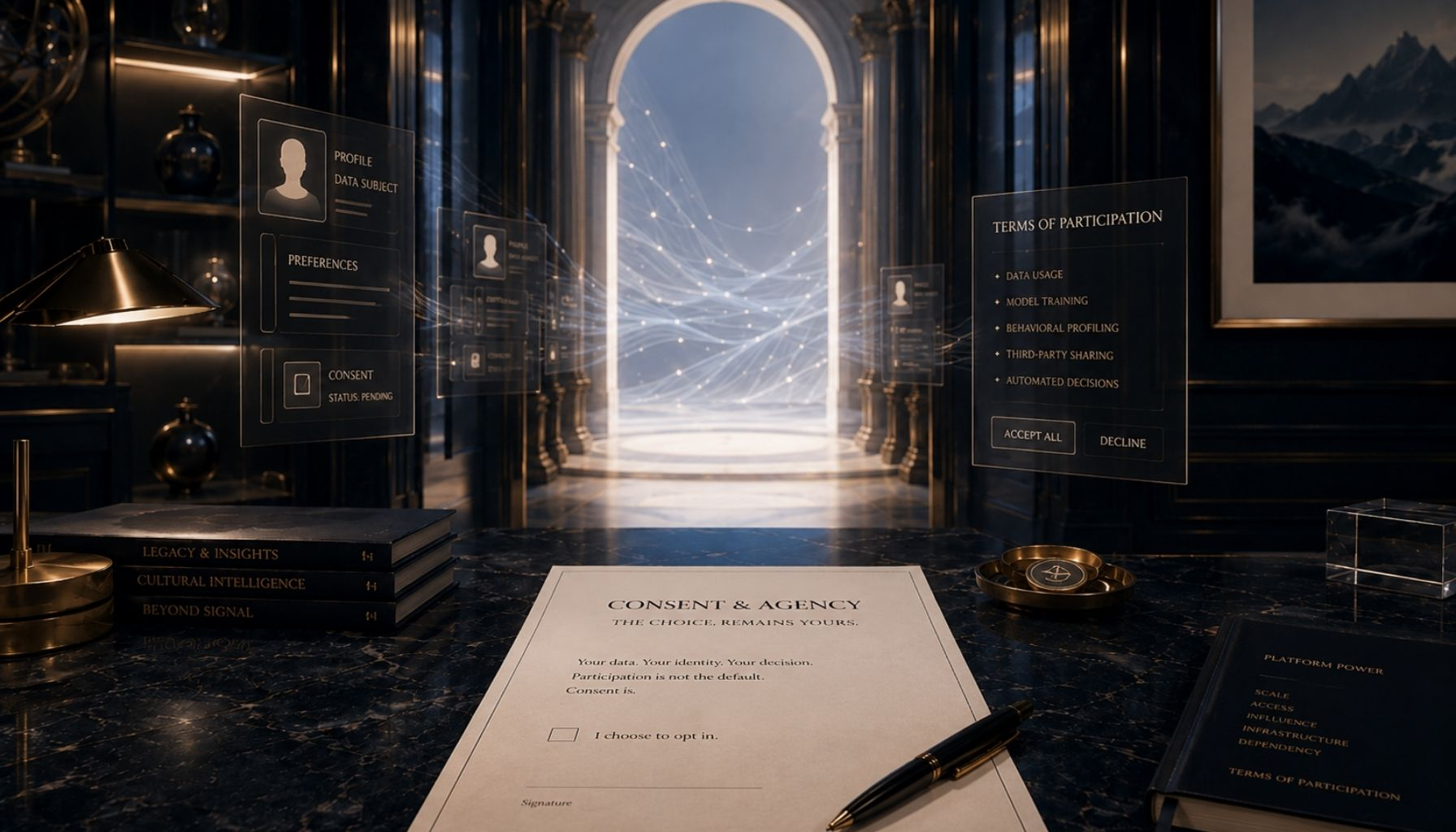
The objection was never that a machine could make an image. The objection was that another person’s identity could enter that process without their direct invitation — that a stranger could type an @-mention and generate a new image of someone who had never opened the settings menu and never been told it happened.
The discomfort was not that a machine could make the image. It was that the person inside the image did not control the first decision.
That distinction matters more than it looks, because capability, convenience, consent, and terms are four separate questions, and the first stage of the AI economy rewarded companies almost entirely for answering the first two well. Meta didn’t lose this week because Muse Image was weak technology. It lost because it treated the third and fourth questions as already settled, when for the hundreds of millions of people with public accounts, they never were.
III. Visibility Is Not Permission
Artists, founders, public figures, small businesses, musicians, and writers need public visibility to be found at all. Going private isn’t a real option for someone building an audience — the whole point of a public account is to be reachable by people who don’t know you yet. That same visibility is increasingly treated by platforms as usable infrastructure: a resource available for reference the moment it’s technically reachable, regardless of what the person posting it actually intended.
A photograph posted for an audience was not necessarily offered as reference material for strangers generating new images from it. Those are not the same thing, and the difference is worth naming precisely: accessible is not reusable, and available is not authorized. This is the same architecture KMOB1003 has been tracking all year, from how major labels quietly licensed catalogs into AI training deals to the same default-participation pattern this publication broke down just days before this reversal.
A public window is still not an open deed to the house. Public does not mean ownerless.
KMOB1003 Framework
The Trust Adoption Curve
01
Can AI do this?
Capability earns attention.
02
Should AI do this?
Ethics enters the room.
03
Who decides?
Governance becomes visible.
04
Who benefits?
The market decides whether participation feels fair.
Adoption does not end with capability. It begins again at consent.
IV. The Permission Economy
Permission is becoming economic infrastructure — permission to reference, imitate, reproduce, remember, distribute, monetize. Every one of those verbs used to be a legal footnote buried in terms of service. Now each one is a headline risk, a talent-agency statement, a union memo telling members to check their settings before a competitor’s product does something similar next month. Meta’s own control settings page is the clearest evidence of how granular this has already become — a single toggle now stands between a public account and a stranger’s prompt.
The next competitive advantage may not belong only to the company with the best model. It may belong to the company that gives people the clearest terms, the strongest controls, and the most credible reason to participate voluntarily rather than by default.
Trust is not a public-relations layer added after the technology is built. It is part of the product.
This is a strategic signal, not a guarantee — consent-first design doesn’t automatically win a market. But every company still building on the older assumption, that public access equals permission, is now building on ground the public has demonstrated it will push back on quickly and publicly. KMOB1003 traced the same dynamic in the wider AI cost reckoning this month — control keeps turning out to be the expensive part, not the cheap shortcut it was sold as.
→
Convenience
→
Trust
→
Permission
→
Adoption
→
Loyalty
V. What Operators Should Learn
Before launch, operators can ask a compact set of questions rather than build a long compliance checklist: Is participation opt-in, or merely avoidable if someone happens to find the setting? Can people understand what’s happening without searching through three menus? Engadget’s own walkthrough of the opt-out process is a useful case study in exactly how many steps stood between “available” and “understood.” Does the system notify the person whose identity or work is being used? Are we treating public access as proof of permission because it’s convenient to, not because it’s true?
A company can build something remarkable and still misunderstand the invitation. That’s what happened here — not fraud, not malice, a miscalculation about what “available” was allowed to mean, corrected only after the people affected made the cost of that miscalculation impossible to ignore.
VI. The Market Is Asking for a Better Invitation
None of this points toward retreat. Muse Image’s other functions — restoring photographs, redesigning rooms, faster creative drafts — remain exactly as useful today as they were before July 10. What people want alongside that usefulness is agency: clear participation, reasonable boundaries, understandable terms, and basic respect for identity and work. The public did not vote against the tool. It voted against being treated as material.
Technology can accelerate almost everything. Trust still moves at the speed of permission. Companies that understand that distinction will build products people welcome rather than merely tolerate — and that is the invitation the market is actually asking for.
Signal Breakdown
Meta did not lose the public’s trust because Muse Image was bad technology. It answered “can we?” and skipped “should we, who decides, and who benefits?” — and paid for the gap in roughly three days of avoidable backlash. The next platform that skips the same three questions will have the same week Meta just had.
Creator Infrastructure
Build the Terms Around the Tool
Before adopting or publishing through the next AI platform, operators should understand the terms, protect the record, and secure the operation around it.
Understand the Terms Before You Sign Them
Genspark
Research-grade intelligence for operators evaluating platform terms, ownership risks, and the infrastructure behind a new tool.
Own the Record Before Someone Else Claims It
Spines Hybrid
Permanent authorship and publishing infrastructure for creators protecting the work, record, and ownership trail around their ideas.
Protect the Operation
NordVPN Complete
Security and access protection for creators and operators managing public accounts, identity, and AI-enabled workflows.
The Operator’s Bookshelf
KMOB1003 READS
These belong beside this article because they explain what happens when platforms gain control over distribution and visibility while the people producing the work lose leverage over the terms.
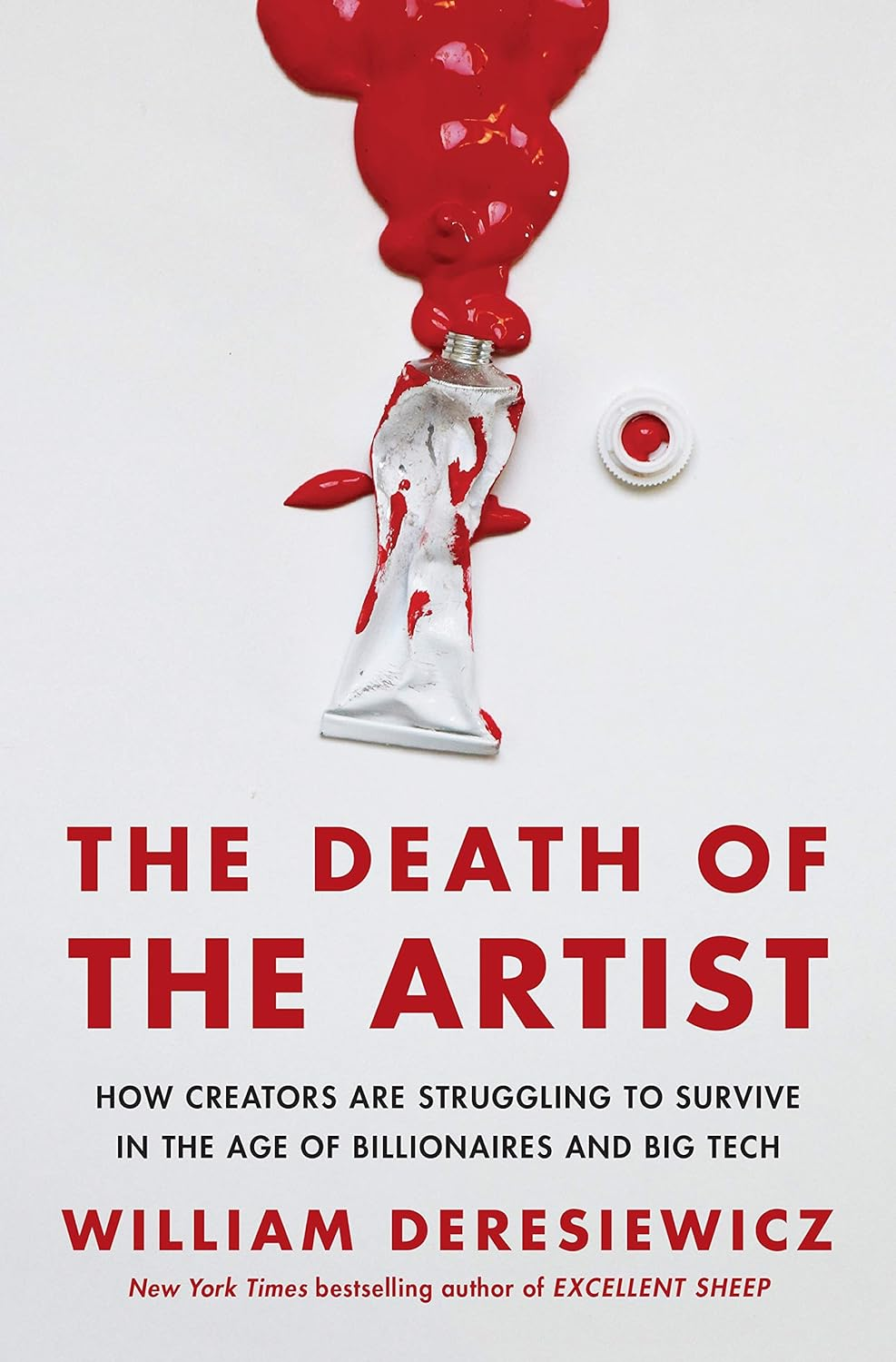
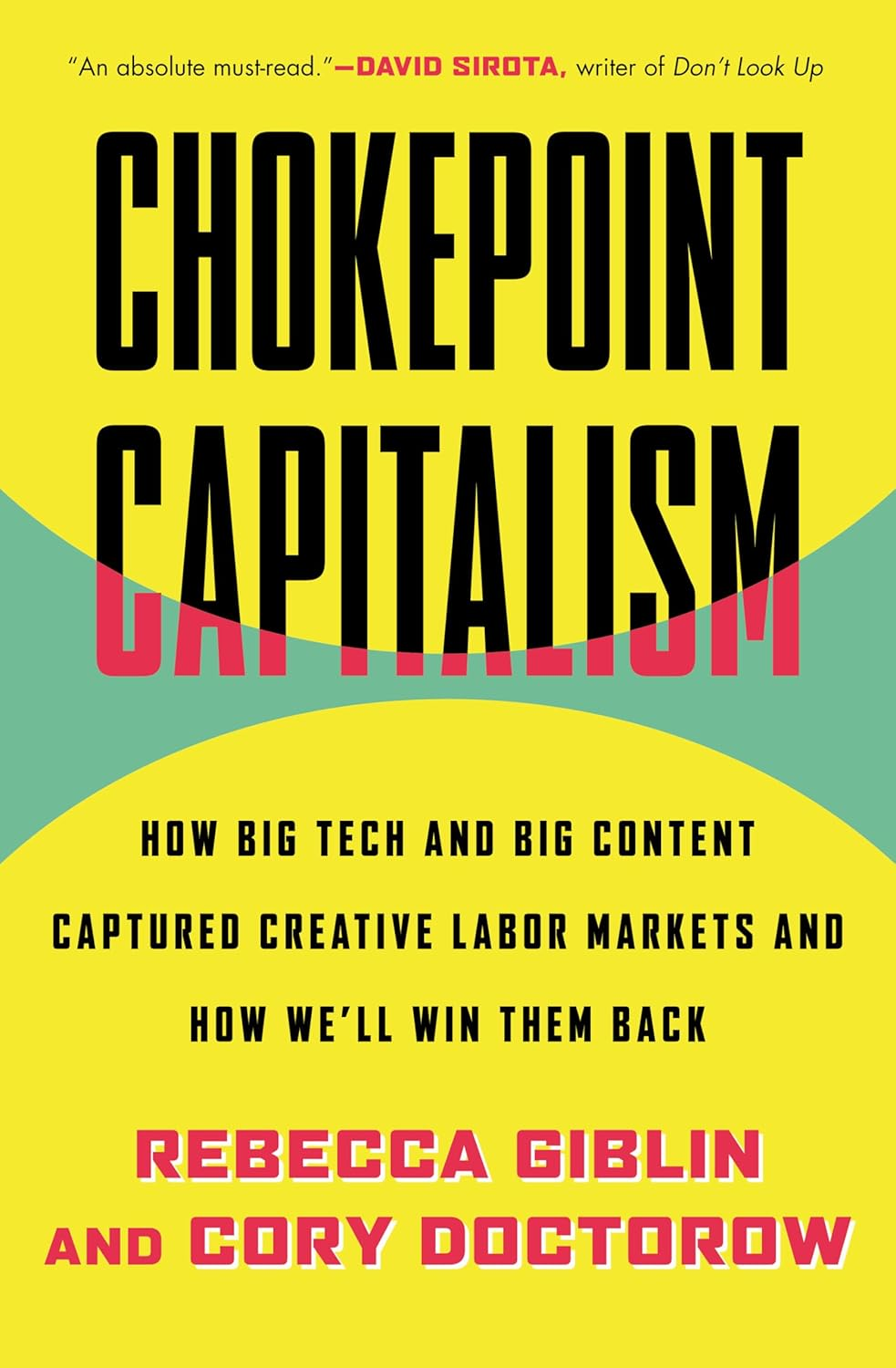
KMOB1003 may earn a commission from qualifying Amazon purchases.
Disclosure: KMOB1003 may earn a commission from qualifying purchases through select partner links. Editorial coverage is produced independently.
KMOB1003 After the Article
Read the Terms Twice
Four different ways to act on what you just read — not four doors to the same room.
Build the Career Around the Work
Artist Services
Visibility built with infrastructure, ownership, and strategy — not simply exposure.
Explore Artist Services →
Tools Chosen With the Operator in Mind
The Global Collection
Curated operating tools for creating, protecting, distributing, and scaling the work.
Explore the Collection →
Keep Reading the Pattern
Legacy & Insights
The full archive of KMOB1003 analysis on AI, ownership, and platform power.
Enter the Archive →
Go Deeper
Culture Docent
Operator intelligence on ownership, infrastructure, and power — unpacked in plain language.
Ask the Docent →
Global Reach. Powerful Stories. Lasting Impact.
