
AI · Infrastructure · Copyright · Operator Intelligence · July 2026
They Saw the Speed. They Forgot to Price the System.
AI did not remove the bill. It moved the bill from payroll to infrastructure.
AI arrived in the executive suite as a story about speed: fewer people, faster output, cheaper operations, an always-on workforce that never asks for a raise. Boards approved budgets on that story. Then the pilots became production, and a second bill arrived — one nobody had priced. Compute. Infrastructure. Legal exposure. Creator consent. The question every leader was asked was “what can AI do?” The question nobody priced in advance was “who pays for what it changes?”
The question was never only what AI can do. The question was always who pays for what it changes.
What This Article Is Actually About
KMOB1003 is reading the gap between how AI was sold to executives and what it actually costs to run responsibly. This piece connects three separate 2026 stories — runaway compute bills, a copyright fight escalating in federal court, and creators building technical gates against AI crawlers — into one argument: control was always more expensive than labor. Most leaders just priced the machine first and the system second.
Signal One
The Bill
Uber burned through its entire 2026 AI coding budget in four months. One unnamed company ran up a $500 million usage bill in a single month.
Signal Two
The Lawsuit
The New York Times and the Daily News asked a federal judge to sanction OpenAI, alleging the company withheld evidence.
Signal Three
The Gate
Patreon partnered with Cloudflare to block AI training crawlers at the network level, arguing creators deserve credit, compensation, and consent.

I. The Promise Arrived First
Every executive heard some version of the same pitch this year: AI would move faster than people, cost less than payroll, and run without complaint at three in the morning. Boards approved budgets on that promise. Ninety-seven percent of executives say their company deployed AI agents in the past year, and CEOs have taken direct ownership of the strategy — seventy-two percent now call themselves the primary decision-maker on AI, double the share who said so a year earlier. The pitch was speed. Nobody priced the system that speed would require.
II. The System Was Not Priced
The bill arrived faster than anyone modeled. Uber burned through its entire 2026 AI coding budget in four months, with roughly seventy percent of its committed code now originating from AI tools — and the company’s own COO has publicly conceded that usage hasn’t yet shown a clear link to shipped value. Microsoft, which writes up to thirty percent of its own code with generative AI, told engineers in one major division to stop using an AI coding assistant because the bills had become unsustainable. One unnamed company reportedly ran up a $500 million usage bill in a single month after management forgot to set a spending cap. None of this is a story about AI failing. It’s a story about companies pricing the tool and skipping the infrastructure, governance, and oversight required to run it responsibly at scale.
The prices themselves aren’t even real yet. Leading AI labs are pricing usage below what it costs to serve, subsidizing access with venture capital to buy market share while the true cost of the infrastructure is still being worked out. That subsidy is starting to unwind. When it fully does, the gap between what companies were told AI would cost and what it actually costs will widen again — and most budgets built this year were never built to absorb that.
The human cost inside these companies is its own line item, rarely put on a spreadsheet. More than 115,000 tech workers have been laid off in 2026 across over 150 companies, with the stated rationale almost always framed as efficiency and reallocation toward AI. At the same time, nearly three-quarters of CEOs report real stress or anxiety about their own AI strategy, and a majority privately admit that strategy is more performance than substance. A tool that makes leadership anxious while it eliminates jobs is not, by definition, a cheaper system. It’s simply a system whose true cost hasn’t been fully invoiced yet.
KMOB1003 Framework
The AI Invoice
01
The Promise
Speed, scale, and savings sold to the board.
02
The Pilot
Small usage, small bill, easy approval.
03
The Bill
Compute and infrastructure costs surface at scale.
04
The Exposure
Copyright, consent, and legal risk enter the room.
05
The Gate
Creators and publishers build technical and legal walls.
The invoice was never just the token bill. It was always the whole system.
III. The Copyright Bill Entered the Room
This week, The New York Times and the Daily News asked a federal judge to sanction OpenAI, alleging in a court filing that the company withheld evidence relevant to a landmark copyright infringement trial over how its systems were trained on millions of news articles. The Times has reportedly already spent more than $28 million fighting AI companies in court — a legal budget most newsrooms could never absorb, spent defending a business model the newsroom didn’t choose to compete against. This isn’t a story about whether AI can summarize the news. It’s a story about who absorbs the legal cost when a company builds a product on material it never licensed — and whether “we didn’t ask” is a business model or a liability still awaiting its court date.
The industry’s own settlements are the clearest price tag available. Anthropic agreed to pay book authors $1.5 billion for training its models on pirated work — according to court filings, a landmark figure, though still a small fraction of the company’s overall valuation. Whatever a company saves in payroll by automating a task, it may eventually spend multiples of that figure defending how the underlying system was built. That’s not a hypothetical. It’s a line item companies are only now learning to forecast, and the forecasting gets more expensive every quarter they wait.
IV. Creators Are Building Gates
Creators didn’t wait for the courts. Cloudflare announced new defaults that block AI training and agent crawlers on ad-monetized pages unless site owners explicitly allow them, rolling out across the wider internet by mid-September. Patreon is the anchor partner, blocking AI training crawlers at the network level across its entire platform. Patreon’s founder was blunt about the terms: creators deserve credit, compensation, and consent, and platforms that won’t offer all three don’t get access to the work at all.
This is the same pattern KMOB1003 has tracked across music licensing, AI-cast performers, and AI-generated likenesses this year: the industry doesn’t wait for permission, so the people whose work fuels it are building the permission structure themselves, one platform at a time. Cloudflare’s own data shows why the urgency is real — for every referral an AI crawler sends back to a publisher’s site, it may crawl that site tens of thousands of times without ever sending a reader in return. That ratio is the actual cost of “free” training data, paid entirely by the people who made it, long before any court decides who owes what.
What makes this moment different from prior rounds of tech disruption is the speed of the countermeasure. Robots.txt was a polite request that most AI crawlers simply ignored while courts moved slowly. Blocking at the infrastructure layer — where roughly a fifth of the internet’s traffic already passes through a single provider — is a different kind of leverage entirely. It doesn’t wait for a verdict. It changes the terms of access today, for everyone building on top of that infrastructure tomorrow.
V. Control Was Always More Expensive Than Labor
Here is the KMOB1003 read on all three signals together: capital was never only chasing cheap labor. It was chasing controllable systems — and control turns out to be the most expensive part of the entire transaction. A worker negotiates a salary once a year. A compute bill renegotiates itself every time usage spikes. A worker’s consent is a single conversation. A creator economy’s consent, once you multiply it across millions of authors, photographers, musicians, and publishers, becomes a legal and technical infrastructure problem that companies are still building court cases and crawler blockers to solve. Speed was cheap. Control was not. Most leaders bought the first and are only now discovering the invoice for the second.
VI. Ask the Better Question
None of this is a reason to abandon the tools. It’s a reason to change the order of operations. The operators who come out ahead in this cycle won’t be the ones who adopted AI fastest. They’ll be the ones who asked, before the pilot ever left the sandbox, what the tool would make them responsible for — legally, financially, and to the people whose work made the tool possible in the first place. The question was never only what AI can do. The question was always who pays for what it changes. Ask that one first, and the invoice stops being a surprise.
Signal Breakdown
Three separate 2026 headlines — a runaway compute bill, a copyright sanctions motion, and a creator platform blocking crawlers — are the same story told from three different chairs. The tool was never the expensive part. The system required to run it responsibly always was, and companies that skip pricing it are the ones now making headlines for the wrong reasons.
Creator Infrastructure
Price the System, Not Just the Tool
Before adopting the next AI tool, operators can start pricing the system around it.
Understand the Terms Before You Sign Them
Genspark
Research-grade intelligence for operators auditing what a tool actually costs before it costs them.
Own the Record Before Someone Else Claims It
Spines Hybrid
Permanent authorship and IP infrastructure for the work AI cannot legally claim as its own.
Protect the Operation
NordVPN Complete
Security and access control for the operators running AI workflows at scale.
The Operator’s Bookshelf
KMOB1003 READS
These belong beside this article because they ask the same question in different rooms: who gets paid, who holds power, and who decides when a digital system absorbs human contribution.

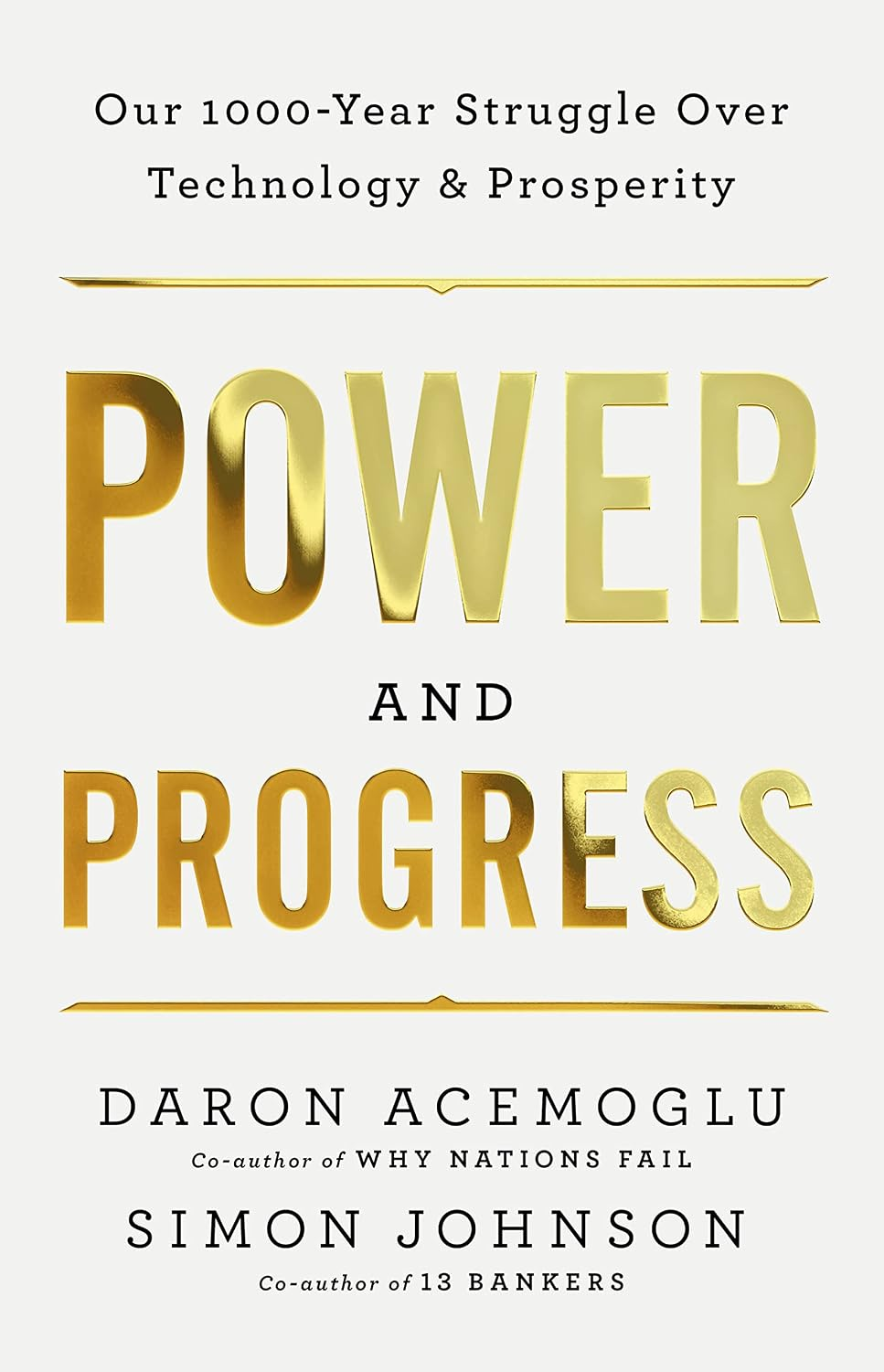
KMOB1003 may earn a commission from qualifying Amazon purchases.
Disclosure: KMOB1003 may earn a commission from qualifying purchases through select partner links. Editorial coverage is produced independently.
KMOB1003 After the Article
Price It Before You Adopt It
You read the argument. Now the tools operators are using to research the real cost, protect their own archive, and secure the system before scaling it.
Research the Real Cost
Genspark
Before the pilot becomes production, know what the system actually costs.
Map the Source Layer →
Affiliate partner. KMOB1003 may earn a commission.

Own the Record
Spines Hybrid
Permanent authorship infrastructure for the work no AI system can legally claim.
Build Your Archive →
Affiliate partner. KMOB1003 may earn a commission.

Protect the Operation
NordVPN Complete
Security and access control for operators running AI workflows at scale.
Protect Your Access →
Affiliate partner. KMOB1003 may earn a commission.

Go Deeper
Culture Docent
Operator intelligence on ownership, infrastructure, and power — unpacked in plain language.
Explore the Docent →
Global Reach. Powerful Stories. Lasting Impact.
KMOB1003 Global Media
Cultural infrastructure analysis. Operator intelligence. Human signal reporting.
