
Technology · AI Economics · Creator Infrastructure · Human Signal · PM · July 2026
The Human Was Never the Expensive Part
Capital is not replacing humans because they cost too much. It is replacing them because they cannot be controlled enough. That changes everything about what comes next.
Something odd is happening in the AI economy. The machine that was supposed to make the human too expensive is now expensive enough to become its own line item — its own budget crisis, its own infrastructure problem. And still, companies keep reaching for it. That tells us something. Maybe the human was never the expensive part. Maybe the human was the part that made capital uncomfortable — the part with memory, judgment, dignity, and the audacity to negotiate. The machine is obedient. That, it turns out, is worth more to certain buyers than any salary ever was.
AI is not replacing humans because it is cheap. AI is replacing humans because capital is willing to pay more for systems it can control than for people it has to respect.
What This Article Is Actually About
The cheap-AI story was never the whole story. The real argument behind this moment is not about cost — it is about control. This article examines why capital keeps reaching for systems that are expensive to run and difficult to justify, what bot farms and synthetic creators actually replace, how creator data moves through platforms not designed with creator ownership in mind, and why the human signal is becoming the most durable premium asset in the economy.
Signal One
The Control Premium
AI compute costs are rising. Layoffs are accelerating. Capital is not confused. It knows exactly what it is buying — and it is not efficiency.
Signal Two
The Synthetic Trust Gap
Bot farms scale content. Audiences scale distrust. The gap between them is the creator’s most durable structural advantage.
Signal Three
The Memory Problem
Creative drafts, transcripts, and strategy pass through platforms. The question is not who sees them. It is who owns what they teach.
I. The Machine Is Expensive, But Obedient
The cost argument was always more complicated than the headlines made it. Nvidia’s Vice President of Applied Deep Learning told Fortune in April that the cost of compute is “far beyond the costs of the employees.” Uber’s CTO burned through his company’s entire 2026 AI coding budget in four months. OpenAI projects $14 billion in losses this year alone. And yet, Big Tech has committed $740 billion in capital expenditure in 2026 — a 69 percent increase from the year before.
A Gartner study of 350 enterprises already deploying AI found that companies cutting the most workers showed nearly identical financial returns to those that cut the least. MIT research suggests AI automation is economically viable in only about 23 percent of roles. So the cheap-AI story is breaking down in real time. And companies keep cutting anyway. More than 115,000 tech workers have been laid off in 2026. Meta eliminated 8,000 positions. Oracle cut up to 30,000. Atlassian shed 1,600 workers specifically to self-fund further AI investment.
The economics do not add up — unless you are looking at the wrong variable. This article continues the argument we began in AI Was Supposed to Reduce the Bill. Now It Is Becoming the Bill.
AI is not replacing humans because it is cheap. AI is replacing humans because capital is willing to pay more for systems it can control than for people it has to respect. The machine is expensive. But it is also programmable, scalable, compliant, and endlessly iterable. It does not negotiate. It does not remember what it was worth last quarter. It does not push back.
That is the real economy behind the headline.
II. The Bot Farm Does Not Replace Culture. It Replaces Accountability.
Andreessen Horowitz — a16z — is backing a startup called Doublespeed, an AI bot farm that uses agentic social accounts to advertise products on behalf of clients. The pitch on their website: “Never pay a human again.” The company’s co-founder has called human creators “unsustainable” and described their operation as deliberately leaning into, in his own words, “the dystopian feeling.” Their bots run off real phones, masked as organic users, built to engage “like real creators in the ecosystem.”
This is not about efficiency. This is about control without consequence. The bot does not carry lived experience, cultural memory, or accountability. It cannot be held responsible because it was never real enough to take a position. And it cannot build trust because it was never trusted with anything that mattered.
A Digiday analysis of the creator economy in 2026 found that brands experimenting with AI influencers have seen no consistent proof of outperformance over human creators. One industry expert put it precisely: “Creator marketing works because the audience believes there is a real person making a real judgement.” When audiences discover the person was never real, what breaks is not the content. It is the trust.
The bot farm does not want to participate in culture. It wants to simulate culture without paying for relationship, taste, risk, or the kind of judgment that only comes from having something at stake.
Synthetic influence can imitate attention. It cannot inherit trust.
III. The Platform Wants the Audience and the Memory
The displacement is not only happening at the output layer.
In January 2026, Google launched Personal Intelligence — a feature that fuses Gmail, Photos, YouTube history, and Search activity into a single Gemini reasoning context. On the consumer side, Gemini’s own documentation confirms that prompts on free and paid individual tiers may be used to improve Google’s services unless users actively disable Gemini Apps Activity — a move that costs them their conversation history in return. Consumer-tier users, including those on paid individual plans, according to independent privacy analysis, still fall under consumer-grade data governance.
The distinction matters enormously for creators. Your drafts live somewhere. Your audience patterns live somewhere. Your transcript of a strategy conversation about a project not yet launched — all of it passes through systems not designed with creator ownership in mind. As one enterprise security analysis noted, the platform “treats available data as usable data” — without evaluating intent, context, or who built what. Protect your connection and your access with NordVPN. Read the policy before the platform reads your prompts.
Creators are not only being replaced at the output layer. Their creative memory — the drafts, the transcripts, the audience relationships, the brand strategy built over years — may be becoming product intelligence inside systems they do not own.
IV. The Human Signal Becomes the Premium Layer
Here is what this economy cannot manufacture.
It cannot manufacture a room where something real happened. It cannot manufacture an audience that chose to trust someone before an algorithm promoted them. It cannot manufacture an archive built over years of lived work, real risk, and cultural investment. The future premium layer will not be infinite content. The world already has more content than it can process. The premium layer will be proof — proof that a real person made it, that a real community trusted it, that the judgment behind it came from somewhere earned. The future will not belong to whoever can generate the most content. It will belong to whoever can still prove there was a human reason for making it.
At KMOB1003, this is what our Artist Services platform is built to protect and amplify. It is what the Voice Gallery is built to preserve. Real creators. Real archives. Real audiences. Real rooms. Not because machines cannot imitate the surface of those things — they can — but because the surface was never the point.
Audiences sense it before they can name it. In 2026, Octavio Maron, Chief Creative Partner of Creative Innovation at Dentsu, described it precisely: “There’s a category that’s instantly recognizable — the uncanny lighting, the generic composition, the lack of any real point of view. No intention behind it.” Intention cannot be automated. It has to be earned.
The feed can show you the signal. The room lets you feel it.
When culture is real, it does not only appear in the feed. It gathers somewhere. Find the concerts, rooms, stages, and live signals worth showing up for through KMOB1003 Ticket Desk Live.
Creator Infrastructure
The Human Proof Stack
Five tools for building creator infrastructure that capital cannot replicate. Own the conversation. Protect the access. Control the archive.
Record the Conversation
Riverside
Interviews, documentation, receipts, and human proof — broadcast quality from day one.
Protect the Access
NordVPN
Privacy, creator data boundaries, account security, and safer workflows on every network.
Own the Audience
ClearCRM
Direct audience relationships, CRM, and less dependency on platform memory and platform rules.
Publish the Archive
Spines
Books, long-form ownership, creator IP, and a body of record that belongs to you — not the platform.
Produce the Signal
ElevenLabs
Faster production and ethical AI narration — accessible, scalable, still driven by a human creator with a point of view.
V. The Room Belongs to the Builders
KMOB1003 is not against artificial intelligence.
We are against systems that use AI to remove accountability, erase human value, harvest creative memory without consent, manufacture false culture, or replace relationship with synthetic compliance. Those are not the same thing.
The creators, journalists, artists, operators, and builders who understand this moment are not waiting to be replaced. They are building the infrastructure that makes replacement impossible — recording, protecting, owning, publishing, and producing the signal on their own terms. Read more in Legacy & Insights.
IBM replaced its human resources function with AI. The system handled 94 percent of routine requests — and failed entirely on the 6 percent that required ethical judgment. IBM is now tripling its entry-level hiring. Ford is rehiring experienced engineers to address quality issues automated systems could not resolve. As IBM’s chief human resources officer warned publicly: “There’s no pipeline. The well simply dries up.”
The human was never the expensive part. The human was the part with memory, judgment, boundaries, dignity, and leverage.
The future does not belong to the loudest machine. It belongs to the builders who know what must remain human, what can be automated, and what should never be surrendered.
Signal Breakdown
Capital is building a world where output costs less and accountability costs nothing. The human creator’s advantage is not that they are cheaper — it is that they are real, and in a world flooded with synthetic signal, real is becoming the only premium that actually holds. The question is not whether you will be replaced. The question is whether you have built the infrastructure that makes you irreplaceable. That work starts now.
The Operator’s Bookshelf
KMOB1003 READS
Some books refuse synthetic memory because they were built from witness. These two belong beside this article because they remind us what machines cannot inherit: breath, pressure, language, race, grief, survival, and the evidence of living.
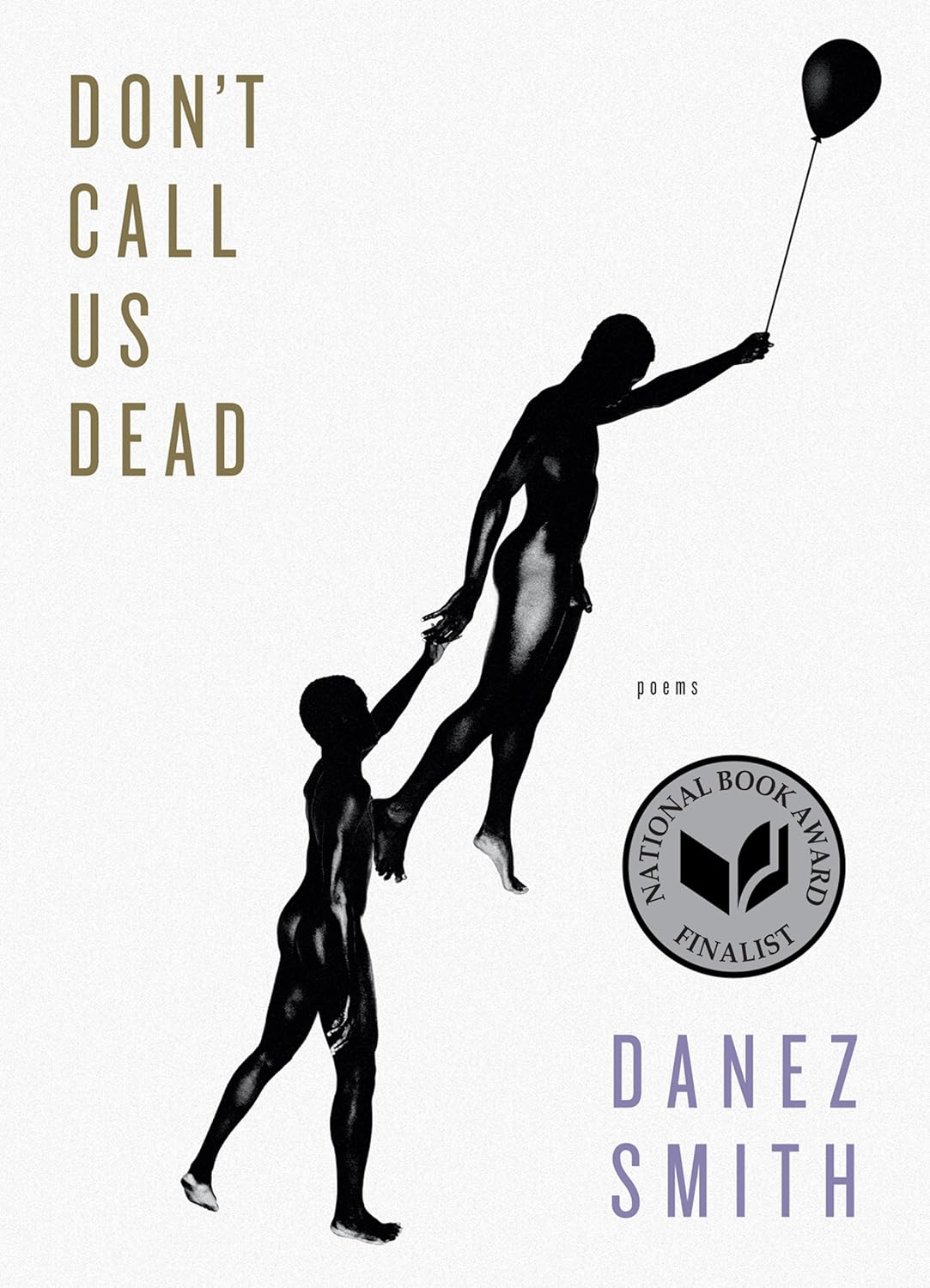

KMOB1003 may earn a commission from qualifying Amazon purchases.
Disclosure: KMOB1003 may earn a commission from qualifying purchases through select partner links. Editorial coverage is produced independently.
KMOB1003 After the Article
The Human Proof Rail
You read the argument. Now enter the infrastructure: the room, the archive, the voice, and the system that protects the signal.
Read the Signal
Culture Docent
Ask the room what the signal means. Cultural intelligence for the headlines, systems, and ownership questions shaping the next economy.
Ask the Docent →

Hear the Proof
The Voice Gallery
The human signal lives in breath, witness, testimony, and the rooms where language still carries consequence.
Enter the Voice Gallery →

Build the Signal
Artist Services
For artists and creators ready to turn talent into structure: positioning, rollout, visibility, and professional signal.
Build the Infrastructure →
Publish the Archive
Spines
If the platform can borrow the memory, the creator needs a body of record. Books remain one of the strongest forms of ownership.
Publish the Archive →
Affiliate partner. KMOB1003 may earn a commission.
KMOB1003 Global Media
Cultural infrastructure analysis. Operator intelligence. Human signal reporting.
