AI · Privacy · Consent · Platform Design · Wednesday PM · July 2026
Meta Didn’t Ask. It Just Assumed Yes.
Participation became the default. Permission became the afterthought.
Most people think consent begins when someone asks. Increasingly, digital systems begin when no one asks at all. Meta’s newest AI feature is this week’s example — but the pattern underneath it is bigger than one company, and it will still be here long after this headline scrolls past.
Opt-out is not consent. It’s simply consent’s paperwork, filed after the fact.
What This Article Is Actually About
Meta’s Muse Image launch is this week’s case study, not the whole argument. KMOB1003 is reading the design pattern underneath it — default participation, consent by omission, visibility treated as raw material — and asking what it costs the people whose faces, work, and public presence make the platforms worth using in the first place.
Signal One
The Feature
Meta launched Muse Image on July 7, 2026, letting anyone in the Meta AI app pull a public Instagram account’s photos into an AI-generated image.
Signal Two
The Default
Public accounts are opted in automatically. Meta confirms subjects are never notified when their likeness is used.
Signal Three
The Case
Reporters documented generating a convincing likeness of a colleague in under a minute — she had no idea until she was told.
I. The Feature Nobody Read Twice
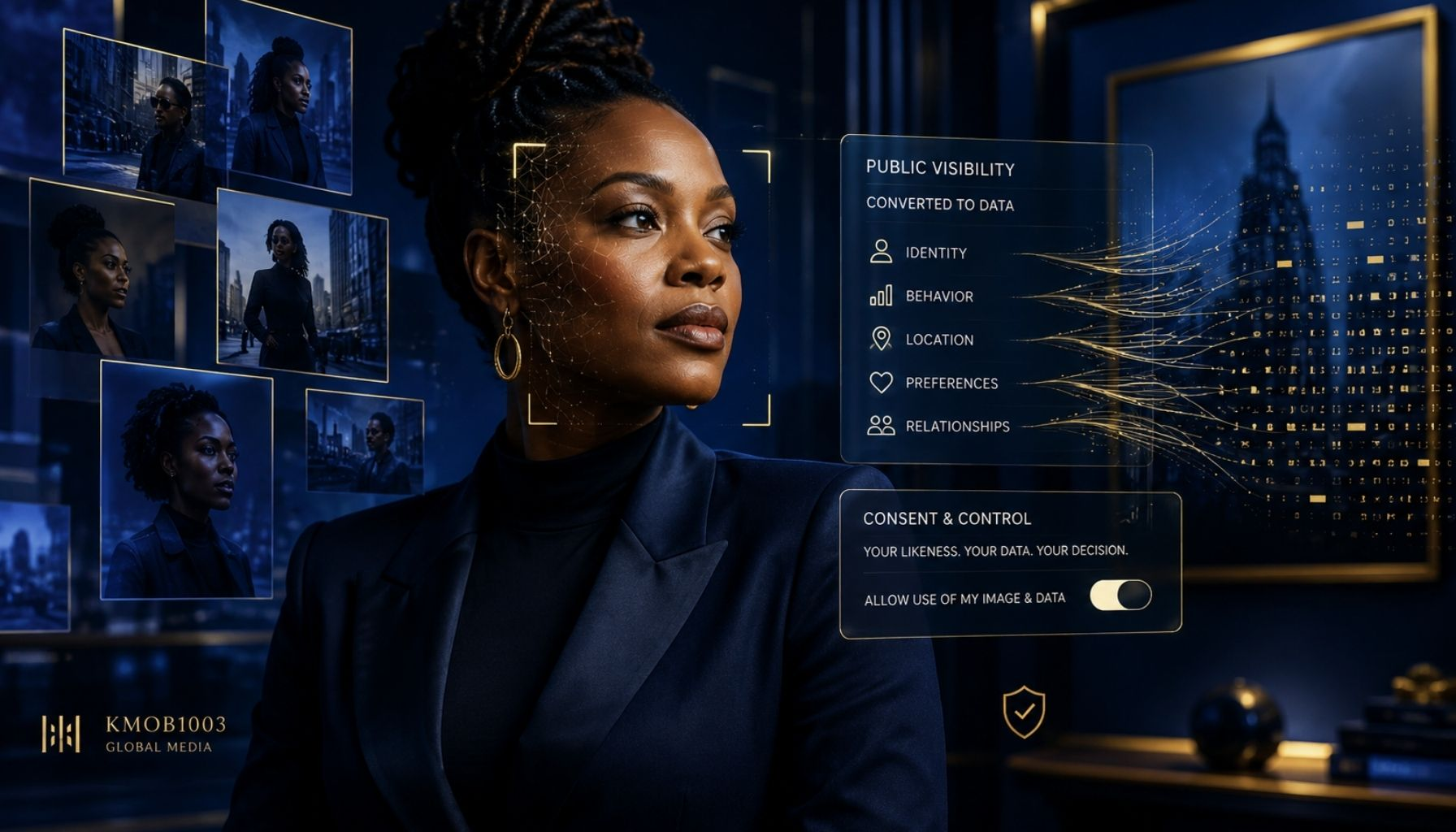
There is a version of consent most of us were taught as children: someone asks, you answer, and the answer means something. It’s the version built into contracts, into medicine, into the basic architecture of trust between two parties — permission has to come before the act, not after it. That version is almost entirely absent from how modern technology now touches the most personal thing a person owns: their own face, and the public record of what they’ve built and shared over years, often specifically so they could be found and trusted by the people they were trying to reach.
On July 7, 2026, Meta’s Superintelligence Labs released Muse Image, its first in-house AI image generation model, built into the Meta AI app, Instagram, and WhatsApp, with Facebook and Messenger following in the coming weeks. The capability itself is unremarkable by 2026 standards — text-to-image generation, photo editing, multi-reference composition, the same category of tool every major platform now ships in some form. What is remarkable is a single design decision buried inside the launch: anyone using the Meta AI app can @-mention a public Instagram account inside a prompt, and Muse Image will pull that person’s public photos in as a visual reference to generate new images — without sending a request, and without notifying the person whose face was used.
Meta’s own help documentation confirms it plainly: users will not be told when someone generates an image using their content, at any point, under any circumstance the company has disclosed. No message, no flag, no record surfaced to the person whose likeness became the material.
II. Participation Became the Default
Meta didn’t begin with permission. It began with participation by default — and that distinction is the whole story, far more than any single feature Muse Image ships with. This is not a Meta problem alone. It is an industry design pattern repeating with enough consistency to be predictable: ship the capability first, bury the control three menus deep, and let silence do the work consent used to do. Meta shares rose more than 3% on the announcement — the market rewarded the launch the same day reporters were documenting how easily the feature could generate a convincing likeness of someone who never agreed to be in the frame. Both things were true at once, and neither one slowed the other down.
To be precise about what is and isn’t confirmed: Meta has not stated an intent to train future models on these images, and Meta’s own announcement frames Muse Image as a creative convenience — invitations, mockups, personal graphics. Whether this becomes a GDPR or biometric-privacy question in Europe remains to be seen; regulators have not ruled, and it would be premature to say they will. What is confirmed, and documented across multiple independent outlets, is simpler and arguably more important: the setting exists, it defaults to on, and images already generated don’t disappear even after someone opts out. That is not a hypothetical risk sitting somewhere in the future. It is the mechanism, working exactly as built, on the day it launched.
KMOB1003 Framework
The Consent Drift
01
The Photo
A public likeness becomes the source material.
02
The Feature
It ships without asking first.
03
The Default
Opt-out quietly replaces opt-in.
04
The Generation
An image is made, silently, on request.
05
The Subject
Finds out last, if they find out at all.
The system didn’t take your photo. It just never asked before using it.
III. The Language Doing the Work
Watch the language technology companies reach for when they describe features like this one: personalize, improve, enhance, remember, train, help. Every one of those words implies something being done for you. None of them says what is actually happening, which is closer to: “we’re using your likeness unless you stop us.” The gap between the marketing language and the plain-English sentence is not an accident. It is the product — and it is the same gap running through every AI story this year, from AI-cast performers to AI-licensed catalogs to AI-generated likenesses standing in for real ones. The names on the recordings and the photo feeds change. The gap does not.
IV. Who This Actually Affects
The people with the most exposure here are rarely the people who think about this first. Private accounts are largely insulated, since the feature is built around public content — but a public profile is exactly what most working creators, musicians, authors, and public-facing operators need in order to be found at all. The same visibility that builds an audience is the visibility this feature quietly repurposes. That overlap isn’t new, and it isn’t unique to Meta. It’s the same tension running through this year’s fights over AI-trained voices and AI-cast performers: does visibility still belong to the person who built it, or does it become shared property the moment it’s technically reachable? Every one of these stories is the same audit, run on a different asset — a musician’s catalog here, a founder’s photo feed there, an actor’s face somewhere else, the underlying question identical each time.
There is also a quieter cost that rarely makes the headline: the erosion of trust in what’s real. When a stranger can generate a plausible image of you without your knowledge, the burden of proof about what actually happened, what you actually said or wore or did, shifts onto you. That is a strange kind of tax to place on the people who simply chose to be visible in the first place.
Creator Infrastructure
The Artist’s Proof Stack
While the licensing table moves, independent artists can build infrastructure that keeps the signal theirs.
Record Before the Story Gets Rewritten
Riverside
Interviews, sessions, conversations — broadcast quality, owned by you.
Own the Archive Before the Platform Rewrites the Terms
Spines
Books, long-form IP, and a permanent body of record that belongs to the artist.
Protect the Connection
NordVPN
Creator privacy, account protection, and data boundaries on every network.
V. The Door, Not the Warning
None of this requires panic, and it doesn’t require leaving Instagram, or public life. It requires something smaller and more durable: knowing the setting exists, understanding what “public” now actually means, and deciding — deliberately, on your own terms — what you’re willing to hand over by default and what you are not. For anyone running a public brand account, an executive profile, or a creator handle, that’s a five-minute check, not a five-month project, and it’s worth treating as time-sensitive precisely because the default was never announced loudly enough for most people to notice it changed.
For a long time, visibility was simply a fact of modern life — you were seen, or you weren’t, on roughly the same terms as everyone else. Increasingly, visibility is infrastructure, with its own settings, its own defaults, its own fine print written to be skimmed past rather than read closely. The operators and creators who thrive from here forward won’t be the ones who disappear from public view — visibility is still the whole game, for a musician, a founder, a public voice. They’ll be the ones who learn to read the fine print before someone else does it for them, who treat their own image and archive the way they’d treat any other asset worth protecting: with terms they set, not terms they inherit by default.
That is the door this week’s story actually opens. Not a retreat from public life, but an invitation to enter it more deliberately — eyes open, terms understood, consent restored to where it always should have started.
Signal Breakdown
Meta didn’t invent this pattern, and it won’t be the last to use it. Default participation is cheaper to build and easier to defend than genuine consent, and it will keep showing up everywhere a platform’s value depends on data it didn’t have to ask for. The difference this time is simply how personal the material is — not a browsing habit or a purchase history, but a face.
The Consent & Visibility Shelf
KMOB1003 READS
Some books help us see the machine before it finishes naming itself. These belong beside this article because they explain what happens when a person’s likeness becomes inventory inside someone else’s system — and what can be done about it.
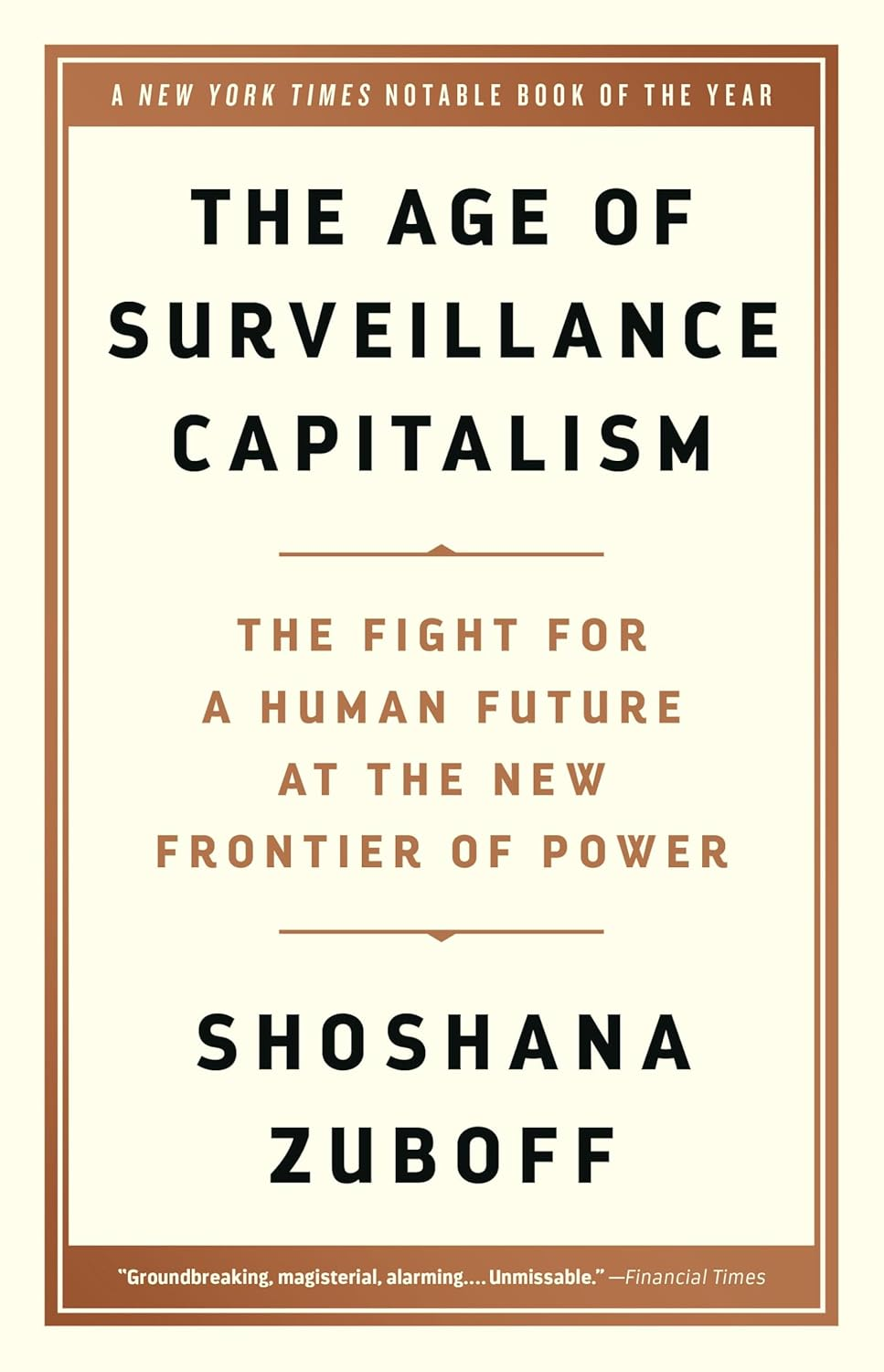
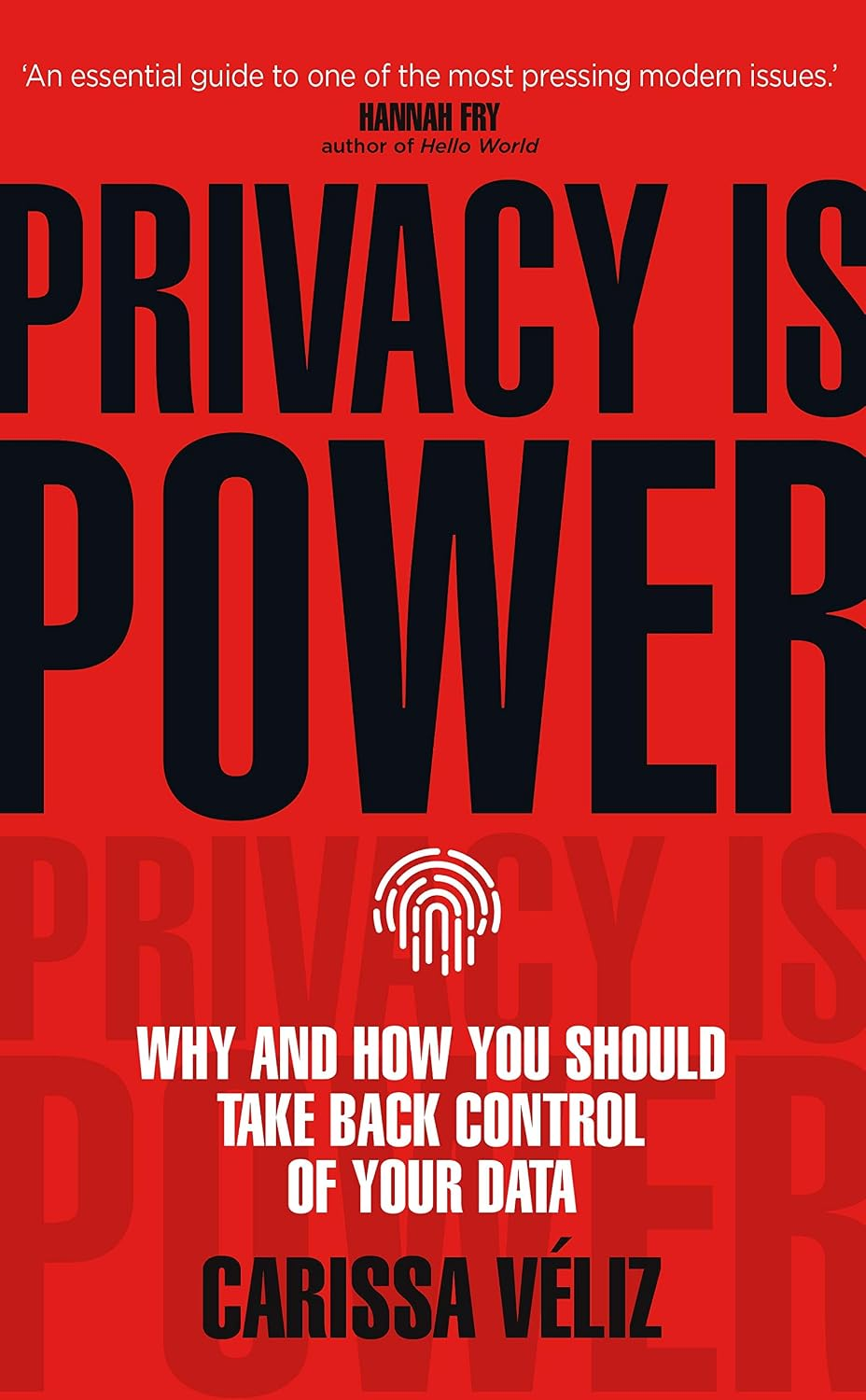
KMOB1003 may earn a commission from qualifying Amazon purchases.
Disclosure: KMOB1003 may earn a commission from qualifying purchases through select partner links. Editorial coverage is produced independently.
KMOB1003 After the Article
The Consent Room
You read the pattern. Now the tools: research the terms, protect the connection, and understand what the machine is actually doing with a likeness.
Research the Terms
Genspark
Before you accept a platform’s defaults, understand them. Research-grade intelligence for operators who read the fine print.
Map the Source Layer →
Affiliate partner. KMOB1003 may earn a commission.
Own Your Voice
ElevenLabs
If likeness is now infrastructure, voice is next. Tools for creators who want to control how their own voice gets used.
Explore ElevenLabs →
Affiliate partner. KMOB1003 may earn a commission.

Protect the Connection
NordVPN Complete
Privacy, security, and account protection on every network — the boring, time-sensitive move this article is actually recommending.
Protect Your Access →
Affiliate partner. KMOB1003 may earn a commission.
Go Deeper
Culture Docent
Cultural infrastructure, unpacked in plain language. This is exactly the kind of question the Docent exists to walk through.
Explore the Docent →
Global Reach. Powerful Stories. Lasting Impact.
KMOB1003 Global Media
Cultural infrastructure analysis. Operator intelligence. Human signal reporting.
