KMOB1003
KMOB1003 Global · Media Infrastructure · Streaming · Platform Power · Monday PM · June 15, 2026
Fox’s $22 billion Roku acquisition is not a streaming play. It is a fight for the doorway — the screen, the menu, the recommendation surface, and the first choice every viewer makes before they press play.
The old television business fought for the channel. The new one fights for the door.
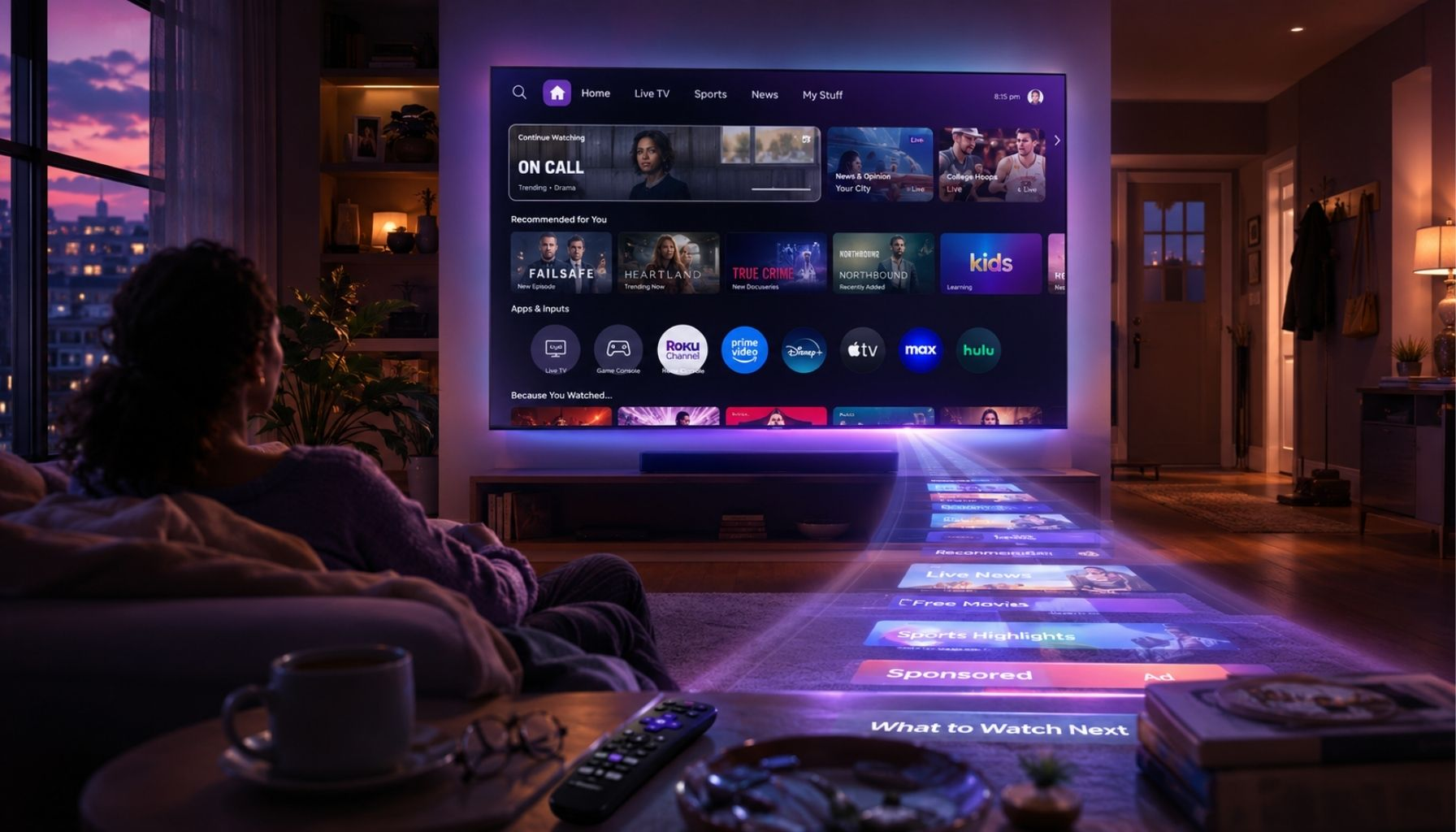
There is a moment before the show starts. The television is on. The remote is in hand. A menu appears — a grid of apps, a row of recommendations, a search bar, a set of promoted titles. The viewer has not yet chosen what to watch. But someone has already chosen what the viewer will see first, what will be suggested, what will cost money to skip, and what will appear at the top of the page without the viewer ever asking for it. That moment — the first screen, the opening menu, the recommendation surface before the choice is made — is what Fox Corporation paid $22 billion to own on Monday. Fox and Roku announced a definitive agreement under which Fox will acquire Roku for $160 per share in a cash-and-stock transaction valuing Roku at approximately $22 billion in enterprise value — combining Fox’s sports, news, and Tubi service with Roku’s connected TV platform reaching more than 100 million global streaming households. The channel was never the point. The door was.
What This Article Is Actually About
Why the Fox-Roku deal is not a streaming acquisition in the conventional sense. It is a fight for the first screen — the recommendation surface, the operating system layer, the ad inventory, and the audience pathway that determines what 100 million households see before they decide what to watch. KMOB1003 reads what this means for media power, creator distribution, and who controls the room.
Layer One
The Operating System
Roku is not a content company. It is the operating system through which 100 million households access all other content companies. Owning the OS means owning the surface where all discovery begins — and all advertising reaches the viewer first.
Layer Two
The Ad Inventory
Roku’s chief revenue stream is advertising — $613 million in Q1 2026, up 27% year over year. Combined with Tubi’s 100 million monthly users, Fox now controls one of the largest ad-supported streaming inventories in the country.
Layer Three
The Recommendation Surface
The homepage of a connected TV platform is not neutral. What appears at the top of the menu — promoted, featured, auto-played — is a media decision with commercial consequences. Fox now owns that surface for 100 million households.
Layer Four
The First-Party Data
Roku has a direct relationship with more than 100 million streaming households — names, viewing habits, preferences, time-of-day patterns. That data layer is what makes the ad inventory valuable and what makes the platform irreplaceable to Fox’s growth strategy.
The channel was never the point. The door was. — KMOB1003 Global Media · June 2026
Fox Corporation spent two decades after the Disney sale rebuilding itself around a single thesis: own the live content nobody will skip. News. Sports. NFL. MLB. The Super Bowl. The World Series. The content that has to be watched in real time, that cannot be paused and returned to next week, that carries enough urgency to keep a viewer from switching to something else. That thesis built Tubi into a free, ad-supported platform with more than 100 million monthly users. And it left Fox with one persistent problem: it owned the content people would not skip, but it did not own the surface through which people found it. CEO Lachlan Murdoch called the acquisition a “defining moment” — pairing Fox as the leader in live news and sports with Roku as the leading connected TV platform, combining what he described as “the most valuable live content portfolio in video consumption with the preeminent streaming platform through which America watches it”. He was not wrong about what they built. He is also describing exactly why they needed each other.
Roku was never really a hardware company. The dongle was the handshake. The actual business was the room you walked into after — the screen that appeared when the television turned on, the menu that organized every option, the algorithm that decided what you saw first before you had asked for anything. That is what commands attention. Not the show. The surface the show lives on. According to Nielsen, the Roku Channel commands 3% of all U.S. streaming viewership — fifth overall, behind YouTube, Netflix, Disney, and Prime Video — while advertising revenue hit $613 million in Q1 2026, up 27% year over year. Those numbers are not about how good Roku’s shows are. They are about the value of being the door every other show has to walk through.
“The old television business fought for the channel. The new television business fights for the doorway. Fox just bought the door.”
— KMOB1003 Global Media · Media Infrastructure · June 2026
The broader story underneath the Fox-Roku deal is a bet on ad-supported streaming as the dominant model for the next decade of television. Subscription fatigue is real. The average household now manages multiple streaming subscriptions, regularly pauses and restarts services, and shows consistent preference for free, ad-supported options when the content is strong enough. Tubi proved that the free model works at scale — 100 million monthly users who accept ads in exchange for access. Roku proved that the platform layer works at scale — 100 million global streaming households running everything through the same operating system. On a pro-forma basis, the combined company becomes the third-largest player in U.S. television by share of viewing — a position built not on a single blockbuster subscription service but on the combination of live content, free ad-supported streaming, and the door everyone else has to walk through. That is a different kind of media power than Netflix or Disney built. It is not the destination power of “you have to subscribe to us.” It is the infrastructure power of “you have to go through us.”
Think about what Fox can tell an advertiser now. Your spot runs during the NFL. It runs on Tubi — free, ad-supported, 100 million monthly users. And it reaches whoever is watching through Roku, which knows who they are, when they watch, and what they watched before — because Roku has been quietly building that relationship in 100 million living rooms for years. Fox’s live content is the premium inventory. Tubi is the volume. Roku is the meter that makes both more valuable. The $400 million in projected cost synergies is the number they put in the press release. The real number is the one that happens when you can tell every advertiser in the country: you have to go through us. That is not a channel strategy. That is a tollbooth strategy.
Partner Intelligence · Read the Media Stack
KMOB1003 has been building owned media infrastructure — radio, social video, editorial, affiliate commerce, and audience relationships — across 50+ countries since 2021. If the Fox-Roku deal tells you anything, it is that the platform layer is the most valuable real estate in media. See how KMOB1003 reads audience movement, distribution, and media power — and how partners reach the audience that matters.
Fox and Roku have both said the combined platform will remain “open” — that Roku will continue operating as a platform through which viewers access Netflix, YouTube, Disney, and every other service. That commitment matters and should be watched carefully. Roku’s value to viewers has always been its neutrality: it does not force you toward Fox content any more than it forces you toward Netflix. The moment that changes — the moment Roku’s home screen begins to systematically favor Fox and Tubi over competitors — is the moment regulators, competitors, and viewers will have a different conversation about what this deal actually was. Variety notes that Roku will continue to operate as a standalone platform and remains a primary access point for viewers to open Netflix and YouTube on their TVs — but the combined company’s incentives will inevitably create pressure on that neutrality over time. Owning the door does not require locking it immediately. It requires owning the decision about who gets the key.
If you are building media outside the major platform world, Monday was a clarifying morning. The menu just got more concentrated. The ad inventory just got more consolidated. The viewer relationship that Roku spent years building quietly in living rooms across the country now belongs to Fox. None of that is illegal. None of it is even surprising if you have been paying attention to how every major technology era ends — with the infrastructure collapsing into fewer hands. What does not flow through Fox’s infrastructure will have to find another way to the viewer. That is not a reason to panic. It is a reason to build differently. The audience that comes back because it trusts you does not need a menu recommendation. It already knows where you are.
Production Layer · Own the Capture Before the Platform Owns the Distribution
When the first screen is owned by a conglomerate, the independent operator’s advantage is the quality and permanence of what they produce before it reaches any platform. Riverside gives creators and media operators broadcast-quality capture — the kind of production standard that travels across whatever distribution surface exists, without needing a platform’s permission to look professional.
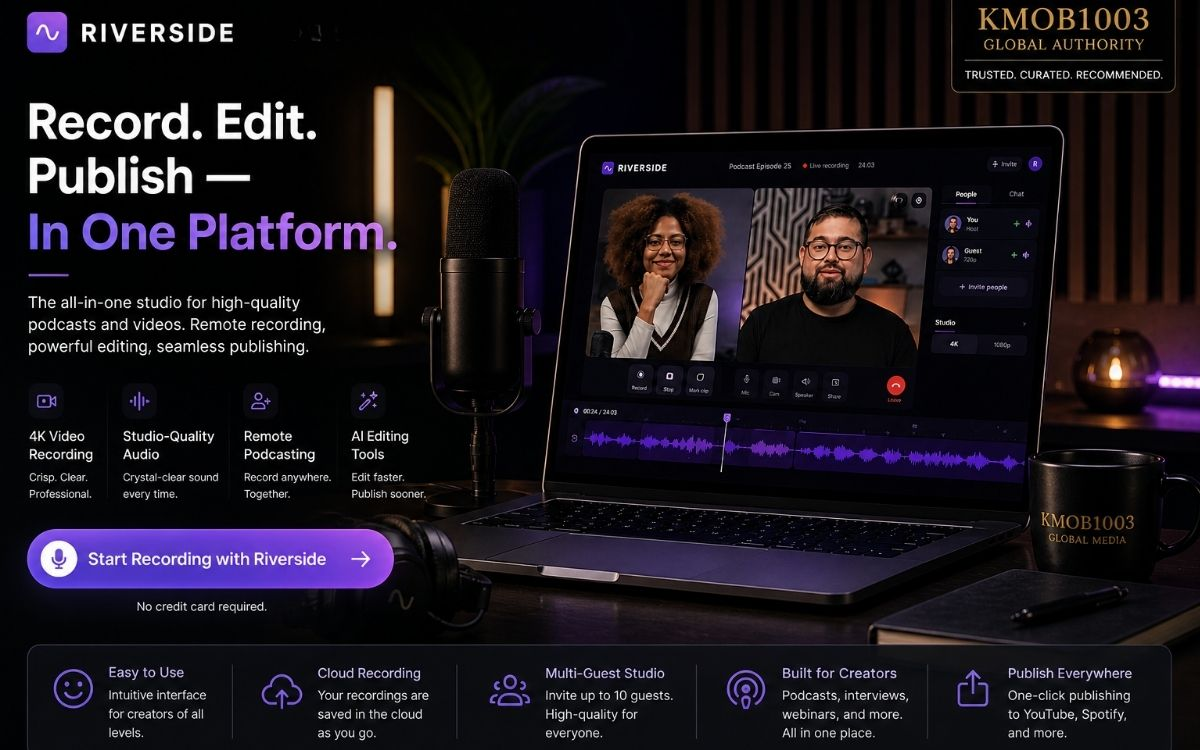
Capture at the Quality the Platform Cannot Ignore →
Affiliate link · KMOB1003 may earn a commission from qualifying purchases.
Lachlan Murdoch did not spend $22 billion on shows. He spent $22 billion on a surface. That distinction is the entire lesson. In the attention economy, the most valuable asset is not the content — it is the layer that sits between the content and the viewer. The search result. The menu. The recommendation. The first screen. Every major technology and media company that has built durable power in the last twenty years has understood this. Google did not win by writing the best content. It won by becoming the surface through which people found all content. Amazon did not win by making the best products. It won by building the store through which people found all products. Apple did not win by making the best apps. It won by building the operating system through which people ran all apps. Fox, with $22 billion and one Monday morning, just made the same move in television. The question is what took them this long — and what it costs everyone else now that the door has an owner.
KMOB1003 was built on the opposite end of that logic — not on owning the first screen, but on building an audience that does not need a first screen to find us. A 933K+ combined audience footprint across 50+ radio countries, built without platform dependency, without a Roku placement, and without a recommendation algorithm deciding whether we surface. The Fox-Roku deal is a reminder that the most resilient media position is not the one with the biggest platform deal. It is the one with the owned relationship — the audience that comes back because it trusts you, not because an algorithm suggested you. The door is worth $22 billion because so many media operators never built a room worth returning to without one.
Fox did not just buy a streaming company. It bought the moment before the choice — the menu, the recommendation, the first thing 100 million households see when they turn on the television. The platform does not have to raise its voice to control the room. Sometimes it only has to own the door.
Some links in this article are affiliate links. KMOB1003 may earn a commission from qualifying purchases at no additional cost to you. All affiliate partnerships are editorially independent.
