
The Lakers Are Worth $12.5 Billion. Control Is Still the Expensive Part.
Lakers ownership dispute now sits beneath a record $12.5 billion valuation, separating what the franchise is worth from who has the authority to decide what happens next.
Jerry Buss built an institution in which ownership, family and cultural authority largely occupied the same room. His children are discovering, in public, that those things can be separated.
The Lakers ownership dispute begins with a number large enough to make almost everything around it disappear: $12.5 billion — the valuation at the center of a reported agreement for a group led by Bob Iger and Josh Kushner to acquire Mark Walter’s controlling interest in the Los Angeles Lakers, a record for an American professional sports franchise. The number settles price. It does not settle authority. Within days, the Buss family’s remaining 17.8 percent stake in the team became its own flashpoint: siblings reportedly voted to sell that stake at the same valuation, and Jeanie Buss — the Lakers’ governor and the one sibling who did not join that vote — is now contesting whether the sale can be legally carried out at all.
What This Article Is Actually About
This is not a story about whether the Lakers should be worth $12.5 billion, or whether any individual heir is right to want to sell or right to want to hold on. Sports franchises are commercial assets, and reasonable people disagree about liquidity, timing and risk. This article asks a narrower question: when a family inherits an institution built by one person, what actually determines who has the authority to decide its future — the size of an economic interest, a family vote, or the governing documents written years before any of this became urgent?
Signal One
The Price Is Set
A group led by Bob Iger and Josh Kushner has reportedly agreed to acquire Mark Walter’s controlling interest in the Lakers at a $12.5 billion valuation, pending NBA approval.
Signal Two
The Family Is Split
Buss siblings reportedly voted to sell the family’s remaining 17.8% stake at the same valuation. Jeanie Buss did not join that vote.
Signal Three
Authority Is Contested
Jeanie Buss’s attorney argues no sale can be effectuated without co-trustee approval. The dispute remains unresolved.
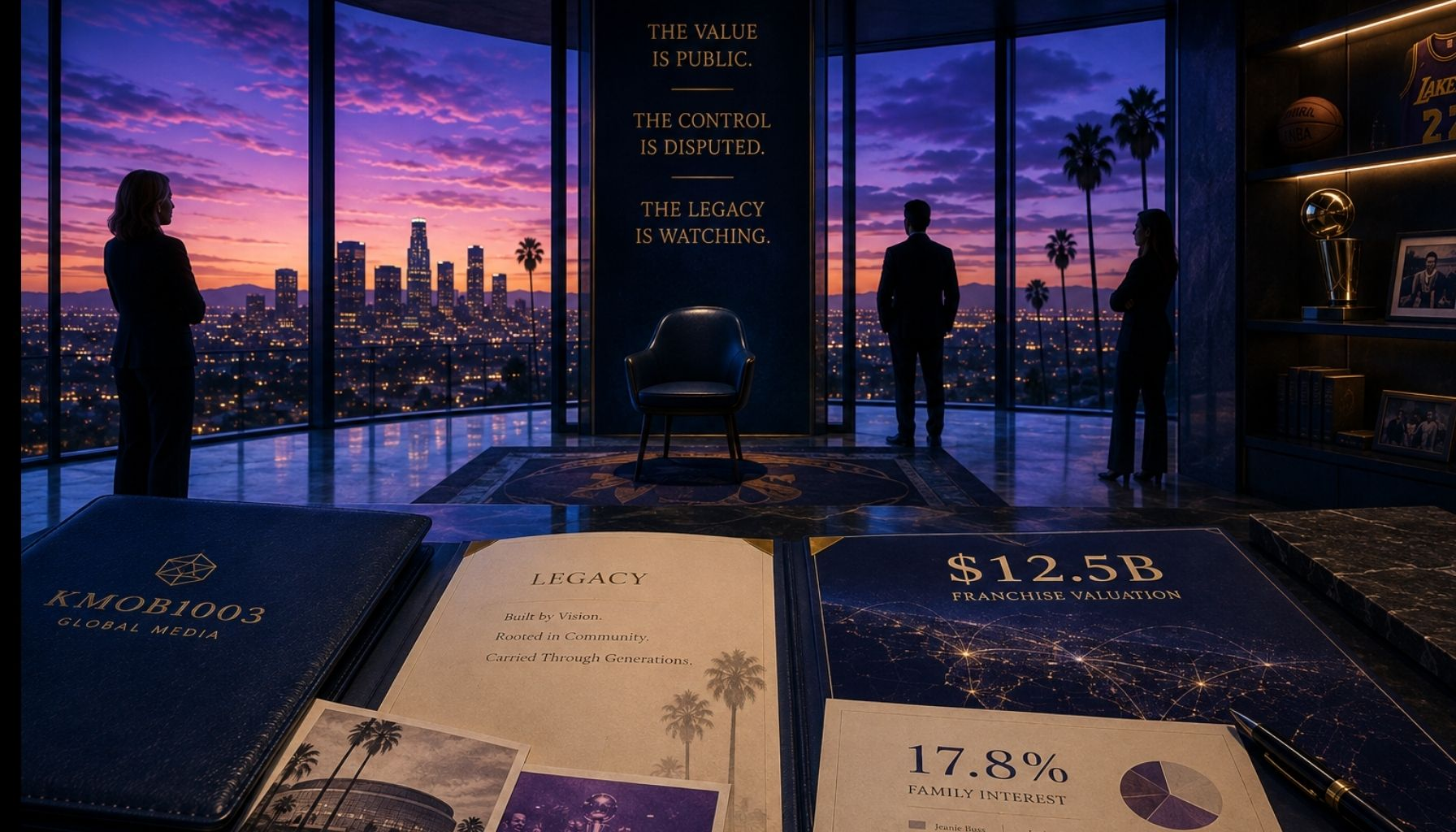
I. Lakers Ownership Dispute: The Price Is Settled. The Authority Is Not.
A group led by Bob Iger and Josh Kushner has reportedly agreed to acquire Mark Walter’s controlling interest in the Los Angeles Lakers at a $12.5 billion valuation, a figure that would set a new high-water mark for a professional sports franchise sale in the United States. The transaction still requires NBA approval before it can close. Layered on top of that headline deal is a second, messier one: multiple reports indicate the Buss family’s remaining 17.8 percent stake in the team was voted on for sale at the same valuation — a vote Jeanie Buss did not join. Through her attorney, Adam Streisand, Buss is now arguing that no sale of that stake can be completed without approval from all three co-trustees of the family trust that holds it, and that a prior court order requires the trust to preserve enough ownership for her to remain the team’s controlling governor. The dispute remains unresolved, and it runs across three layers.
Economic interest is the 17.8 percent stake the family retained when Walter’s group took control in 2025. Family preference is the siblings’ reported vote to sell that interest now, at the higher valuation. Governing authority is narrower: whether the trust’s co-trustee structure permits that vote to be executed, or requires agreement Jeanie Buss has not given. A majority in favor does not, by itself, resolve the third layer.
What Isn’t in Dispute
Mark Walter’s group acquired majority control of the Lakers in 2025 at a roughly $10 billion valuation, unanimously approved by the NBA’s board of governors that October. A new agreement, reported at a $12.5 billion valuation, would transfer that controlling interest to a group led by Bob Iger and Josh Kushner, subject to NBA approval. The Buss family retained a minority stake, reported at roughly 17.8 percent, when the 2025 sale closed. Reports indicate the family’s siblings voted to sell that stake at the same $12.5 billion valuation; Jeanie Buss did not join that vote and, through her attorney, disputes that it can be carried out without co-trustee approval. That dispute is unresolved.
II. Jerry Buss Left More Than Shares
The Lakers ownership dispute matters because Jerry Buss left his children more than shares. He bought the Lakers in 1979 for $67.5 million and spent the next three decades turning a basketball team into something closer to a cultural utility. Showtime-era basketball became Hollywood’s adopted franchise, courtside seats became a red carpet, and the team’s identity fused with the city’s idea of itself — glamour, resilience, reinvention. None of that happened by accident, and none of it shows up as a separate line item on a balance sheet. It is, in large part, why a franchise purchased for $67.5 million now anchors a $12.5 billion valuation. His children did not merely inherit stock. They inherited a system — one built to generate cultural gravity, not just ticket revenue — and a set of expectations about what the Lakers are supposed to mean that a spreadsheet cannot fully capture.
III. What the Lakers Ownership Dispute Reveals About Succession
Families can inherit equity together and still disagree, in good faith, about what the inheritance is for. The Buss siblings have navigated public tension before. None of that history assigns villains here. What it shows is something more ordinary and harder to resolve: six people raised inside the same institution can grow into six different relationships with what it’s supposed to mean. Some carried public responsibility for the team for years, answering for it long before any transaction was on the table. Others held their stake more at a distance, inherited rather than daily-earned. Proximity shapes attachment; ownership alone doesn’t. A family trust with named co-trustees exists because someone, years ago, understood that shared inheritance does not produce shared instinct.
IV. The $2.5 Billion Pressure Test
When Walter’s group acquired the Lakers’ controlling interest in 2025, the deal was built around a roughly $10 billion valuation. The agreement now on the table for Iger and Kushner’s group values the franchise at $12.5 billion — a jump of $2.5 billion in under a year, without implying that each individual share appreciated by an identical percentage. That kind of movement changes the economics of succession fast. A stake that was illiquid and largely theoretical a year ago is suddenly a number a bank can lend against, a number six people have to reckon with individually rather than as an abstraction. Extraordinary, unrepeatable liquidity compresses timelines that would otherwise unfold over years. Rapid appreciation does not create disagreement out of nothing — it makes existing disagreement more expensive to leave unresolved.
KMOB1003 Framework
The KMOB1003 Ownership Test
Ownership
Who possesses the economic interest?
Authority
Who has the governing power to decide?
Management
Who actually runs the institution?
Legacy
What is the institution supposed to preserve after its founder is gone?
A family can share the asset without sharing the answer.
V. The Lakers Ownership Dispute Is Not Legacy vs. Money
The Lakers ownership dispute also resists an easy moral reading. It would be simple, and wrong, to cast this as Jeanie defending her father’s legacy against siblings chasing a payday. Liquidity is not inherently a betrayal of what Jerry Buss built, and invoking his memory is not, by itself, a form of governing authority. Heirs are allowed to hold legitimately conflicting objectives about the same asset. What resolves the conflict is not who invokes legacy most persuasively or who holds the largest economic share — it is what the trust documents, the 2017 court order, and the co-trustee structure actually say. Legacy without structure eventually collapses into an argument over what a founder “would have wanted,” a question no one still living can answer with certainty. Structure is what turns intent into enforceable authority. That is precisely the mechanism now being tested.
VI. The Buyers Are Acquiring Cultural Infrastructure
Bob Iger spent his career running one of the world’s largest media and entertainment companies; Josh Kushner has built a career across venture capital and consumer platforms. Neither is buying a basketball operation in isolation. They are buying a franchise woven into live entertainment, media rights, global fandom, licensing and Los Angeles’s own civic identity — infrastructure that happens to play 82 games a year. What the new ownership group intends to do with that infrastructure has not been publicly detailed, and this article does not speculate beyond what has been reported. What is already clear is that the asset changing hands is bigger than the roster, and the authority to direct it is worth exactly as much as the deal itself.
VII. The Institution Eventually Becomes Bigger Than the Family
What the Lakers ownership dispute ultimately tests is whether inherited value and inherited authority can remain aligned after the founder is gone. Jerry Buss’s era ended in 2013, and the Lakers have spent the years since discovering, in public, what happens when an institution built around one person’s judgment has to keep operating without him. A $12.5 billion valuation settles what outsiders will pay. It does not settle who inside the family, or inside the trust, gets to decide what happens next — and it will not settle whether the next ownership structure understands why the team became worth that much in the first place.
The Lakers may be worth $12.5 billion. Control is still the expensive part.
Signal Breakdown
Signal: A group led by Bob Iger and Josh Kushner has reportedly agreed to acquire Mark Walter’s controlling Lakers interest at a $12.5 billion valuation, while the Buss family’s remaining 17.8% stake is caught in a contested sibling vote.
Impact: If unresolved, the dispute could determine whether Jeanie Buss remains the Lakers’ controlling governor and reshape who holds real decision-making authority over one of sport’s most valuable franchises.
Watch: Whether the co-trustee dispute is resolved through negotiation or litigation, and how it interacts with NBA approval of the larger Iger-Kushner transaction.
Control Is Never Just a Number.
Legacy & Insights follows the structures beneath media, technology, ownership and cultural power — where the headline ends and the operating system begins.
Creator & Institutional Infrastructure
Ticketmaster
Some Institutions Are Understood Best From Inside the Room.
Franchise value is built partly through what happens when thousands of people gather around the same event, the same colors and the same memory. For readers ready to move from the ownership story back into live culture, Ticketmaster is one route into the arena.
StubHub International
A Global Franchise Is Built Beyond Its Home Address.
The most valuable sports institutions travel through fandom. StubHub International gives global audiences another path into major sports and live-culture events when the experience matters as much as the broadcast.
Genspark
The Headline Is Usually the Beginning of the Work.
Ownership stories become useful when operators can trace the people, structures, documents and competing claims behind them. Genspark can support the research layer when the assignment is to compare sources, surface contradictions and organize what still needs verification.
Spines
If the Institution Is Supposed to Outlive You, Document What You Built.
Succession becomes harder when the next generation inherits an asset but not the reasoning that created it. For founders, operators and experts with knowledge worth preserving, Spines offers a path toward turning experience and institutional memory into a durable published asset.
Disclosure: KMOB1003 may earn a commission from qualifying purchases through select partner links. Editorial coverage is produced independently.
The Operator’s Bookshelf
KMOB1003 READS
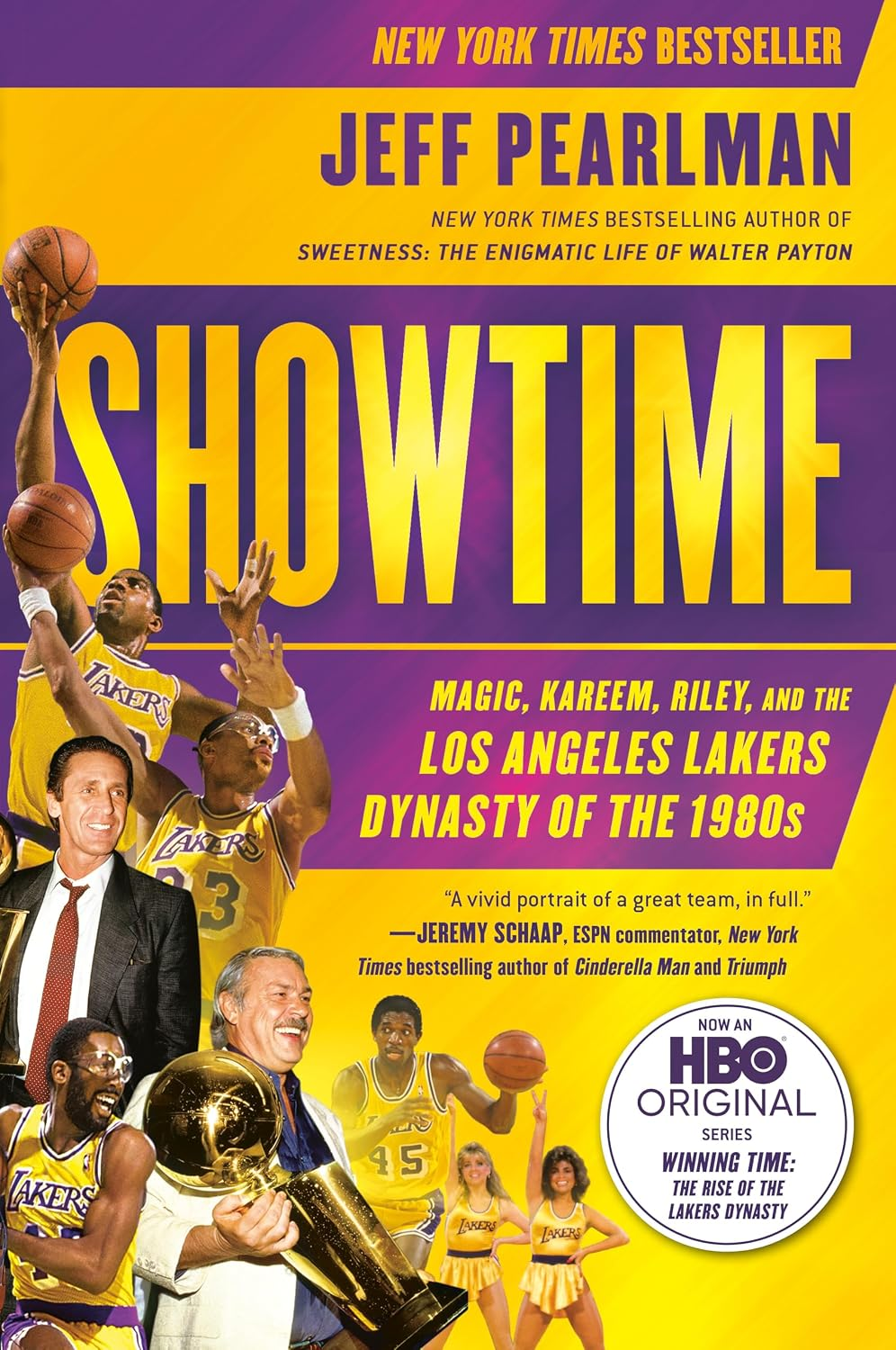
As an Amazon Associate, KMOB1003 may earn from qualifying purchases.
KMOB1003 After the Article
Continue the Signal
One ownership dispute changes a franchise. Here’s where the pattern keeps building.
KMOB1003 Collection
The Global Collection
Move from the ownership story into KMOB1003’s curated world of books, tools, culture and objects selected with intention.
Enter the Collection →
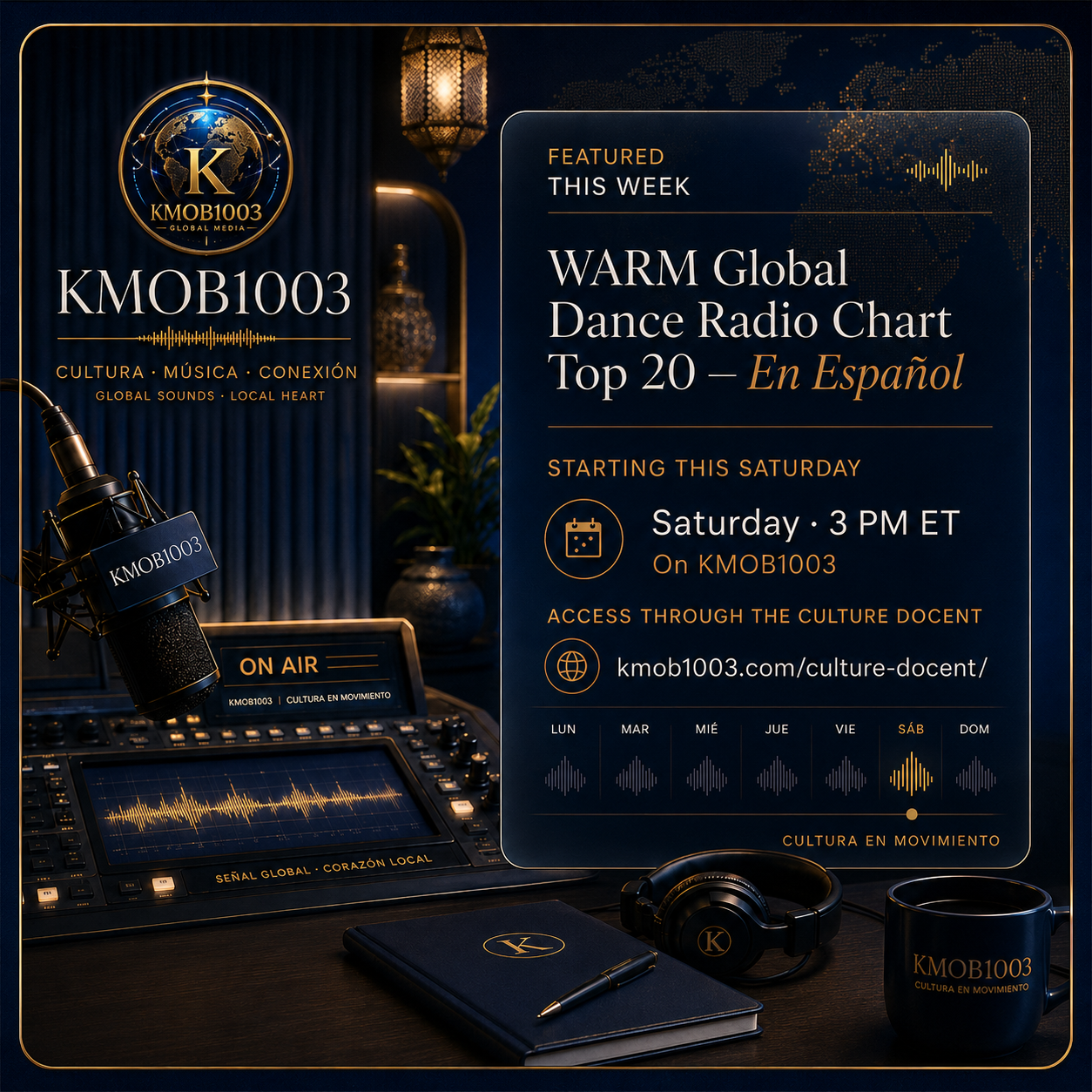
KMOB1003 Culture Docent
Culture Docent
Follow the cultural connections behind the headline through KMOB1003’s guided global intelligence room.
Ask the Docent →
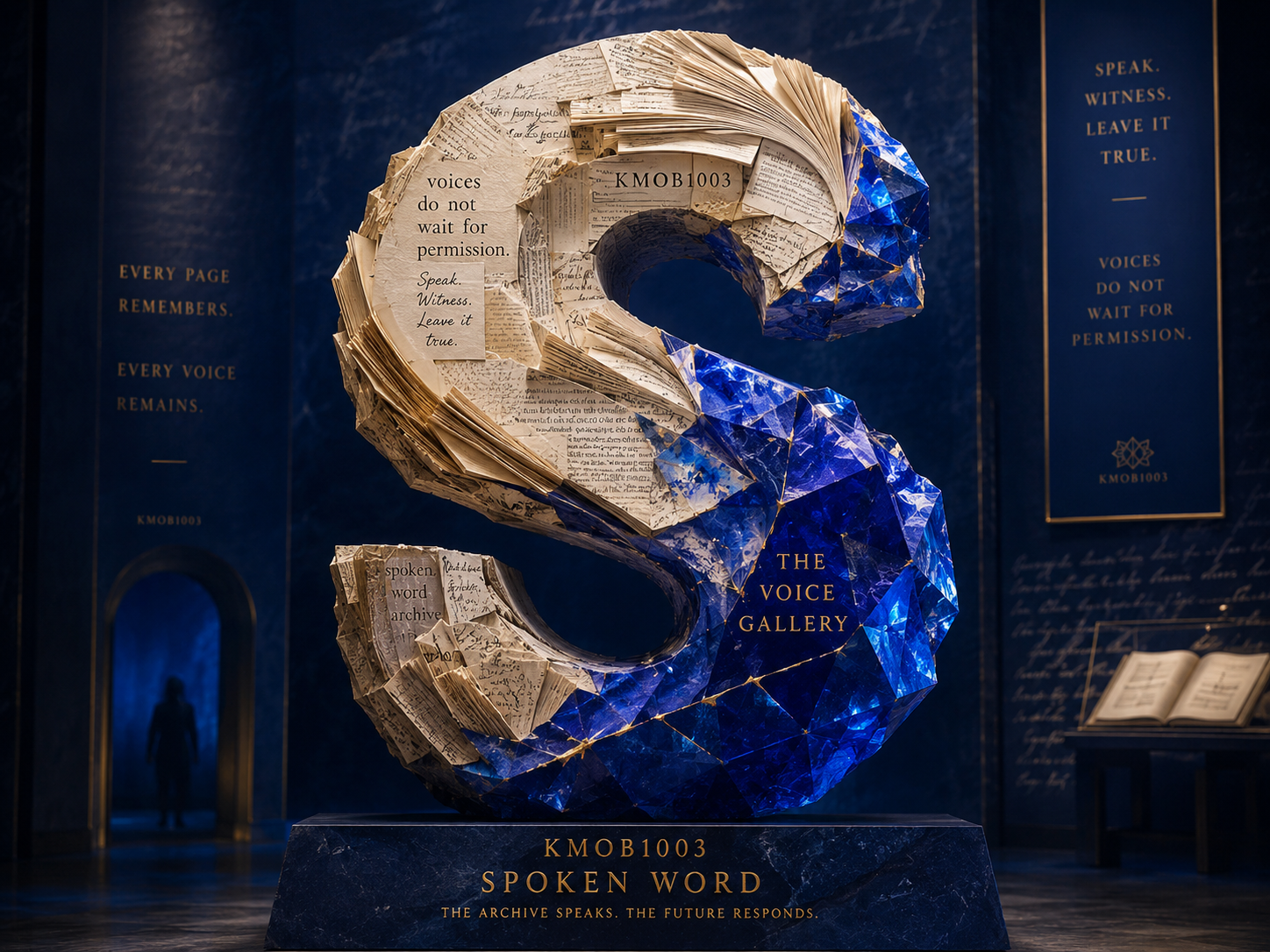
KMOB1003 Spoken Word
The Voice Gallery
Enter an archive where voice, language and performance carry cultural memory beyond the moment.
Enter the Voice Gallery →
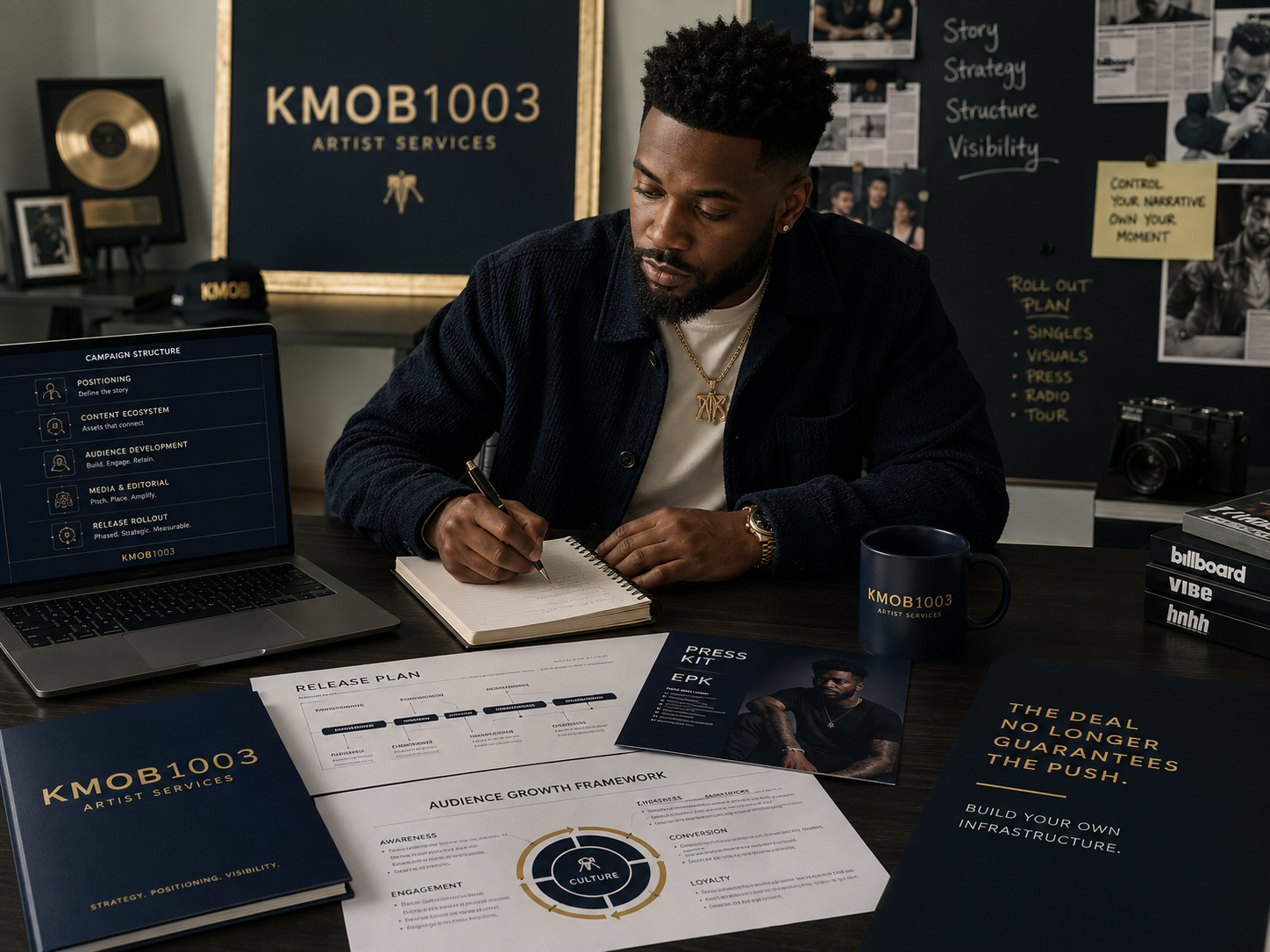
KMOB1003 Artist Services
Artist Services
For artists ready to move from attention into infrastructure, discover KMOB1003’s media, radio and campaign pathways.
Build the Signal →
Global Reach. Powerful Stories. Lasting Impact.
