
He Found 48 of His Songs Inside the Machine
Nashville musician Adam Paddock searched a public database of AI music training data and found 48 of his own recordings listed inside it. The industry is building increasingly sophisticated systems to label what AI creates. It has not built comparable systems to tell artists what already went in.
A song is not only the finished recording a listener hears. It is a lyric sheet, a home-studio session, a hundred hours nobody watched. Before any machine can be labeled for what it produces, a human catalog was already somewhere, entering systems nobody explained to the person who made it.
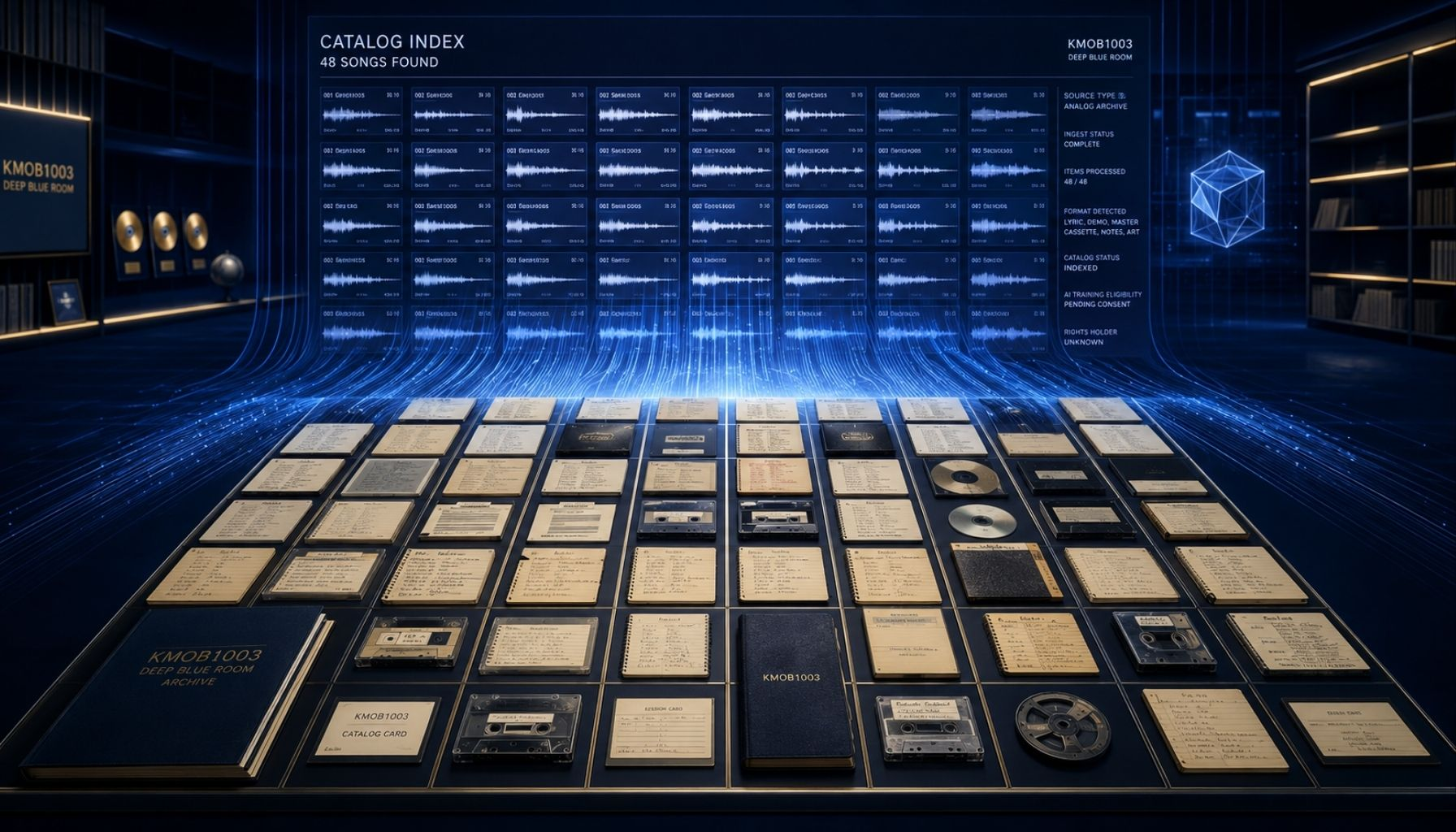
AI music training data became personal for Nashville musician Adam Paddock when he searched a public database and found 48 of his own songs listed across datasets associated with AI development, roughly 71 percent of everything he has recorded. He works a serving job while he builds a music career from a home studio, the kind of work where a single finished song can represent more than 100 hours of writing, arranging, recording and mixing. No company called him. No dataset operator sent a notice. He learned where his catalog had gone the same way anyone else could learn it now: by typing his own name into a search field and waiting to see what came back.
What This Article Is Actually About
This is not an argument against AI music. KMOB1003 uses AI and covers it seriously. It is an examination of a strange moment in music history: the industry is developing increasingly sophisticated ways to tell listeners when artificial intelligence helped make a recording, while some musicians are still discovering, after the fact, that their recordings appeared inside datasets associated with AI development. The transparency conversation may be starting at the wrong end of the song.
Signal One
The Catalog Came First
Decades of human recordings created the cultural archive that modern music technology now learns around and operates within.
Signal Two
The Label Comes Later
The industry is building disclosure systems around AI output while questions surrounding the provenance of training material remain contested.
Signal Three
Licensing Changes the Question
Emerging agreements demonstrate that creator consent and compensation can be designed into AI music infrastructure rather than negotiated only after deployment.
I. He Typed His Name Into the Database
Nashville musician Adam Paddock found 48 of his own songs listed across datasets associated with AI development when he searched The Atlantic’s AI Watchdog tool, according to WSMV, which first reported his search. That is roughly 71 percent of his recorded catalog. Paddock works a serving job while building his music career, recording from a home studio on his own time between shifts. He told WSMV that a single finished song can represent more than 100 hours of direct work, writing, arranging, recording, mixing and revising before it ever reaches a listener.
No company called to tell him where his catalog had turned up, and no dataset operator sent a notice. He learned it the way anyone else could now learn it, by typing his own name into a search field and waiting to see what came back. The labor came first, built one late shift and one home-studio session at a time. The recognition of that labor, if it comes at all, is arriving only after the fact, and only because he went looking for it.
II. What AI Music Training Data Can — and Cannot — Prove
AI music training data can now be searched in a way that felt largely invisible only a year ago. The Atlantic built its AI Watchdog project as a public tool that lets musicians, writers and other creators check whether their work appears inside music training datasets associated with AI development. For Paddock, that search returned a number, 48, that made an abstract industry conversation suddenly specific to his own catalog and his own years of unpaid labor.
The tool also carries a limitation the reporting is careful to preserve, and KMOB1003 preserves it here too. The Atlantic’s own disclosure states plainly that the presence of a work in a dataset is not definitive proof that it was used to train any particular AI model. Dataset visibility is new and genuinely useful to artists. Dataset proof, in the legal sense of establishing that a specific recording trained a specific system, remains a separate and largely unresolved question, one that reporters, lawyers and platforms are still working through case by case.
III. Now the Industry Is Labeling What Comes Out
The music industry, meanwhile, is moving quickly to label what AI produces, even as questions about what trained it remain open. In July 2026, a coalition including the RIAA, IFPI, A2IM, WIN, IMPALA, the Recording Academy, SAG-AFTRA and the Human Artistry Campaign introduced a labeling framework distinguishing AI-Generated recordings from AI-Assisted ones, giving listeners a track-level signal about how a recording was actually made. That is a genuine step toward transparency, and it deserves credit as one.
Spotify has built something related but distinct from that framework. Beginning in mid-September 2026, Spotify plans to display an AI Persona label on artist profiles it determines represent AI-generated identities rather than human performers. Spotify has been explicit that this label concerns the public identity behind an artist profile, not the production process behind any individual recording, and that AI Personas will not appear by default in editorial or algorithmic recommendations unless a listener seeks them out directly. Two different labeling questions, output and identity, are advancing on parallel tracks at once, and it is worth keeping them separate — neither one, on its own, tells a musician what happened earlier, when their recordings first entered AI music training data.
IV. What Should the Input Label Say?
If listeners deserve a label describing how a recording was made, a harder question follows for the people who wrote and performed the material that helped teach these systems in the first place. What should musicians be entitled to know when their recordings surface inside AI music training data, the same way Paddock’s did? Who supplied the source material, and under what authorization did it travel there? Who knew their work had entered that ecosystem, and who, if anyone, was compensated for it?
Did the creator ever have a genuine opportunity to opt in, or an equally genuine opportunity to opt out before the fact rather than after? And once a recording has traveled into training-related infrastructure, can the person who made it actually discover where it went, or does the search itself remain the only available notice. Those are the questions any honest input label would have to answer. Right now, almost none of them have a standard, industry-wide answer at all, which is exactly why one artist’s search of a public database became a story in the first place.
V. Licensing Proves Permission Can Be Designed Into the System
One recent agreement suggests those questions are answerable in practice, not only in theory. On August 12, 2026, BMG announced a global alliance with Suno covering BMG’s recorded and publishing repertoire, with participating artists and songwriters given choice, rights protections and compensation. BMG says the agreement also settles prior use of BMG recordings and publishing works already inside Suno’s systems. The deal does not resolve every historical dispute across the industry, and its terms apply to BMG’s own repertoire, not automatically to catalogs held by other publishers or labels. What it does demonstrate is that consent and compensation can be designed into AI music infrastructure through negotiation, rather than discovered by a musician searching a database after the fact. The real question stops being simply AI or no AI. It becomes whether these systems get built through negotiated relationships with creators, or whether negotiation only arrives once deployment is already complete.
VI. Fifty Percent of the Door Is Already Synthetic
Some numbers from the platforms make the scale of this shift concrete, and also easy to misread if taken at face value. Deezer reported that fully AI-generated tracks exceeded 50 percent of daily new uploads at peak in June 2026, averaging roughly 90,000 AI-generated tracks a day arriving on the platform. But Deezer also reported that those tracks represented only about 1 to 3 percent of actual listening, and the company excludes detected fully AI-generated music from its algorithmic and editorial recommendations entirely. Upload volume is not audience demand, and the two numbers describe genuinely different things. Production abundance does not automatically create artists, audience relationships, memory, identity, trust, culture, community or taste, no matter how fast the catalog of generated material grows. A generated audio file entering a platform catalog is not the same thing as a song entering someone’s actual life — on a playlist, at a show, or in a listener’s memory.
VII. The Artist Should Not Have to Find Himself Afterward
Adam Paddock’s story does not end with Spotify, with Suno, or with a verdict on Silicon Valley, and it should not. What a mature AI music economy should make ordinary is simpler than that: provenance, notice, choice, negotiation, attribution, and compensation where it is genuinely due, so that a human recording moving through a machine system leaves a traceable record behind it rather than a silence. The troubling part of Paddock’s search was never only that he found 48 songs waiting inside a dataset. It is that searching a database, on his own time, was how he learned they were there at all — and that AI music training data still has no standard way of telling an artist that on its own.
KMOB1003 Framework
The Provenance Chain
Source
Whose human work entered the dataset?
Consent
What authorization governed its use?
Value
Who benefited economically?
Disclosure
Can the creator discover where the work went?
Transparency should not begin when a machine releases a song. It should begin with the human work that taught the system what music sounds like.
Signal Breakdown
Signal: The music business is building increasingly formal ways to identify AI-assisted, AI-generated and synthetic music output.
Impact: Those systems can improve listener transparency, but they do not automatically resolve what happened to the human recordings that entered earlier training-related datasets.
Watch: Training-data provenance, creator notification, licensing structures, opt-in and opt-out mechanisms, compensation, platform labels, recommendation treatment, and practical tools artists can use to discover where their work appears.
The Work Needs a Record Before the System Needs a Label.
One article can name the pressure point. The larger KMOB1003 archive follows how ownership, technology, culture and consent shape who gets credited, paid and remembered.
Creator & Institutional Infrastructure
RareVinyl
A Catalog Is More Than Training Material.
Before a recording is a data point, it is a physical object someone chose to own. RareVinyl connects listeners to the pressings, reissues and catalog culture that keep music tangible, collectible and rooted in the people who made it.
Spines
Make Ownership Visible Before the Platform Decides It for You.
Publishing work under a creator’s own name creates a clearer public record of authorship and ownership history. Spines gives musicians, writers and operators a direct path to publishing and provable intellectual property.
Riverside
Keep the Original Human Record.
A documented session creates a contemporaneous record of the creative process. Riverside gives musicians and creators professional recording infrastructure to capture the original human work behind a finished song.
ElevenLabs
Use AI Deliberately. Know What You Are Giving It.
AI-assisted production does not have to mean unaccounted-for material. ElevenLabs gives creators a deliberate way to work with generative voice and audio tools inside their own production process, rather than treating AI as something happening somewhere outside the creative workflow.
Disclosure: KMOB1003 may earn a commission from qualifying purchases through select partner links. Editorial coverage is produced independently.
The Operator’s Bookshelf
KMOB1003 READS

As an Amazon Associate, KMOB1003 may earn from qualifying purchases.
Disclosure: KMOB1003 may earn a commission from qualifying purchases through select partner links. Editorial coverage is produced independently.
KMOB1003 After the Article
Continue the Signal
One dataset search changed one musician’s story. Here’s where the pattern keeps building.
KMOB1003 Artist Services
Build the System Around the Music
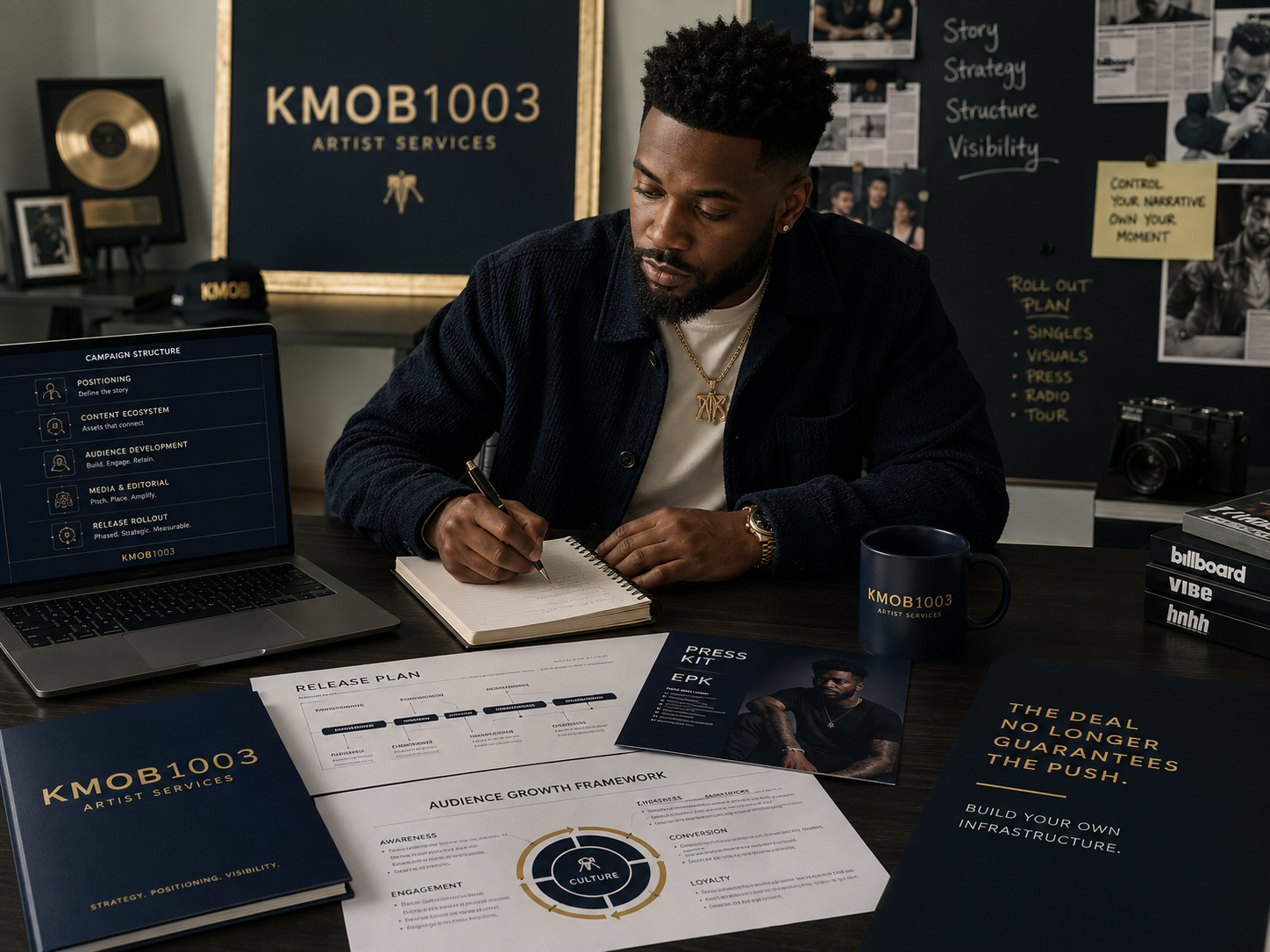
KMOB1003 Artist Services combines broadcast consideration, editorial storytelling, campaign strategy, EPK/media positioning, and artist infrastructure for independent artists ready to move beyond the release link.
Explore Artist Services →

KMOB1003 Spoken Word
The Voice Gallery
Poetry, performance, and living voices worth stopping for. Enter KMOB1003’s spoken-word gallery and hear the work in the room where it belongs.
Enter the Voice Gallery →
KMOB1003 Culture Docent
Global Music. Cultural Context.
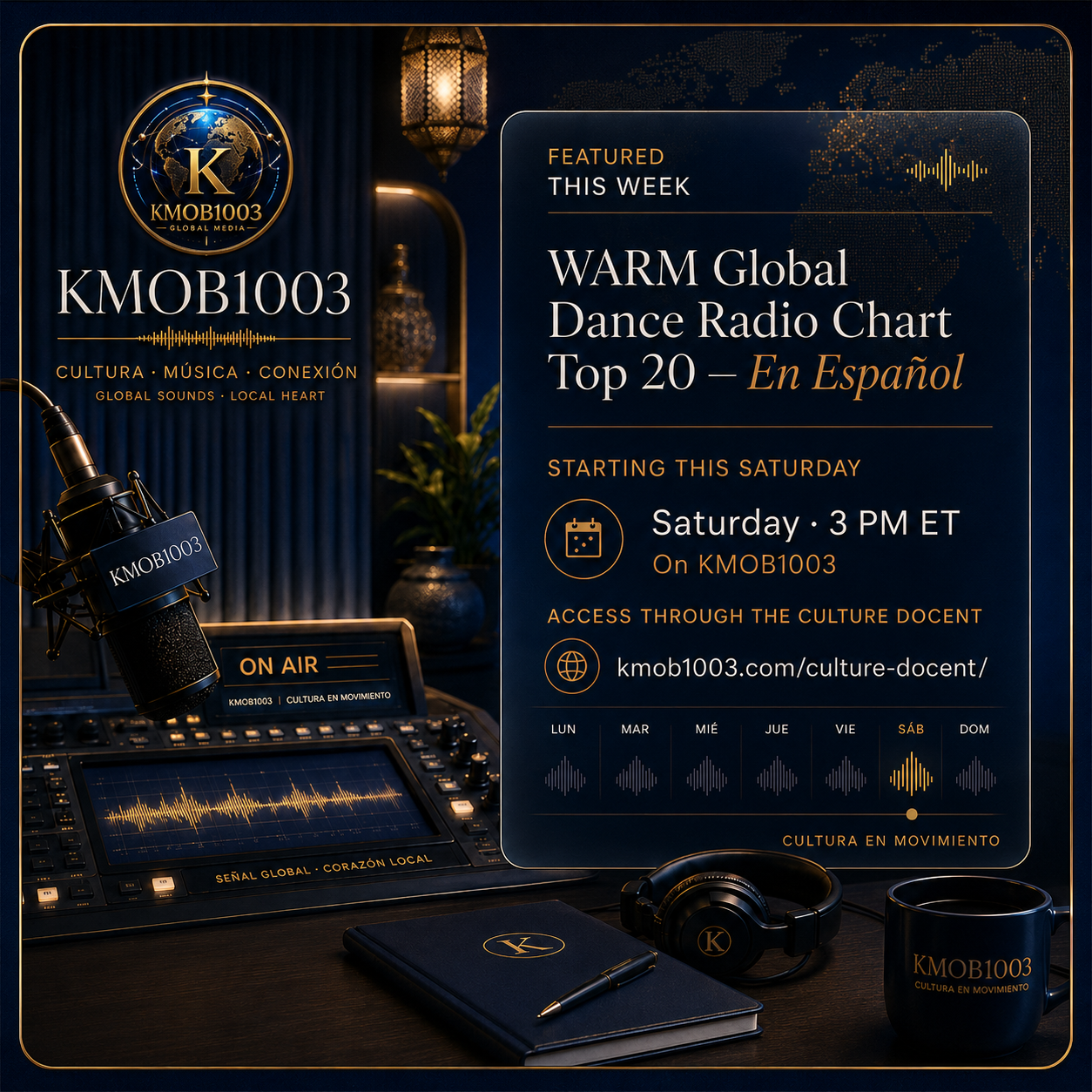
Enter Culture Docent for global music, cultural intelligence, and programming including WARM Global Dance Radio Chart Top 20 — En Español, Saturdays at 3 PM ET on KMOB1003.
Enter Culture Docent →

KMOB1003 Global Collection
Tools, Services & Experiences for How You Build
Shop KMOB1003’s curated edit of creator tools, travel, publishing, business services, privacy, workspace, live culture, books, style, and more.
Shop the Global Collection →
Global Reach. Powerful Stories. Lasting Impact.
