
Global Culture · Football · Legacy & Insights · July 2026
Nico Williams and Lamine Yamal Made Football’s Future Look Bright
Spain lifted the trophy, but Nico Williams and Lamine Yamal gave the tournament something larger: a glimpse of football’s next era—young, fearless, multicultural, and full of joy.
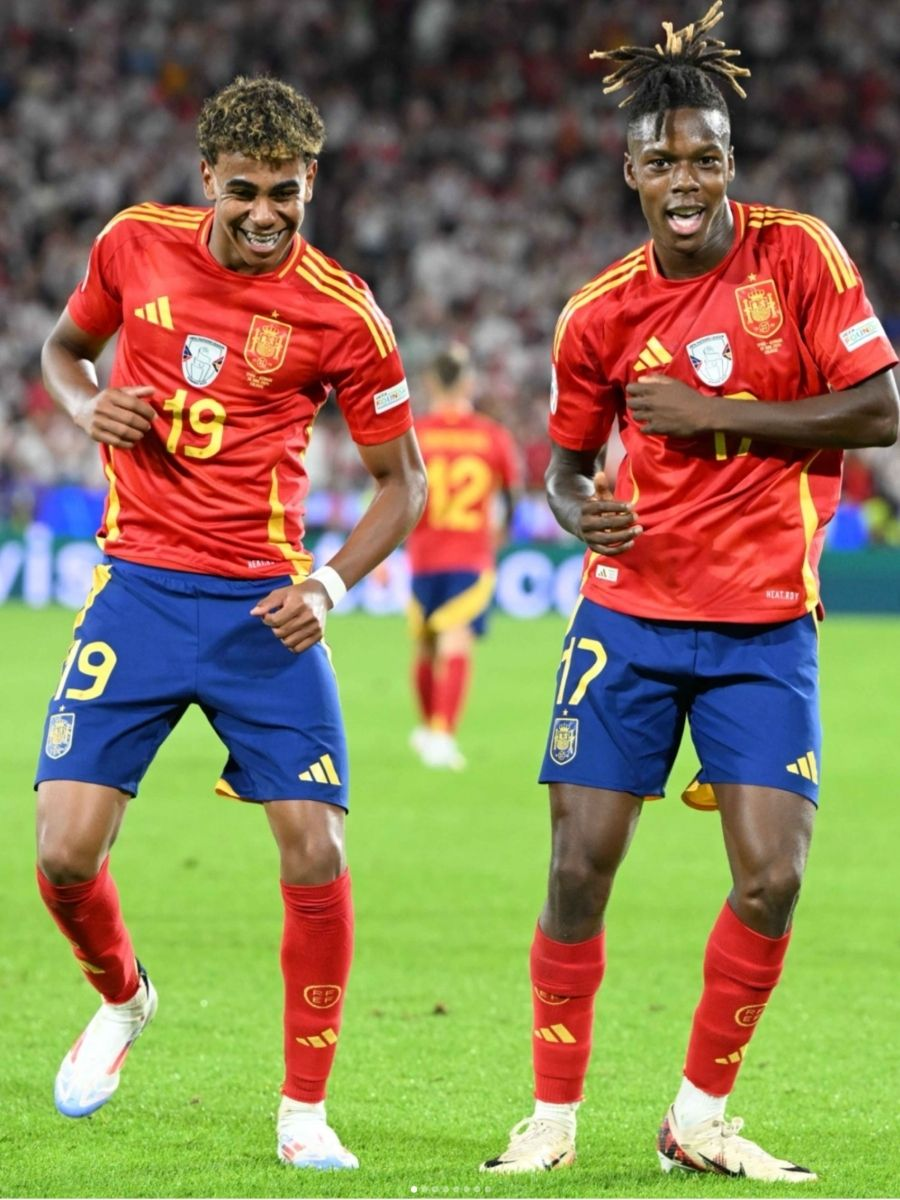
Two different problems arrive at once when Spain attacks. On one flank, Nico Williams is already running full speed at the exact spot a defender least wants him to reach, forcing the back line to widen or get beaten. On the other side, Lamine Yamal is doing almost nothing — holding the ball a beat longer than instinct says is safe, letting a marker commit before punishing the decision. A defense built to stop speed isn’t built to stop patience, and a defense built to stop patience isn’t built to stop a nineteen-year-old running directly at it. Spain’s opponents had to solve both problems at once, for ninety minutes and then some — and neither player ever looked as though the weight of that responsibility had cost him the joy of playing.
The jersey sorts players by country. It was never built to sort a family.
What This Article Is Actually About
This is not only a story about Spain winning. It’s about what Nico Williams and Lamine Yamal showed the world: that youth can look ready rather than unfinished, that flair and responsibility can coexist, and that the multicultural identity already shaping modern national life is not football’s future waiting to happen — it’s already on the pitch, shaping how the winning team played.
Signal One
The Direction
Their pace, vision, and chemistry made Spain’s football feel less like the end of a tournament and more like the beginning of an era. Yahoo Sports on the final.
Signal Two
The Readiness
Both players carried responsibility without losing the freedom, daring, and imagination that made them dangerous. Al Jazeera on Spain’s youth movement.
Signal Three
The Inheritance
Behind the national shirts stood families, neighborhoods, and migration histories that had already crossed borders football later placed beside their names. Yahoo Sports on Rocafonda.
I. More Than a Result
Spain beat Argentina 1-0 in extra time after Nico Williams redirected Pedro Porro’s delivery toward Ferran Torres, who finished the decisive move — Williams had scored himself earlier in the match, ruled out for a teammate’s foul, and shrugged it off well enough to set up the winner minutes later. Lamine Yamal, nineteen, spent the match refusing to be rattled by an Argentina side trying to physically wear him down; a BBC pundit put it simply afterward: “He’s 19 and has completed football.” De la Fuente was more measured but pointed the same direction: the tournament, he said, would “help him mature and be even a greater footballer than he already is.” Both undersell what happened on the pitch — youth stopped being a caveat around the semifinal and started being the story.
II. Nico Williams Opened the Field
Williams plays like a door getting kicked in rather than pushed open. He does not wait for space; he runs directly at the defender least prepared to be beaten and dares them to stop him alone. Introduced as a second-half substitute in the final, he needed one meaningful touch to change the outcome of a World Cup — reading Pedro Porro’s cross, beating Nahuel Molina to the header, and placing it into exactly the space Torres needed. That is not raw speed. That is a player who has already decided where the ball is going before his marker has finished reacting to where it currently is. What he did afterward says just as much. Minutes after the final whistle, Williams dedicated the trophy to Neymar, a player who has reached four World Cups and never won one. “I idolise Neymar,” Williams said. “I hope he’s watching us, this is also for him.” Not the manager. Not himself.
III. Lamine Yamal Saw the Next Pass Early
Yamal operates on a different clock than everyone else on the pitch. Criticized mid-tournament for a modest goal tally, he answered the question before anyone finished asking it: “If we win the World Cup, I think nobody will remember how many goals I scored… I know that with my movement, I draw a lot of opponents away; I can create space for a teammate.” That is exactly what the final looked like — beating two defenders inside his own half, holding the ball at the byline a half-second longer than instinct says is safe, because his instinct has already priced in what that extra half-second buys his teammates. Composure, at nineteen, under a defense trying to provoke him into a mistake it never got.
IV. The Chemistry Was the Signal
Their chemistry shows up in the shape of the attack more than in any single pass between them. Williams pins a fullback and forces cover to rotate wide; Yamal, often on the opposite side, reads what that rotation opens through the half-space. Neither needs every attack to run through him for both to shape the match — a trust that’s public as well as tactical. Williams called Yamal “the best player in the world” ahead of the semifinal — not “one of,” the best, ranking his close friend above Mbappé without hesitation. That’s confidence between teammates, not a scouting report. The decisive goal came through a different sequence — Porro’s delivery, Williams’ redirection, and Torres’ finish. The truer claim: across seven matches, their opposite-side pressure helped Spain’s attack function as a system, whether or not either touched the ball on any given goal.
V. Their Families Crossed the Borders First
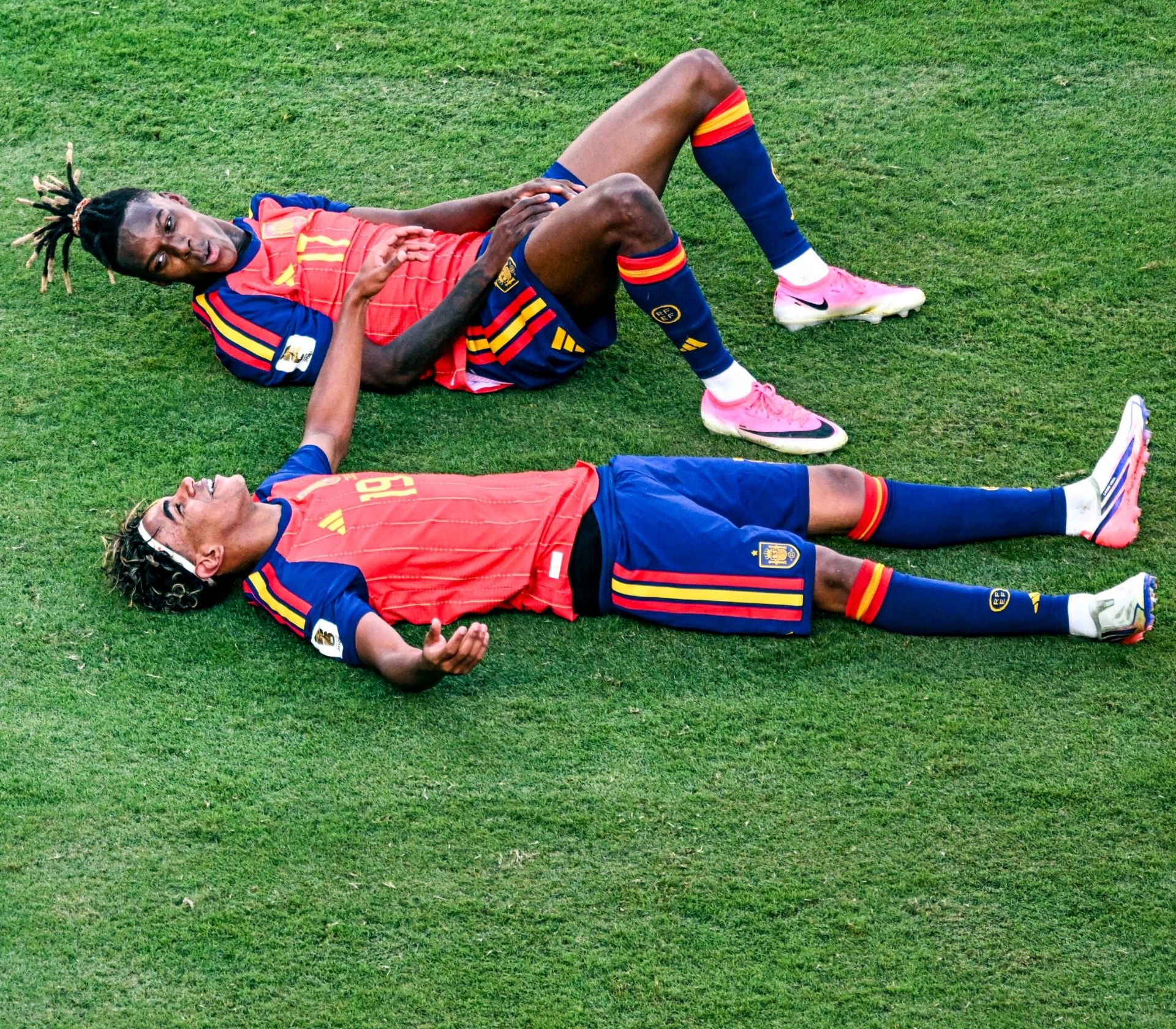
Both of them carried something older than the tournament onto that pitch. Yamal grew up mostly in Rocafonda, a concrete-block neighborhood in Mataró built by generations of Moroccan and West African families, his father from Morocco, his mother from Equatorial Guinea; his goal celebration — two hands forming “304,” his neighborhood’s postal code — is not a brand, it’s an address. Williams’ parents are reported to have crossed roughly two thousand miles of the Sahara on foot from Ghana, his mother said to have been pregnant with his brother Iñaki at the time, before a lawyer in Melilla advised them to seek asylum — an account the family has given in multiple interviews. Iñaki was born in Bilbao and plays for Ghana; Nico, born in the same city eight years later, plays for Spain. Their father is reported to have spent close to a decade working turnstiles at a London stadium so the family could stay together in the Basque Country. Their greatness did not make their families worthy. Their families were already worthy.
VI. What Does a National Shirt Hold?
So what does the shirt actually hold, when the life underneath was never contained by one country to begin with? Yamal has said he’ll always carry love for Morocco despite choosing Spain’s colors. Williams once said, ahead of the 2022 tournament, that he hoped Spain would draw Ghana just so he could compete against his own brother — the way they used to in the street. Neither man had to resolve which country deserved the loyalty, because both answers were already true before either put on a national shirt for the first time. The jersey sorts players by country. It was never built to sort a family, or a childhood, or which language your grandmother spoke.
VII. Football’s Future Is Multicultural Because Its Present Already Is
None of this is football’s future arriving early. It’s football’s present, visible now at a scale nobody could look away from. Spain’s own squad — Cubarsí, Williams, Yamal — was assembled from families whose lives had already crossed borders long before a federation came calling, the same way youth academies across Europe have quietly drawn from migrant neighborhoods for two decades without anyone treating it as news. Rocafonda didn’t need this tournament to exist; it needed this tournament to notice. The multicultural roster people keep calling a preview of what’s coming has been building the sport for years; in New Jersey, the whole world finally had to see it.
KMOB1003 Framework
What Nico and Lamine Changed
The Width
Nico forced defenders backward and widened the spaces Spain could attack.
The Pause
Lamine held possession long enough to make defenders reveal their decisions.
The Trust
Neither player needed every attack to pass through him for both to influence the match.
The Joy
Responsibility did not make their football cautious, joyless, or afraid.
Nico Williams and Lamine Yamal made the future look bright because one expanded the field, the other expanded its possibilities, and neither lost his joy while carrying the weight of the moment.
VIII. The Game Is in Good Hands
That’s why the sport feels like it’s in good hands — not because two young players won a trophy, but because of how visibly they meant it. Williams spent his biggest night thinking about a man who never got one. Yamal played a final designed to make it look easy rather than merely survive it. Football doesn’t need to guess what its next era looks like. It already watched it happen, in extra time, on a Sunday in July.
Signal Breakdown
Nico Williams and Lamine Yamal did not make football’s future look bright because they were young. They made it look bright because youth did not limit their responsibility, multicultural identity did not weaken their belonging, and joy did not diminish their seriousness.
Creator Infrastructure
Capture the Match. Preserve the Memory. Let the Story Travel.
Record the Human Story
Riverside
Capture high-quality remote conversations with players, families, supporters, journalists, and community voices whose experiences extend beyond the final whistle.
Build the Visual Archive
CapCut
Shape stadium footage, match reactions, family photographs, neighborhood scenes, and cultural moments into clear short-form stories built for mobile audiences.
Let the Story Cross Languages
ElevenLabs
Create clearly disclosed multilingual narration that helps global reporting travel across languages and formats while keeping authentic interviews and human testimony at the center.
The Operator’s Bookshelf
KMOB1003 READS
As an Amazon Associate, KMOB1003 may earn from qualifying purchases.
Disclosure: KMOB1003 may earn a commission from qualifying purchases through select partner links. Editorial coverage is produced independently.
KMOB1003 After the Article
The Culture Traveled Too
One match is a signal. Here’s where the pattern keeps building.
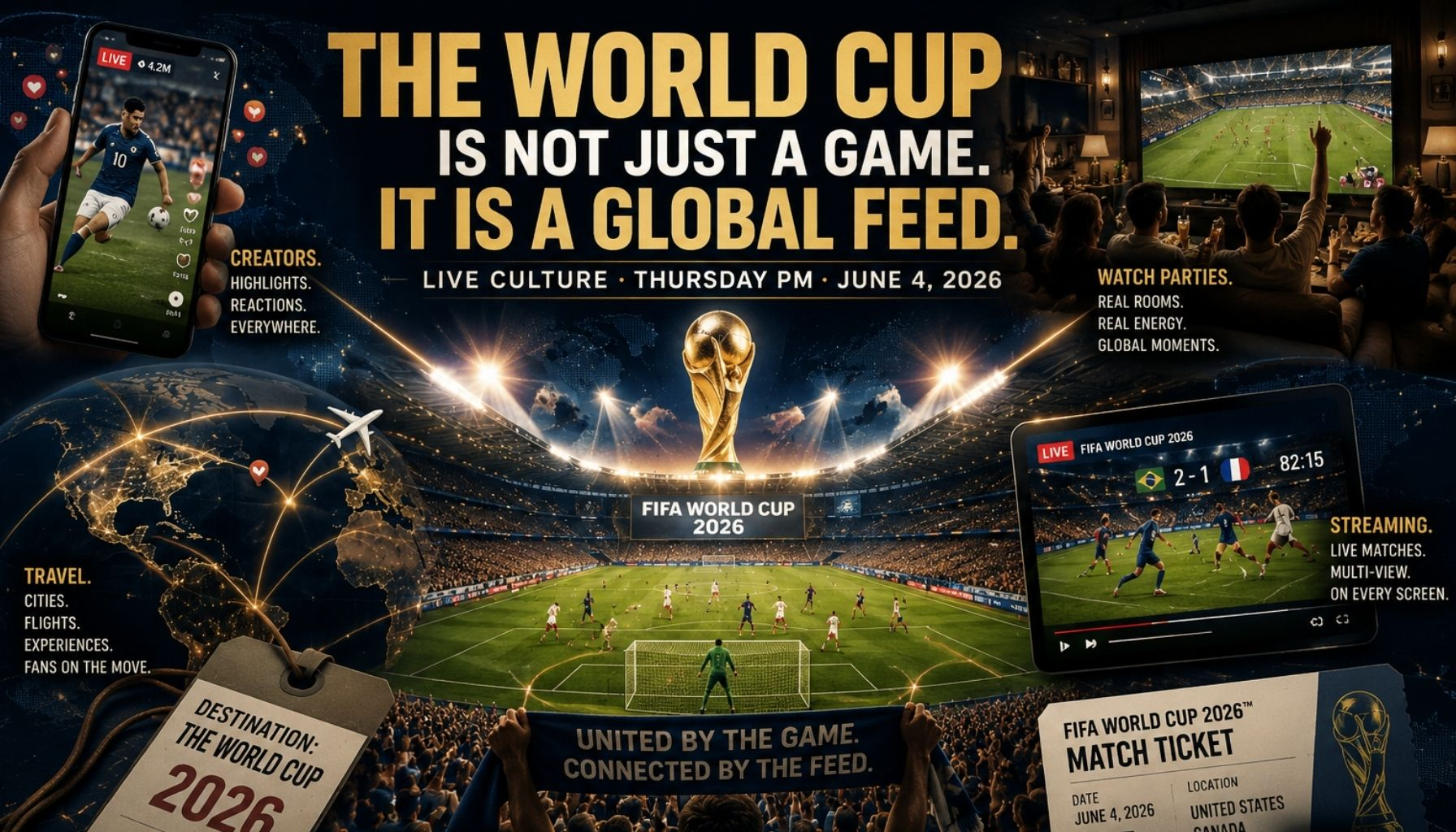
The Match Ended. The Signal Kept Moving.
The World Cup Is Not Just a Game. It Is a Global Feed.
The World Cup travels beyond the stadium through clips, creators, watch parties, travel, commentary, and shared memory. See how the tournament became a global media system before Nico Williams and Lamine Yamal became two of its defining signals.
Follow the Global Feed →
One Story Is a Signal. The Archive Shows the Pattern.
Legacy & Insights
Enter KMOB1003’s editorial archive for deeper analysis of the systems shaping culture, leadership, technology, sports, and public life.
Enter the Archive →

The Culture Traveled Too
RareVinyl
Explore rare records and global music that preserve the sounds, movements, and cultural histories communities carry across generations and borders.
Explore the Global Sound →

Keep Learning Beyond the Final Whistle
Audible
Explore audiobooks on football, tactics, migration, global culture, leadership, and the family histories carried into the world’s largest sporting moments.
Listen and Go Deeper →
Global Reach. Powerful Stories. Lasting Impact.
