KMOB1003
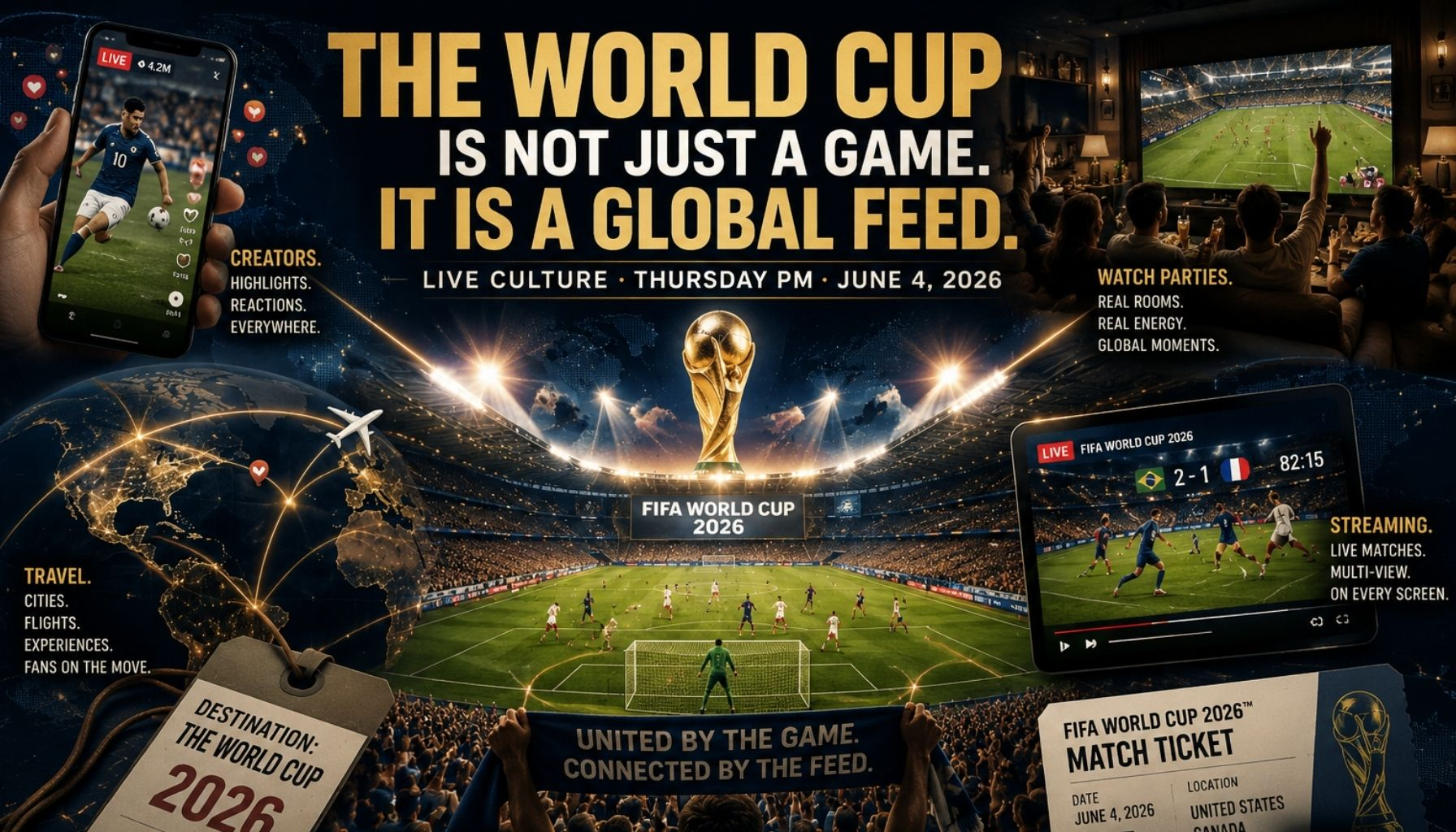
KMOB1003 Global · Live Culture · Thursday PM · June 4, 2026
The World Cup is no longer only a tournament. It is a global attention system moving through travel, creators, streaming, watch parties, and live rooms.
The match is still the center. But the feed is now part of the stadium.
FIFA World Cup 2026 spans 48 teams, 104 fixtures, and 16 host cities across Canada, Mexico, and the United States — the largest edition in the tournament’s history. The scale of the event is significant. But the scale of the feed around it is larger still. Before a single match kicks off, the World Cup is already moving through phones, hotel lobbies, airport lounges, group chats, short-form video, creator commentary, brand activations, and local rooms on six continents. That movement is not peripheral to the tournament. It is part of the tournament.
What This Article Is Actually About
Why the World Cup functions as a global media feed — not just a sporting event — and what that means for creators, media operators, travel planners, brands, and anyone building audience infrastructure around live culture. The match creates the center. The feed is where the value moves.
Layer One
The Match
Creates the center. The fixed moment every other layer references, reacts to, and moves through.
Layer Two
The Clip
Creates the replay. Short-form video turns live moments into shareable social memory within seconds.
Layer Three
The Creator
Creates the interpretation. Commentary, reaction, analysis, and fan narrative build the cultural layer around the result.
Layer Four
The Room
Creates the memory. Watch parties, sports bars, hotel lobbies, fan zones, and live gatherings turn viewing into shared experience.
Layer Five
The Traveler
Creates the movement. Flights, hotels, host cities, fan itineraries, and cross-border travel build the physical feed around the tournament.
Layer Six
The Platform
Creates the feed. Streaming access, social distribution, broadcast rights, and regional platforms determine who sees what, when, and how.
The World Cup now moves through all six. — KMOB1003 Global Media · June 2026
The World Cup used to be understood as a tournament that lived on broadcast television and in stadiums. Those remain central. But the perimeter of the event has expanded beyond any single screen or venue. The 2026 tournament crosses three countries and 16 host cities, which means the geographic and cultural footprint of the event is unlike anything a single broadcaster or platform can fully contain. The match creates the center. Everything else — the travel, the commentary, the parties, the clips, the social video, the rooms — creates the feed around it.
That feed is not secondary. For a significant portion of the global audience, the feed is how the World Cup is experienced. A fan in Lagos, Seoul, or São Paulo may never enter a stadium. But they will watch on a streaming platform, follow creator commentary, join a watch party, share clips, and participate in the cultural conversation in real time. That participation is not a lesser version of attending. It is a different layer of the same global event.
“A live event no longer ends at the whistle. It becomes clips, rooms, travel, commentary, memory, and movement.”
— KMOB1003 Global Media · Live Culture · June 2026
The 2026 World Cup will generate more short-form creator content than any previous edition. That is not a prediction — it is a structural certainty given where creator infrastructure now sits relative to where it was in 2022. The tools available for filming, editing, packaging, and distributing a reaction clip in under three minutes have improved significantly. The audiences for creator commentary on sports culture have grown. And the platforms that distribute short-form video have built specific surfaces for live event content.
What that means for media operators is that the creator layer is no longer a side channel running alongside the official broadcast. It is part of how the tournament is narrated in real time. A creator who edits a thirty-second clip of a key moment and posts it within minutes of the final whistle is not competing with the broadcast. They are extending it — adding interpretation, language, cultural context, and audience specificity that no single broadcaster can provide at scale across 48 national fan bases simultaneously.
Travel Layer · Stay Where the Signal Travels
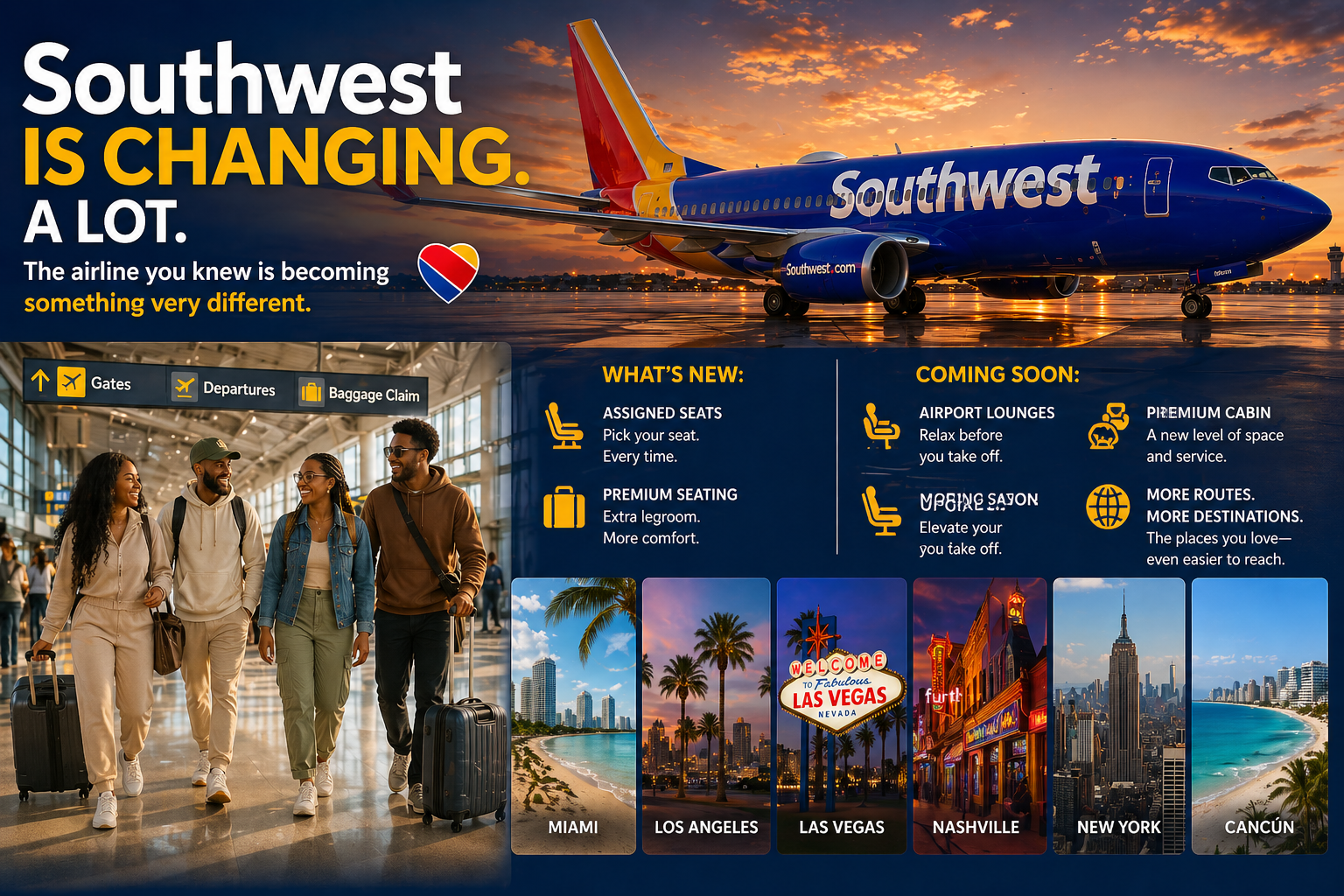
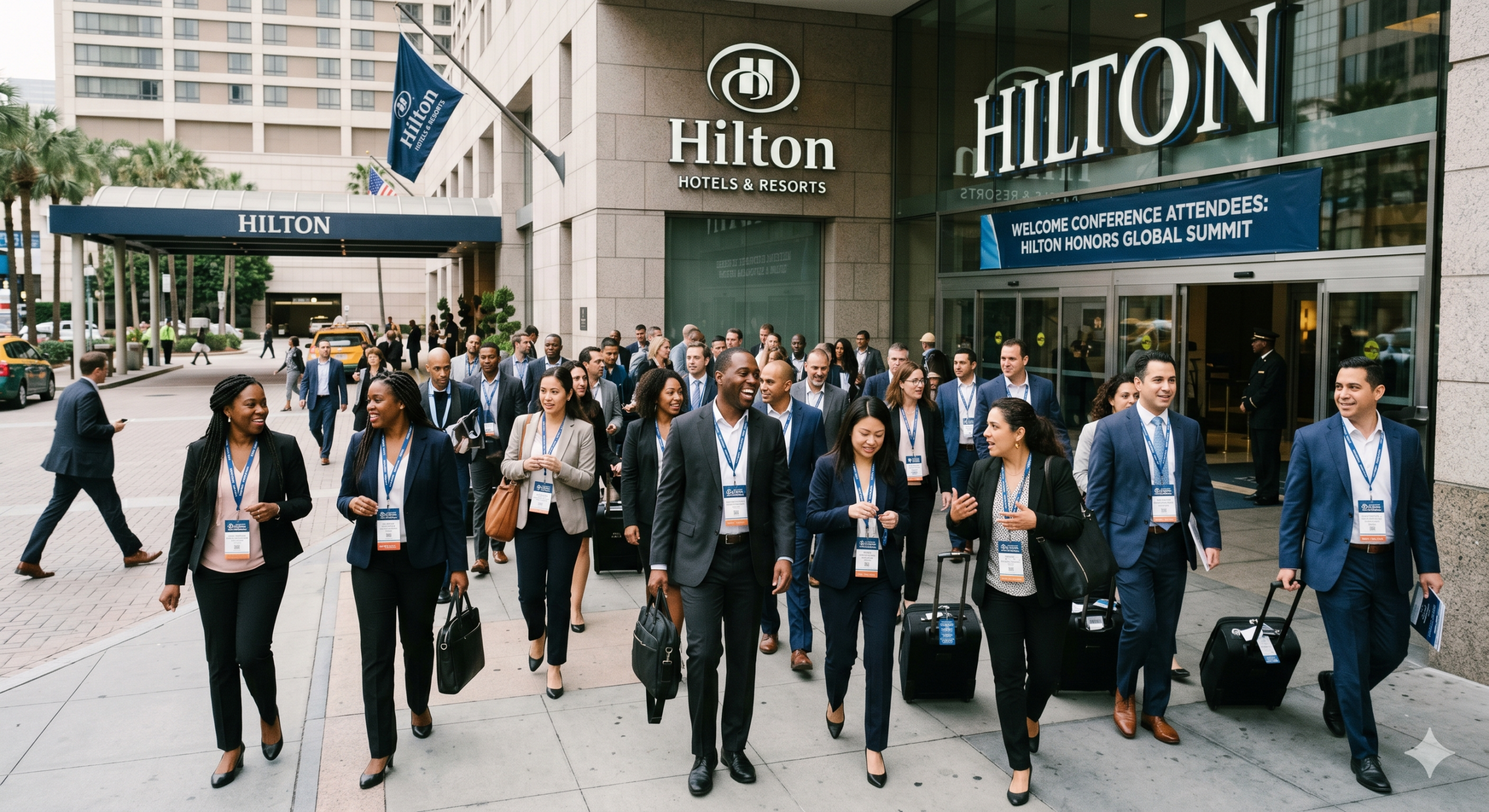
The World Cup moves through 16 host cities. The fans, creators, and operators moving with it need a travel and stay layer that matches the scale of the moment. Whether you are heading to a match weekend, a watch-party city, or building the itinerary around the tournament, these are the travel partners KMOB1003 routes through.
One of the underreported dimensions of a World Cup held across North America is the watch-party economy it generates in cities far from the host venues. A fan in Chicago, Atlanta, or Montréal who cannot attend a match in Dallas or Los Angeles does not disengage from the tournament. They find a room. A sports bar with the right stream. A rooftop with the right crowd. A hotel lobby running the match on a large screen. A neighborhood gathering built around a national team. These rooms are not overflow accommodations for the real event. They are part of the event’s cultural footprint — and they generate real commerce around travel, food, presence, and local movement.
For media operators, the room layer is a behavioral signal. The fan who enters a watch-party room is demonstrating a level of intent that passive streaming cannot measure. They made a plan. They traveled to a location. They chose to experience the match in a social context. That behavior reveals how much the tournament matters to them — and it opens a different set of commercial opportunities than the fan who watches alone on a phone. The brands and operators who understand the room layer will position differently than those who only think about broadcast reach.
Live Culture · Ticket Desk · Enter the Room
The World Cup is the center. But the rooms around it — concerts, live events, watch parties, cultural moments, and the events that build up the weekend — are also worth entering. The KMOB1003 Ticket Desk routes through Ticketmaster and StubHub for live access across sports, music, comedy, and culture.
The global fan does not enter the World Cup through one channel. Access to the tournament depends on platform, language, region, time zone, broadcaster, and device — and the experience varies significantly depending on which combination applies to any given viewer. A fan watching in the United Kingdom encounters a different broadcast infrastructure than a fan watching in Brazil, Japan, or Nigeria. The rights landscape is fragmented by design, and navigating it is part of the modern live-sports experience for hundreds of millions of people simultaneously.
What that fragmentation creates, from a media-operator perspective, is a demand signal for access intelligence. Which platform carries the match in which market? What time does a 3pm Eastern kickoff land in Tokyo? Where can a fan outside a broadcast territory find legal streaming access? These are not edge-case questions — they are the questions a global audience asks in real time, and the media operators who answer them clearly build trust with an audience that spans every time zone the tournament touches.
The World Cup is not just a game watched on one screen. It is a global media feed moving through travel, watch parties, creator commentary, short-form clips, streaming access, group chats, live rooms, brand rituals, and city movement. The match is still the center. The feed is now part of the stadium.
The brand question during a World Cup has historically been: where does the logo appear? On the broadcast. On the stadium perimeter. On the official sponsor activation. Those placements remain valuable. But the more instructive question for the next generation of media operators and brand partners is: where does the fan move after the signal appears? What did they click? What did they search? What room did they enter? What did they book? What did they share? What did they buy? The World Cup generates billions of downstream behavioral signals — and the brands that understand how to read them will build differently than the ones still counting impressions.
KMOB1003 reads the World Cup from the media-operator side — not as a sports preview, but as a global attention system with commercial, cultural, and behavioral layers that extend well beyond the ninety minutes of a match. The tournament moves through 16 host cities and 48 national fan bases. It generates travel, accommodation, streaming, creator content, watch parties, live events, brand activations, social video, and shared memory on a scale that only happens every four years. Serious media operators do not wait for the recap. They read the feed while it is moving.
The World Cup is not just a game. It is a global feed — and the rooms around the match are where the real cultural and commercial movement happens. Build the infrastructure to read it before the whistle blows.
Listening Layer · Global Sports Culture · Audible
The World Cup generates stories that last longer than the tournament. Athlete memoirs, global soccer culture, travel narratives, fandom, identity, and the business of sport — the listening layer is where those stories live between matches. Audible carries the archive.
Some links in this article are affiliate links. KMOB1003 may earn a commission from qualifying purchases at no additional cost to you. All affiliate partnerships are editorially independent.
