KMOB1003

KMOB1003 Global · Media Infrastructure · Thursday AM · June 4, 2026
Placement is inventory. Audience behavior is evidence. The next media deal measures both.
Inside the Bloomberg Tech conversation this week, the question underneath the panels was not only what technology can do next. It was what technology can understand next.
At Bloomberg Tech San Francisco 2026, the room brought together global C-suite technology leaders across AI, product strategy, capital, consumer technology, and platform intelligence. The conversation was not only about what the next tools can do. It was about what they can read — context, preference, behavior, and the signals audiences leave behind when they encounter a product, a platform, or a piece of content. That shift from capability to comprehension is the one every serious media operator needs to be watching.
What This Article Is Actually About
Why the media industry is moving from placement logic to behavior logic — and what that means for creators, publishers, brands, affiliates, and every operator building an audience-facing business. The deal is not the placement. The deal is what the audience does after the signal appears.
Layer One
Visibility
Tells you where the signal appeared. Logo placement, impression count, reach. Inventory thinking.
Layer Two
Attention
Tells you whether the room noticed. Time on page, watch time, open rate. Signal thinking.
Layer Three
Behavior
Tells you whether the room moved. Clicks, saves, sends, searches, returns. Evidence thinking.
Layer Four
Trust
Tells you whether the room will return. Subscription, referral, repeat action. Infrastructure thinking.
The next media deal has to measure all four. — KMOB1003 Global Media · June 2026
Bloomberg Tech San Francisco brought AI, product leadership, capital, and platform intelligence into the same room for two days. The conversations happening inside that space are not theoretical. They are operational. The leaders asking the questions are not asking what technology can do in three years. They are asking what it can understand today — about audience behavior, about content discovery, about the gap between what a platform surfaces and what a viewer actually wants to find.
KMOB1003 is watching that conversation from the media-operator side. Not because Bloomberg Tech is a culture story. Because the questions being asked at the C-suite level are the same questions every publisher, creator, affiliate operator, and media infrastructure company needs to answer at their own scale. What does the audience do after the signal appears? What does the behavior reveal about intent? What is the platform actually reading when it decides what to show next?
“The question is no longer what technology can do next. It is what technology can understand next.”
— KMOB1003 Global Media · Media Infrastructure · June 2026
Netflix Chief Product and Technology Officer Elizabeth Stone spoke at Bloomberg Tech on June 3 about where the platform is heading. The direction is not simply adding more content. Netflix is trying to solve something more difficult: the problem of too much. When a subscriber opens the platform, the experience of choosing has become work. The catalog is enormous. The right thing for this mood, this moment, this person is buried inside thousands of options that may or may not fit.
The solution Netflix is building is behavioral. Expanded generative AI capabilities. More personalized discovery. Natural-language and voice interface testing. Viewer preference signals. Trend context. The platform is trying to understand what the subscriber wants before they can fully articulate it — and to reduce the friction of choice by reading behavior rather than only cataloging content. That is the shift from library thinking to behavior-reading infrastructure.
Netflix is not organizing a catalog. It is building a system that reads mood, moment, history, trend, and preference — and surfaces the right thing before the viewer has to search. Every serious media platform is heading in the same direction.
The Netflix direction is not unique to Netflix. It is where every mature content platform arrives when the inventory problem is solved and the discovery problem remains. Spotify did it with listening behavior. YouTube did it with watch patterns. TikTok did it with scroll signals. The feed that feels like intuition is actually the result of reading millions of micro-behaviors — pauses, replays, skips, shares, searches, returns — and weighting them against context, trend, and preference history.
The same logic applies at every scale. A newsletter platform reads open rates and click maps. A podcast network reads completion rates and drop-off moments. A creator reads which clips travel, which headlines stop the scroll, and which calls to action generate return visits versus one-time clicks. A media infrastructure company reads which signal formats create audience behavior versus which ones generate impressions with no downstream movement. The platform is just running the same analysis at greater volume and speed.
Operator Intelligence · Map the Pattern Before It Trends
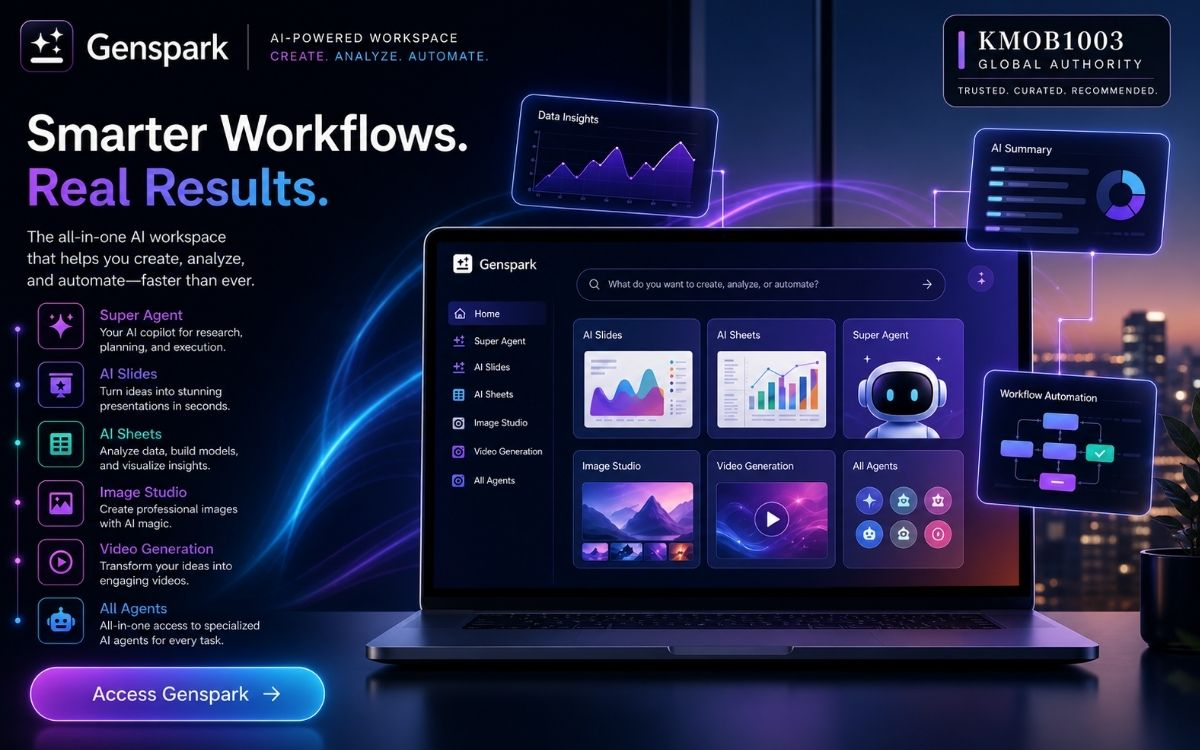
The behavior shift is happening across platforms, content formats, creator categories, and partner ecosystems simultaneously. Genspark gives media operators the research and pattern-recognition layer to find signal before it becomes consensus — and to map what the audience is already doing before the platform names it as a trend.
For years, media deals were built on placement language. Where the logo appears. How large the audience is. How prominent the slot looks. How many people might see the mention. That logic made sense when media was broadcast — when the only measurable output was reach and frequency. But the audience infrastructure that exists now reads far more than reach. It reads what the audience does next.
Did the audience stop? Did they save? Did they send? Did they search? Did they return? Did they click? Did they trust the source enough to act later? Did the placement reveal intent, or only exposure? These are not the same question as how many people saw the logo. And increasingly, the brands, partners, and platforms that understand the difference are the ones setting the terms of the next deal — not the ones still counting impressions.
Operations Infrastructure · Track the Relationship After the Click
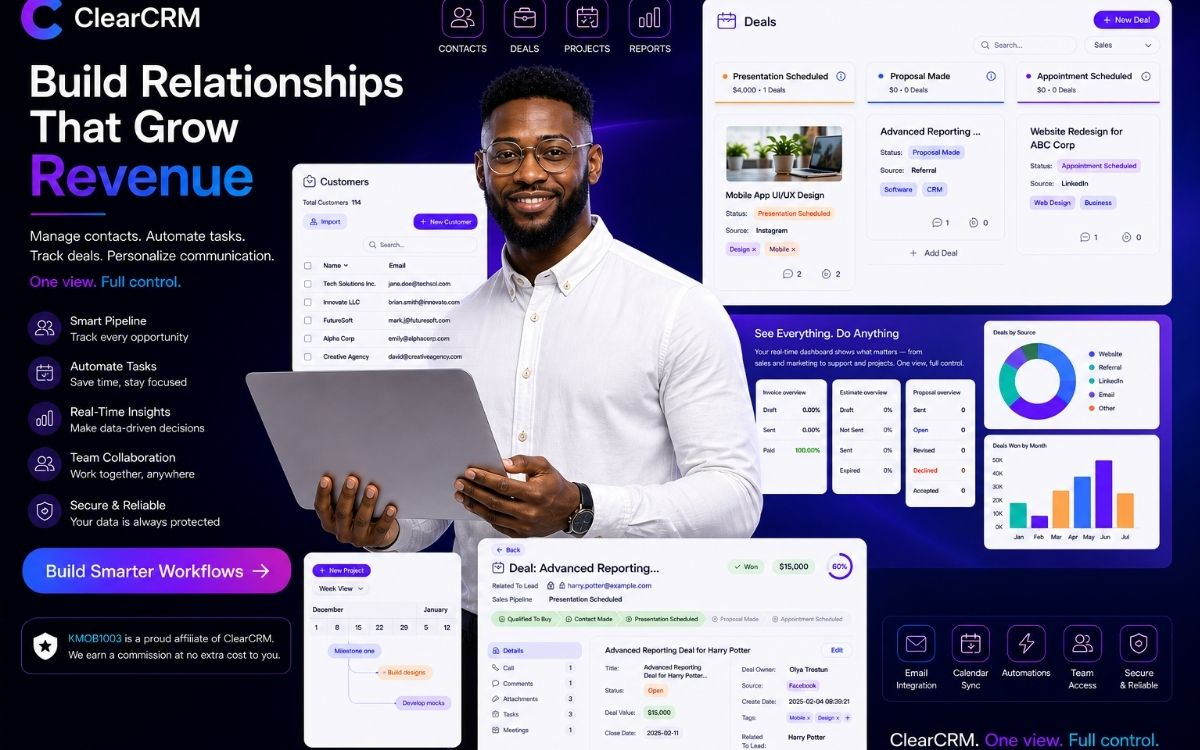
Audience behavior starts showing intent long before a conversation happens. ClearCRM gives creators, media operators, consultants, and agencies the infrastructure to track leads, follow-up, conversations, and relationship movement — so the behavior signal that the content creates does not disappear into a DM thread or a forgotten inbox thread.
KMOB1003 operates across culture, media, radio, creator tools, live events, product signals, and owned distribution in more than 50 countries. The behavior question is not abstract here. It shows up in which content formats create downstream movement versus which ones generate surface-level visibility with no follow-through. It shows up in which partner pathways match reader intent versus which ones sit in a sidebar without earning deeper movement. It shows up in which placements were chosen for convenience versus which ones were chosen because the reader was already moving in that direction.
The next serious media companies will not just promise visibility. They will understand movement. They will know what the audience does after the signal appears, which signals created trust, which placements revealed intent, and which rooms the audience returned to. That understanding is the architecture of the next partnership — not the logo placement, not the impression count, not the reach estimate that cannot be connected to a single downstream action.
What brands should be asking now: What did the audience do? What signal did the audience give? What kind of room did the placement open? Did it create memory, trust, or return? What media operators should be building: source discipline, audience-behavior tracking, partner routing by reader intent, clean affiliate architecture, a follow-up layer, and a research layer that finds the pattern before the platform names the trend. The conversation at Bloomberg Tech this week was about where technology is going. The more important conversation for media operators is where the audience is already moving — and whether the infrastructure is in place to read it.
A placement is inventory. Behavior is evidence. The deal is not where the signal appeared. The deal is what the audience did after it appeared — and whether the operator had the infrastructure to see it, follow it, and build from it.
Understanding behavior requires infrastructure for reading and focused listening — the research layer and the pattern-recognition layer that media operators build before the next signal shows up. These are the tools that support that kind of sustained attention.

Kindle Paperwhite 16GB — Newest Model
7″ glare-free display, 20% faster, weeks of battery life. The reading layer that builds the pattern-recognition layer.

OneOdio Studio Monitor Headphones
Wired over-ear, 50mm neodymium drivers, 1/4 to 3.5mm jack. Focused listening for the operator building the behavior layer.
Some links in this article are affiliate links. KMOB1003 may earn a commission from qualifying purchases at no additional cost to you. All affiliate partnerships are editorially independent.
