
AI · Infrastructure · Energy Policy · Operator Intelligence · July 2026
The Cloud Has a Utility Bill. Communities Are Refusing to Pay It.
New York’s statewide pause on large new data centers is not a rejection of artificial intelligence. It is the clearest sign yet that communities are challenging an AI economy built on public infrastructure, private incentives, and costs that too often arrive on somebody else’s bill.
Artificial intelligence was sold to the public as something that lived almost nowhere in particular. It ran in a browser tab, answered a question, wrote a paragraph, and disappeared back into the abstraction people had started calling the cloud. Behind that tab sits a physical supply chain most users never see: substations, new transmission lines, generation contracts, cooling systems drawing millions of gallons of water, land assembled parcel by parcel, tax incentives negotiated behind closed doors, and a household utility bill quietly absorbing part of the cost. The cloud was never weightless. It was merely built far enough away that most people could not see the bill.
The backlash begins when the people carrying the risk can no longer see themselves in the reward.
What This Article Is Actually About
This is not a state-by-state recap of data-center restrictions. KMOB1003 is reading what New York’s moratorium and the national backlash around it reveal about the physical, financial, and political architecture beneath artificial intelligence — and why communities are increasingly refusing to absorb costs they never agreed to carry.
Signal One
The Pause
New York imposed a one-year pause on qualifying large new data centers while statewide standards are developed. Governor Hochul’s announcement.
Signal Two
The Bill
States are building ratepayer protections so ordinary customers don’t automatically absorb infrastructure costs created by exceptionally large new power users. MultiState’s policy tracker.
Signal Three
The Human Cost
A Georgia family says it agreed to sell a home intended as generational wealth after the possibility of eminent domain was raised for a transmission corridor expected to serve major data-center demand. CBS News, via WSGW.

I. New York Changed the Scale of the Argument
Governor Kathy Hochul signed an executive order pausing state environmental permits for new data centers requiring 50 megawatts or more of power, for up to a year, while regulators build a framework covering ratepayer costs, water use, and community benefits. This is a moratorium on permitting, not a permanent ban, and it excludes projects already underway or already approved. What makes it significant is scale: New York is the first state to pause hyperscale development statewide rather than county by county, and it is doing so while directing agencies to design a Community Investment Framework so localities can negotiate real benefits before construction begins, not after the facility is already drawing power. The state is also pursuing legislation to repeal sales-tax exemptions for the largest data centers, a separate signal that the automatic incentive era may be ending.
II. The Backlash Was Already National
The backlash was already national before New York acted. More than 300 data-center bills have moved through over 30 state legislatures this year. Arizona enacted a three-year pause on its data-center sales-tax exemption. Illinois and Ohio have each directed their commerce agencies to stop considering new tax-incentive requests while lawmakers study the impact. New Jersey’s Data Center Fair Share Act now requires large facilities to commit to paying at least 85 percent of their projected power costs for a decade. Virginia added a first-of-its-kind energy consumption tax rather than repeal its exemption outright. More than 100 local moratoriums have been adopted nationwide, and organized opposition has grown from roughly 76 local groups at the end of last year to well over 400 today, blocking or delaying tens of billions of dollars in projects. New York did not start this movement. It gave it its highest-profile validation yet.
III. Ratepayers Entered the AI Conversation
The AI debate was initially framed almost entirely around model capability, copyright, labor displacement, safety, and misinformation. Households are now encountering artificial intelligence primarily as an energy, land, and utility-rate question instead, arriving not through a chat interface but through a rate filing, a rezoning notice, or a survey stake driven into a backyard. Innovation becomes politically fragile the moment its private upside arrives alongside a public invoice. That concern is now appearing in utility proceedings, ratepayer-protection laws, and state efforts to ensure exceptionally large power users carry the costs associated with serving them.
IV. The Tax-Incentive Contradiction
That fragility sharpens around a specific contradiction. Data-center projects often receive tax exemptions, expedited permitting, and favorable utility arrangements, while the surrounding community absorbs grid upgrades, water demand, and land-use disruption without equivalent guarantees. Not every project creates every one of these conditions, and incentive packages vary considerably by state and site. But the pattern recurring across statehouses is consistent enough to ask a harder question than whether any single project is fair: why are communities increasingly required to prove that a development will not burden them, rather than developers required to demonstrate up front that it will not?
That question stopped being abstract for the Brown family outside Atlanta. Georgia Power says demand has outpaced its existing grid capacity, and its planned transmission corridor requires acquiring more than 300 parcels of land, including homes. The utility estimates 70 to 80 percent of the line’s power will serve data centers, with the remainder supporting broader residential and commercial growth. Ansley Brown says her mother agreed to sell the family home, built decades ago and intended as generational wealth, after the possibility of eminent domain was raised. Georgia Power says eminent domain remains a last resort and that it negotiated in good faith. This is where the cloud stops being metaphorical. Infrastructure built to power private computing demand can cross family land, reshape a property decision made under legal pressure, and turn an abstract expansion plan into a concrete question of who is expected to move.
V. The Jobs Question
The jobs argument deserves fair treatment rather than dismissal. Construction employment, technical staffing, and local tax revenue are real, and communities that land a facility often see genuine short-term investment and activity. But construction jobs are temporary by design, permanent facility staffing is comparatively small once a data center is running, and headline tax projections are frequently offset by the very abatements that made a project attractive in the first place. Grid-expansion costs, water infrastructure, and long-term land use rarely appear in the same press release as the jobs number. The honest question is not whether data centers create any value at all. It is whether the total public return justifies the total public burden once transmission, water, and resource costs are counted alongside the payroll. That accounting rarely happens before a project is approved, which is exactly why it keeps becoming the subject of a fight afterward.
VI. Consent Does Not End at the User Interface
This connects to a larger consent question KMOB1003 keeps returning to. An individual can decide, freely, whether to use an AI product. A community does not experience a transmission corridor, a water allocation, or a rezoning vote as an individual choice in the same way. Consent does not end at the user interface. It also belongs in the places where the infrastructure actually lands: in zoning hearings and utility rate cases most residents never attend until a surveyor’s stakes appear in a backyard, and in public-benefit agreements that are negotiated, if at all, after the largest decisions have already been made.
VII. The AI Infrastructure Cost Transfer
KMOB1003 Framework
The AI Infrastructure Cost Transfer
01
Private Demand
Technology companies require increasing computing capacity.
02
Public Systems
Utilities, water networks, roads, and land-use systems must support it.
03
Incentivized Expansion
Governments compete through tax benefits and accelerated development.
04
Community Exposure
Residents and ratepayers carry infrastructure and planning risk.
05
Political Resistance
Moratoriums, tariffs, and community-benefit requirements follow.
The backlash begins when the people carrying the risk can no longer see themselves in the reward.
→
Public Cost
→
Incentive
→
Exposure
→
Resistance
VIII. The Cloud Can Grow. The Bill Cannot Stay Invisible.
None of this requires celebrating a ban, and it does not require treating every data center as identical or every community as uniformly opposed. It requires a more honest public accounting than the industry has offered so far: transparent cost allocation instead of buried rate riders, enforceable community benefits negotiated before construction rather than promised after, realistic job projections instead of gross figures, and disclosed water and electricity use rather than numbers released only after a fight has already begun. The public is not asking the AI economy to stop building. It is asking the builders to stop treating land, water, electricity, and community consent as free inputs. The cloud can keep growing. The bill can no longer stay invisible.
Signal Breakdown
New York paused permitting. A dozen states are rewriting tax incentives. A Georgia family is negotiating the sale of a home built for the next generation. None of these are the same story, but they are the same argument: the cost of AI infrastructure has to be visible and allocated before it lands on someone who never agreed to carry it.
Creator Infrastructure
Research the System. Protect the Operation.
Artificial intelligence may feel digital, but every major deployment rests on contracts, infrastructure, regulation, security, and public systems. Operators need tools that help them investigate the terms, protect access, and understand the environment around the technology before committing to it.
Map the Source Layer
Genspark
Research support for operators comparing public claims, utility filings, regulations, development proposals, and the infrastructure behind emerging technology.
Protect the Operation
NordVPN Complete
Security and connection protection for operators managing accounts, research, communications, and distributed digital workflows while platform and infrastructure terms continue to change.
Choose the Infrastructure Deliberately
The Global Collection
KMOB1003’s curated operating marketplace for tools, services, protection, publishing, travel, business resources, and creator infrastructure selected with the operator in mind.
The Operator’s Bookshelf
KMOB1003 READS
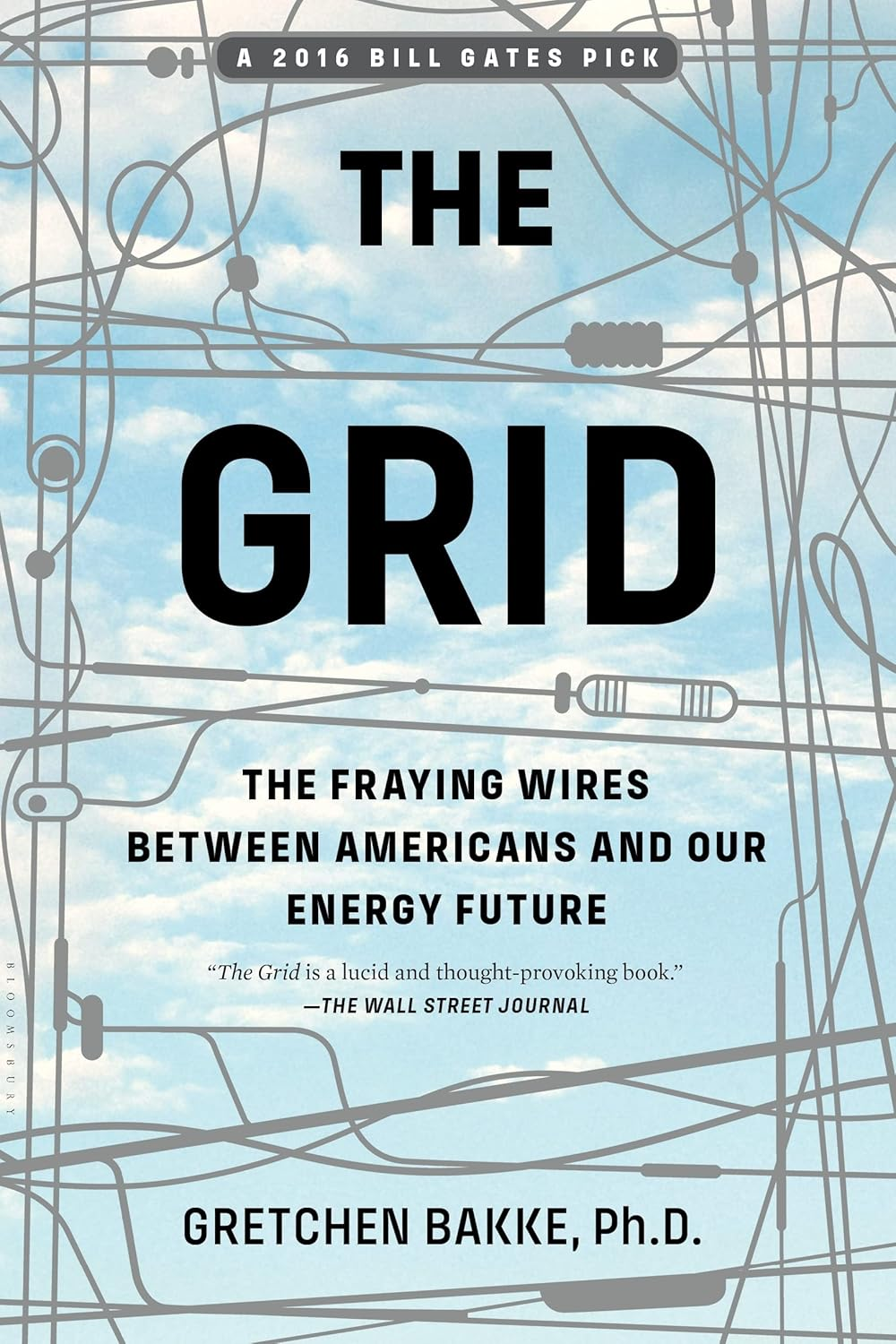
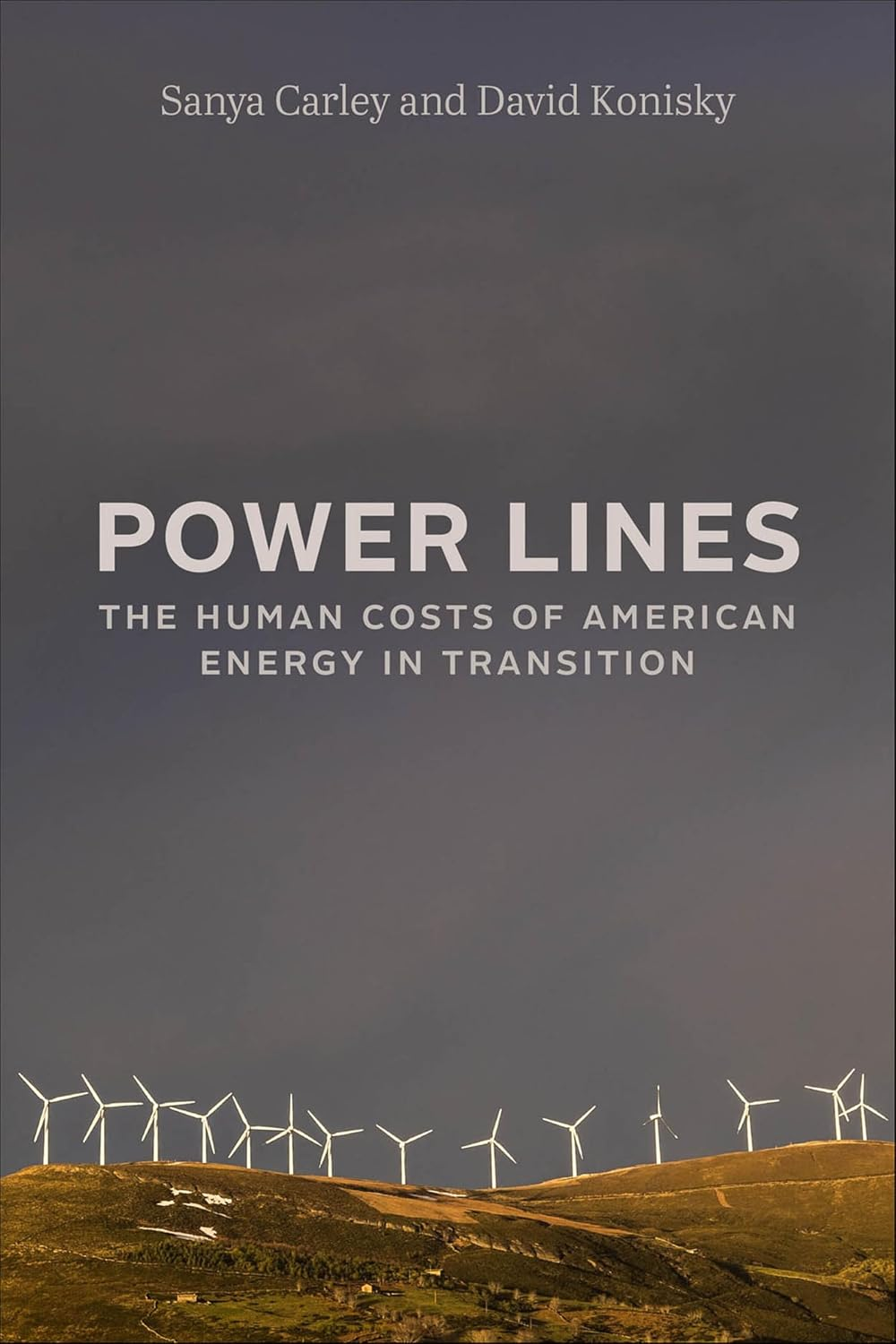
One book explains the physical, regulatory, and political structure the AI buildout is straining. The other examines who carries the human cost of the energy transition it is accelerating.
As an Amazon Associate, KMOB1003 may earn from qualifying purchases.
Disclosure: KMOB1003 may earn a commission from qualifying purchases through select partner links. Editorial coverage is produced independently.
KMOB1003 After the Article
Consent Has an Infrastructure Layer
You read the cost transfer. Now the rooms where consent, infrastructure, and cultural intelligence keep building.

Consent Has an Infrastructure Layer
The Public Didn’t Reject AI. They Rejected the Terms.
AI adoption is not only about whether people use the tools. It is also about the terms governing identity, participation, infrastructure, and public cost.
Read the Analysis →

Tools Chosen With the Operator in Mind
The Global Collection
KMOB1003’s curated operating marketplace for tools, services, protection, and creator infrastructure.
Enter the Collection →

Follow the Cost Behind the Technology
Legacy & Insights
More KMOB1003 analysis on culture, leadership, and the systems behind the story.
Enter the Archive →

Go Deeper
Culture Docent
Operator intelligence on ownership, infrastructure, and power — unpacked in plain language.
Ask the Docent →
Global Reach. Powerful Stories. Lasting Impact.
