
KMOB1003
KMOB1003 Global · Technology · Tuesday AM · June 9, 2026
The question is no longer only “Can people find you on Google?” Discovery is now social, visual, behavioral, and trust-based — and it is happening everywhere the signal lives.
Build signal that can be found, saved, sent, quoted, understood, and returned to — outside the original platform.
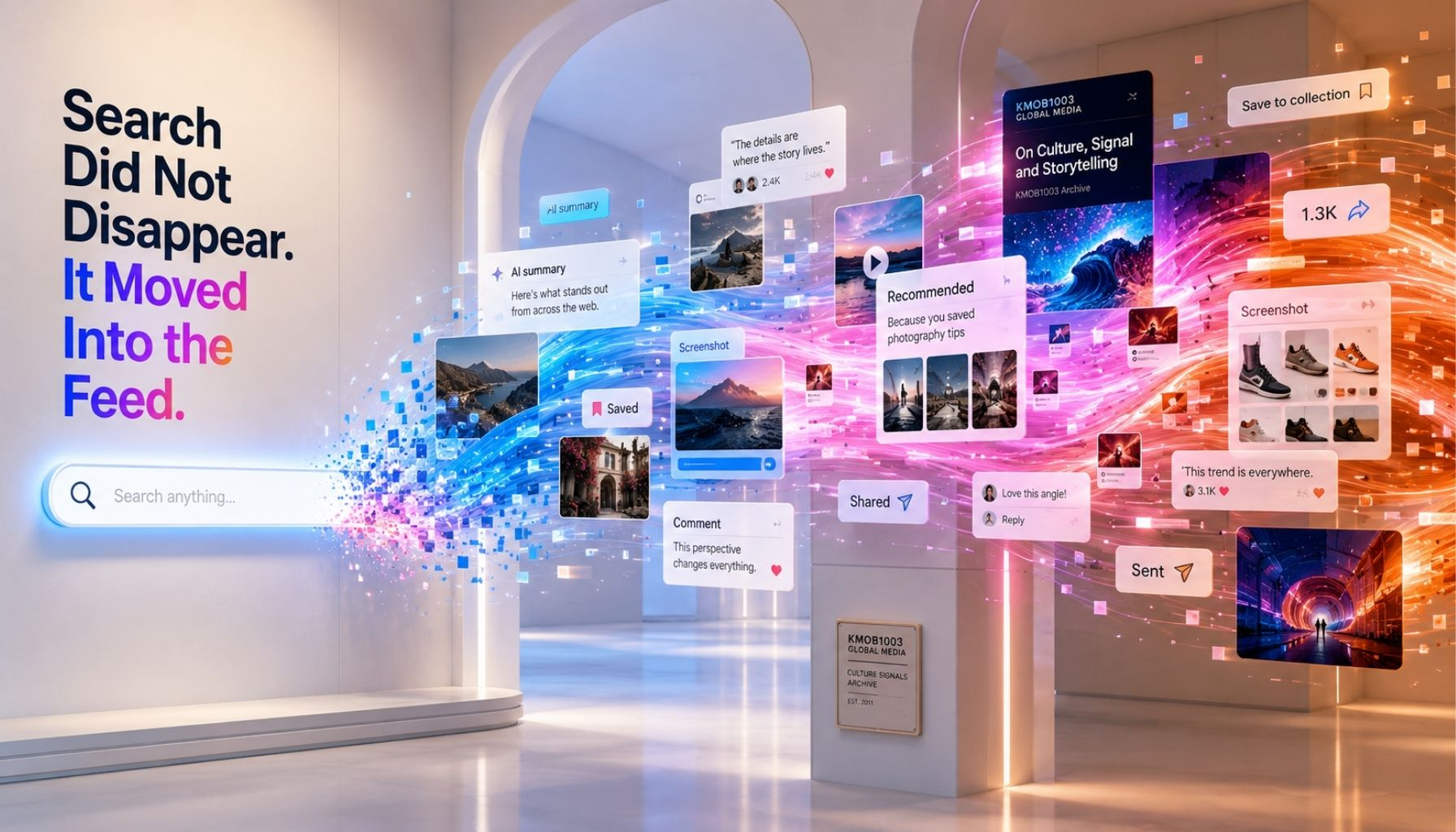
Search did not disappear. It moved into the feed. The shift has been building for years — confirmed by Google’s own internal data, by platform behavior research, by the way audiences actually navigate their days — and it has now reached the point where the operator who is optimizing only for traditional search is optimizing for a partial map. 45% of Gen Z are more likely to use social searching on TikTok and Instagram instead of Google, according to Bernstein analysis of Forbes Advisor survey data. The search box did not close. It multiplied — into feeds, captions, clips, comments, saves, sends, AI summaries, screenshots, and group chats. The operator whose signal does not exist in those spaces is invisible to a significant and growing portion of the people actively searching for exactly what they offer.
What This Article Is Actually About
Why discovery has moved beyond the search box and into feeds, visuals, behavior, and trust — and what the media operator must build differently when findability now requires signal that can survive outside the original platform. This is not an SEO article. It is a media-infrastructure argument about the new architecture of discovery.
Layer One
Traditional Search
Google, Bing, search bars. Keyword-indexed, link-ranked. Still essential — but no longer the whole map of how people find things.
Layer Two
Social Search
TikTok, YouTube, Instagram, LinkedIn, Reddit. Feed-based, visual, trust-anchored. The audience searches through creators, captions, comments, and saves.
Layer Three
AI Search
ChatGPT, Perplexity, AI Overviews. Synthesized answers, not link lists. Content that earns citation here has to be clear, specific, and authoritative enough to survive summarization.
Layer Four
Behavioral Search
Saves, sends, screenshots, replays, bookmarks, group-chat shares, return visits. The audience tells you what it values by what it keeps — not by what it clicks once.
The operator who builds signal only for Layer One is visible on a map that no longer shows the whole territory. — KMOB1003 Global Media · June 2026
The way this change happened was not sudden. It accumulated through behavior. A person looking for a restaurant recommendation does not open a search bar. They open Instagram and look at what creators they trust have posted. A person looking for a take on a cultural moment does not scroll a results page. They open TikTok and search in captions. A person trying to understand a business concept does not click through ten links. They find the LinkedIn post from someone whose thinking they already follow, read it, save it, and return to it later. 52% of social media users now prefer social search over AI chatbots for finding user-generated content and personal experiences, with Gen Z particularly likely to trust brand and product information found on social media over information from traditional search engines, according to Sprout Social’s 2025 Pulse Survey data.
This is not about social media replacing Google. It is about the architecture of discovery expanding. The audience has more search surfaces than it did five years ago, and different surfaces serve different kinds of searches. Google still dominates informational queries, local intent, and research-phase questions. But the discovery layer — the moment when someone first encounters an idea, a creator, a brand, or a voice they want to follow — increasingly happens inside a feed. The feed is no longer just where attention goes. It is where search begins.
“The feed is no longer just where attention goes. It is where search begins. And the operator who has no signal in the feed has no presence in the search.”
— KMOB1003 Global Media · Technology · June 2026
While social search has been shifting audience behavior for years, AI tools have introduced a third architecture alongside traditional and social search — one that does not return links, it returns answers. Adobe’s 2026 data found that 14% of consumers say they are more likely to use ChatGPT than Google for search — nearly double the percentage who say the same about TikTok, and the shift spans every generation, not just younger audiences. A separate study found that one in three Gen Z and one in four millennials now turn to AI platforms to guide purchase decisions. These tools do not return ten links for the user to sort through. They return a synthesized answer — and the content that earns citation in that answer has to be clear, specific, authoritative, and distinct enough to survive summarization.
This changes what the media operator needs to build. Traditional SEO optimized for keyword matching and link authority. Social search optimization requires trust-based visibility — the right captions, the right creators, the right visual signal. AI search optimization requires something more demanding: content clear enough and specific enough that a language model can accurately represent it in a synthesized answer. Vague, generic, or recycled content fails all three architectures. The operator who builds clear, distinct, authoritative signal earns presence in all of them.
Research Layer · Find the Signal Before the Feed Names It
Discovery is moving faster than most operators can track manually. Genspark gives the media operator the research infrastructure to map search behavior, surface trend signals, and find the pattern before the platform has already labeled it as a trend — across traditional, social, and AI search surfaces simultaneously.
The behavioral search layer is visible in KMOB1003’s own performance data. Over 90 days, Pamela F. Nichols’ LinkedIn thought-leadership channel generated 946K+ impressions and reached 563K+ members — with 18K+ engagements, 2,280 saves, and 724 sends. Those saves and sends are not vanity metrics. They are the behavioral record of an audience treating content as a search asset: something valuable enough to keep, return to, and forward to someone else who needs it. The link engagement number — 33 clicks in that same period — tells the complementary story. The posts are not being used as blog-click funnels. They are Pamela-native authority essays that travel as standalone ideas. The link, when it appears at all, is earned. It is not led with.
This is what feed-as-search-layer looks like from the inside. The audience is not waiting for a Google result to discover this thinking. They are finding it through the feed, saving it, sending it, and returning to it — across platforms, devices, and contexts that no search-rank report will ever capture. The 44 impressions and 11 clicks that KMOB1003’s website received from traditional search in the same 28-day window are not a failure. They are a signal about where traditional search currently sits in the overall discovery map — and a reminder that the rest of the audience is finding the signal through other channels entirely.
Visibility now has to survive outside the original post. If the signal only works inside the platform where it was published — if the caption loses meaning without the image, if the argument dissolves without the thread — it is not built for the architecture of discovery that now exists.
53% of Gen Z now prefers TikTok, Reddit, or ChatGPT over Google for search, according to Resolve’s survey research, with the broader conclusion that visibility is no longer only about Google rankings — it requires presence across an entire search ecosystem that includes social platforms, communities, and AI assistants. That conclusion demands a different editorial posture from the operator building audience infrastructure. The work is no longer only to produce content that can rank. It is to produce signal that can be found, saved, sent, quoted, understood, screenshotted, summarized, and returned to outside the original platform.
That means the headline has to carry meaning without the article. The caption has to hold context without the image. The visual has to explain the idea before the click. The language has to be specific enough to survive outside the original post — on a screenshot, in a group chat, in an AI summary, in a search result that surfaces six months later on a platform that did not exist when the content was published. Clarity is infrastructure when discovery happens everywhere. The operator who writes in generalities, publishes without precision, and optimizes only for the algorithm of a single platform is building for a room that represents a shrinking portion of where the audience actually searches.
Visual Layer · Make the Signal Visible
Discovery is increasingly visual. The thumbnail, the featured image, the clip frame, and the caption graphic are no longer decoration — they are the first signal that determines whether someone stops, saves, or searches further. OpenArt gives creators and operators the visual production layer to make ideas findable in the feed before the click, the caption, or the algorithm has a chance to route them.
The behavioral evidence of what the audience searches for is already sitting in the data most operators have access to but do not read this way. What they save is what they want to return to. What they send is what they believe someone else needs. What they replay is what they could not fully absorb in one pass. What they screenshot is what they want to carry outside the platform. What they quote in their own posts is what they found clear and specific enough to credit. TikTok search is now driven by keywords, captions, engagement, and content formatting — meaning the same structural qualities that make content discoverable on traditional search engines increasingly determine visibility in the feed, according to SEO Sherpa’s analysis of TikTok’s search architecture.
The operator who reads saves, sends, screenshots, and replays as search data builds differently from the operator who reads only impressions and clicks. They build for the full architecture of discovery — not just the map that existed five years ago, but the one that exists now, across all the layers where the audience actually searches. Search did not disappear. It moved into the feed, into the save, into the send, into the AI summary, into the screenshot that travels further than the original post ever did. The question is not only whether people can find you on Google. The question is whether your signal is findable wherever the search begins.
The audience is already telling you what it is looking for — by what it saves, sends, replays, quotes, and returns to. That is the search data most operators are not reading. Start reading it.
The feed is now part of the work surface. If discovery is happening through screens, captions, clips, and visual search, the operator desk needs to support sustained attention — keeping the phone accessible and the screen environment manageable during long research and publishing sessions.
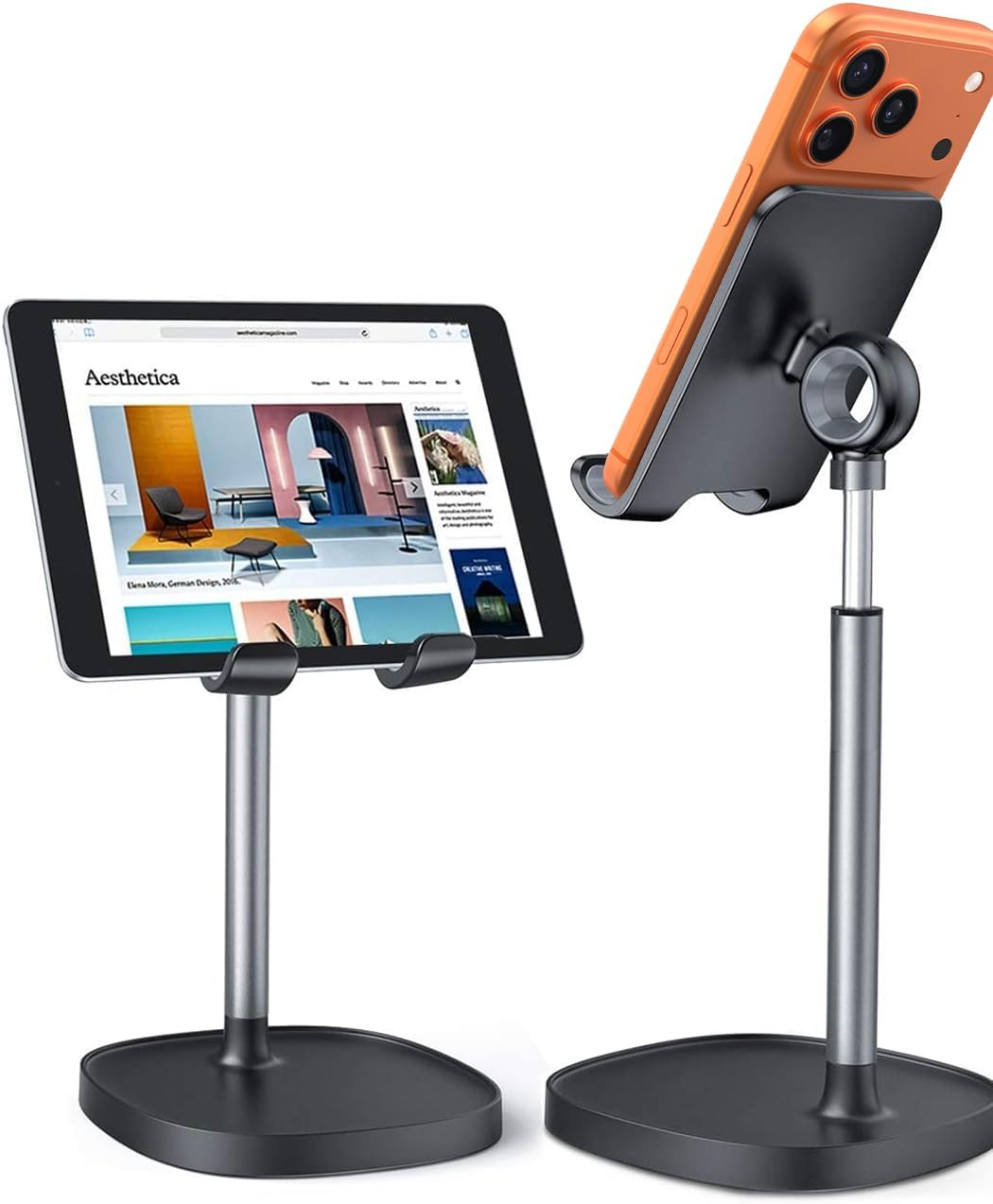
LISEN Cell Phone Stand · Phone Holder for Desk
Stable phone setup for recording clips, reviewing feeds, monitoring social search, checking captions, and keeping the phone visible while working across platforms.
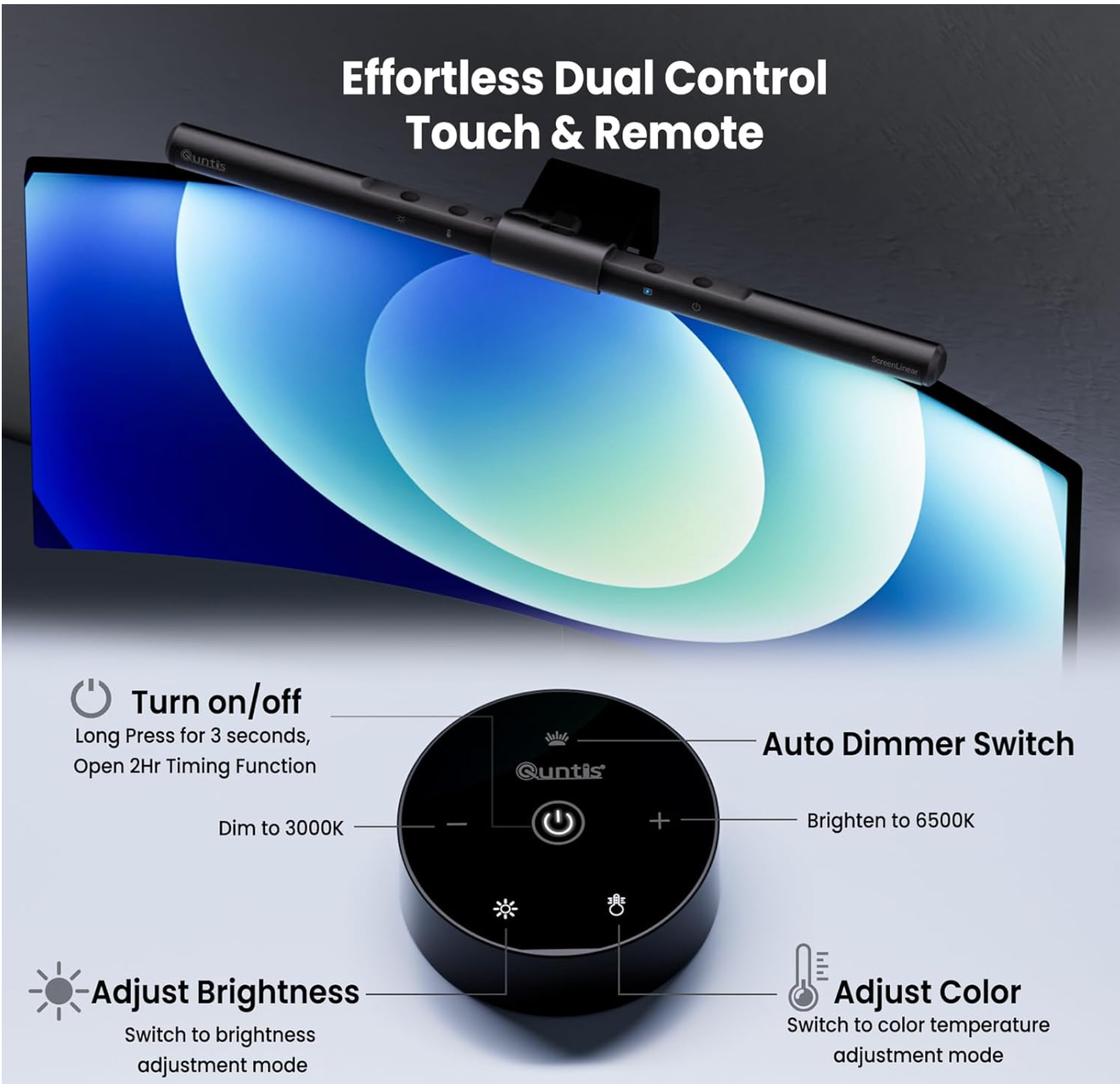
Quntis Computer Monitor Lamp · Screen Monitor Light Bar
Eye-comfort tool for long screen sessions — research, editing, captioning, planning, and monitoring discovery behavior across platforms without fatigue.
Some links in this article are affiliate links. KMOB1003 may earn a commission from qualifying purchases at no additional cost to you. All affiliate partnerships are editorially independent.
