
KMOB1003
KMOB1003 Global · Own Your Signal · Media Economics · Wednesday AM · May 27, 2026
Stephen Colbert’s departure made the headline. Byron Allen’s business model is the story nobody finished reading.
Allen did not inherit the 11:35 PM slot. He bought it. The difference between those two sentences is the entire argument about what media ownership actually looks like when it is not performed for a press release.
Most of the coverage of Stephen Colbert’s Late Show finale focused on the exit. Eleven years at the Ed Sullivan Theater. The goodbye monologue. The end of a late-night era. All of that is real and worth acknowledging. But the more significant story was not what ended on Thursday night. It was what started on Friday — and more specifically, how it started.
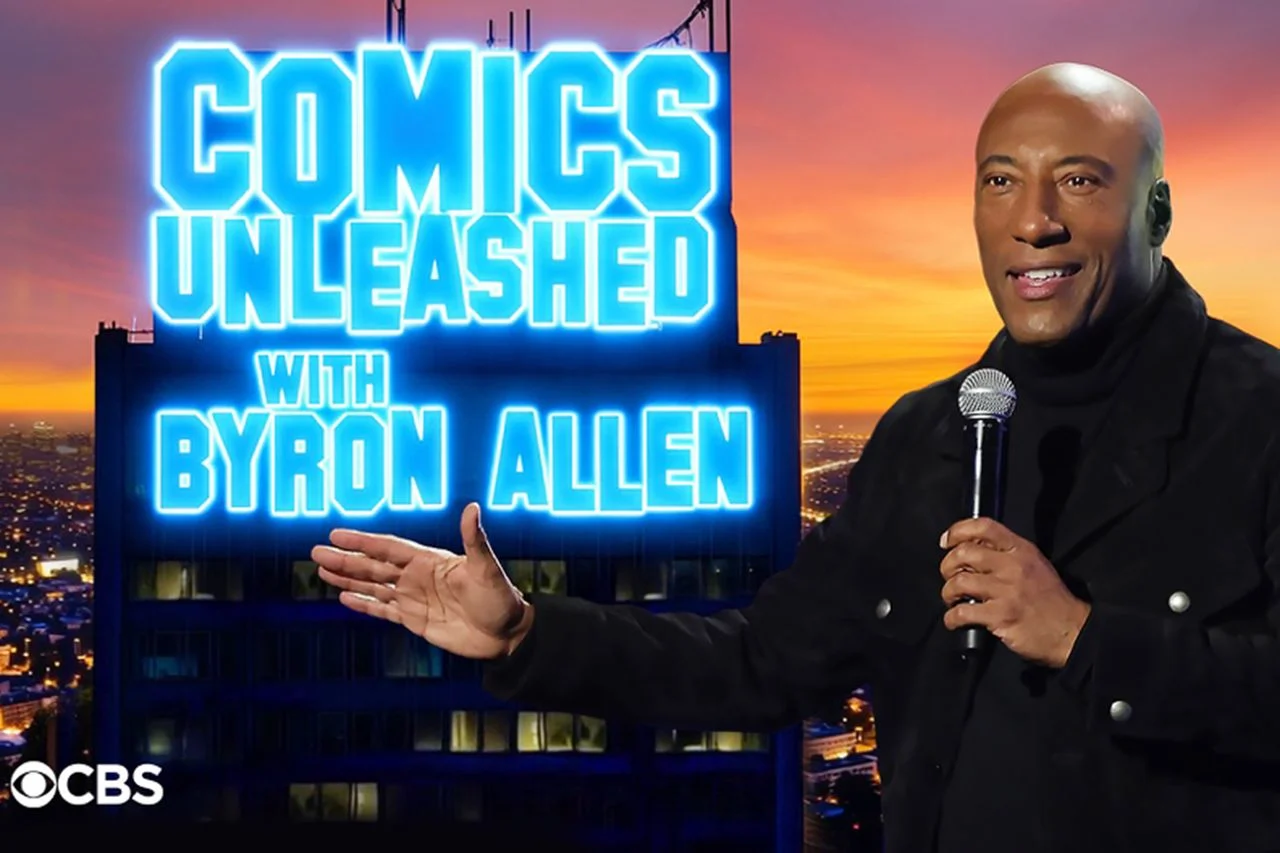
Byron Allen’s Comics Unleashed with Byron Allen debuted in the 11:35 PM CBS slot on Friday, May 22. The coverage framed it as a replacement. Allen himself told The Guardian: “I’m not trying to replace him.” Both framings are correct and both miss the point. Allen is not doing what Colbert did. He is not doing what Letterman did before him. He is operating inside a completely different commercial architecture — one that most media industry coverage glossed over in its rush to eulogize late night.
“The talent performs in the room. The operator owns what surrounds it.”
— KMOB1003 Global Media · Own Your Signal · May 2026
The standard late-night model works like this: a network hires a host, funds the production, owns the show, and sells the advertising inventory. The host is talent. The network is the operator. When ratings drop or costs rise or the political climate shifts, the network cancels the show and the host is out. The talent has no ownership stake in the room they built.
Byron Allen is not operating under that model. Allen is paying CBS for the airtime. He covers production costs. He builds his own commercial relationships and sells his own advertising inventory. CBS receives a guaranteed fee from Allen regardless of ratings. Allen captures the upside — the full revenue from ads he sells against his own content. The network exits the risk. The operator absorbs it and keeps the reward.
This arrangement — called a time-buy or time-brokerage agreement — is not new in broadcasting. It has existed for decades, primarily in religious programming, infomercials, and local syndication. What is significant is that Allen is applying it to a major-network primetime-adjacent slot that has historically been occupied by network-produced, network-owned programming. He did not wait to be hired into the room. He purchased an infrastructure position around it.
The difference between talent and operator is not about performance quality. It is about who owns the commercial architecture around the performance. Allen owns his.
Business Model Readout · Late-Night Economics
Source: NPR Newsmakers Interview · Byron Allen
Production & Marketing Savings
Allen’s stated estimate of what his time-buy model saves CBS compared to a network-produced late-night show. CBS exits production cost and talent risk entirely.
Ratings Lift Cited by Allen
Allen cited a 36% improvement for Comics Unleashed in households and key demographic categories — as stated in the NPR interview, not independently verified.
Metered Markets
Allen stated Comics Unleashed is outperforming Seth Meyers in 43 of 56 metered markets. Cited as Allen’s claim in the interview.
Audience Threshold
Allen’s stated threshold: capturing 1–2% of the available audience is enough to sustain a profitable television business when the cost structure is fundamentally different.
All figures above are Byron Allen’s stated claims from the NPR Newsmakers interview. KMOB1003 presents them as operator intelligence, not independently verified broadcast data.
Source Signal · NPR Newsmakers · Byron Allen Interview
Allen told NPR that CBS and Paramount gave him no boundaries, no notes, and no instructions about what to say or what to avoid. That detail matters — but not for the reason most people focus on. The KMOB1003 signal is not the editorial freedom. It is the business model underneath it: Allen controls the time slot, owns the production savings, sells his own advertising inventory, and operates the commercial layer around the show independently of the network’s preferences. The freedom is a consequence of the ownership structure. When you own the commercial architecture, you do not need the network’s permission to operate it.
Source: NPR Newsmakers interview with Byron Allen, May 2026.
Byron Allen has been building owned broadcast infrastructure for over 30 years. Allen Media Group is widely described as one of the largest Black-owned media companies in the United States. The portfolio includes 35+ television stations across major markets, The Weather Channel, Local Now, HBCUGo, Comedy.TV, and a growing slate of film and television content. This is not a startup. It is a mature media operating system with owned distribution, owned content, and now owned commercial relationships in a major-network time slot.
The CBS slot is one move in a much longer game. Allen has spent decades acquiring infrastructure that the traditional media industry undervalued — local broadcast stations in markets where the big players were consolidating and exiting, cable channels that the major conglomerates considered secondary. Each acquisition was a bet that owned distribution is worth more over time than rented visibility. The CBS time-buy is the same logic applied to a different asset class: network airtime.
Allen did not get lucky with a CBS slot. He built a 30-year infrastructure position that made the CBS slot a logical next acquisition. The strategy preceded the opportunity.
The Late Show under Colbert was a specific kind of public room — sharp, political, ritualized, and deeply meaningful to the audience that returned to it night after night. But the network’s decision to close it revealed something the franchise’s prestige had obscured: the room was always operating on the network’s terms, not the talent’s.
That is the vulnerability of the traditional late-night model. The host may shape the voice. The writers may shape the point of view. The audience may shape the ritual. But the network still controls whether the room stays open. Prestige does not change the architecture. Ratings do not change the architecture. Cultural value does not change the architecture. The operator decides when the lights go out.
Allen’s model does not depend on the network deciding to keep the room open. He controls whether the room opens. That is the structural difference between performing in a room and owning the commercial infrastructure around one.
Operator Intelligence Layer
Research What the Consolidation Wave Is Building Before the Next Slot Opens.
The Paramount-Skydance merger, the Netflix-Warner negotiation, the CBS realignment — these are not isolated events. They are moves on the same chessboard. Genspark gives operators, media professionals, and independent publishers a research layer for tracking what consolidation means before the industry names it.

Operator Infrastructure Layer
Build the Operating Layer the Platform Cannot Own.
The media operator who controls the commercial architecture controls the room. ClearCRM gives creators, consultants, agencies, and small teams a place to manage the relationship layer beyond DMs, comments, and algorithmic noise — the audience pipeline that does not disappear when the platform changes its terms.
The late-night model collapsed because the economics stopped working at scale. Production costs, talent costs, and declining linear viewership created a structure that became unsustainable for networks absorbing all the risk. The model Allen is using transfers that risk to the operator who believes in the content — and captures the upside accordingly. It is a more honest arrangement in some ways: the operator who thinks the content is worth running takes on the responsibility of proving it.
For independent media operators watching this transition, the signal is legible. The large institutional model — where a network funds your production, owns your content, and can cancel your show — is under structural pressure across every category. The operators who have been building owned distribution, owned commercial relationships, and owned audience pipelines are entering a period where those assets become more valuable, not less. The major platforms are consolidating. The institutional late-night era is ending. The space that opens is where operators who control their own infrastructure live.
He did not inherit the room. He changed the business model around it. The room now opens through a structure he controls.
The talent performs in the room. The operator owns what surrounds it. Allen has been on the second side of that equation for 30 years.
