
LEGACY & INSIGHTS
The Ad Pitch Said Your Phone Was Listening. The FTC Says It Wasn’t.
Phone listening ads got a reality check: the FTC says one company’s service was not based on voice data.
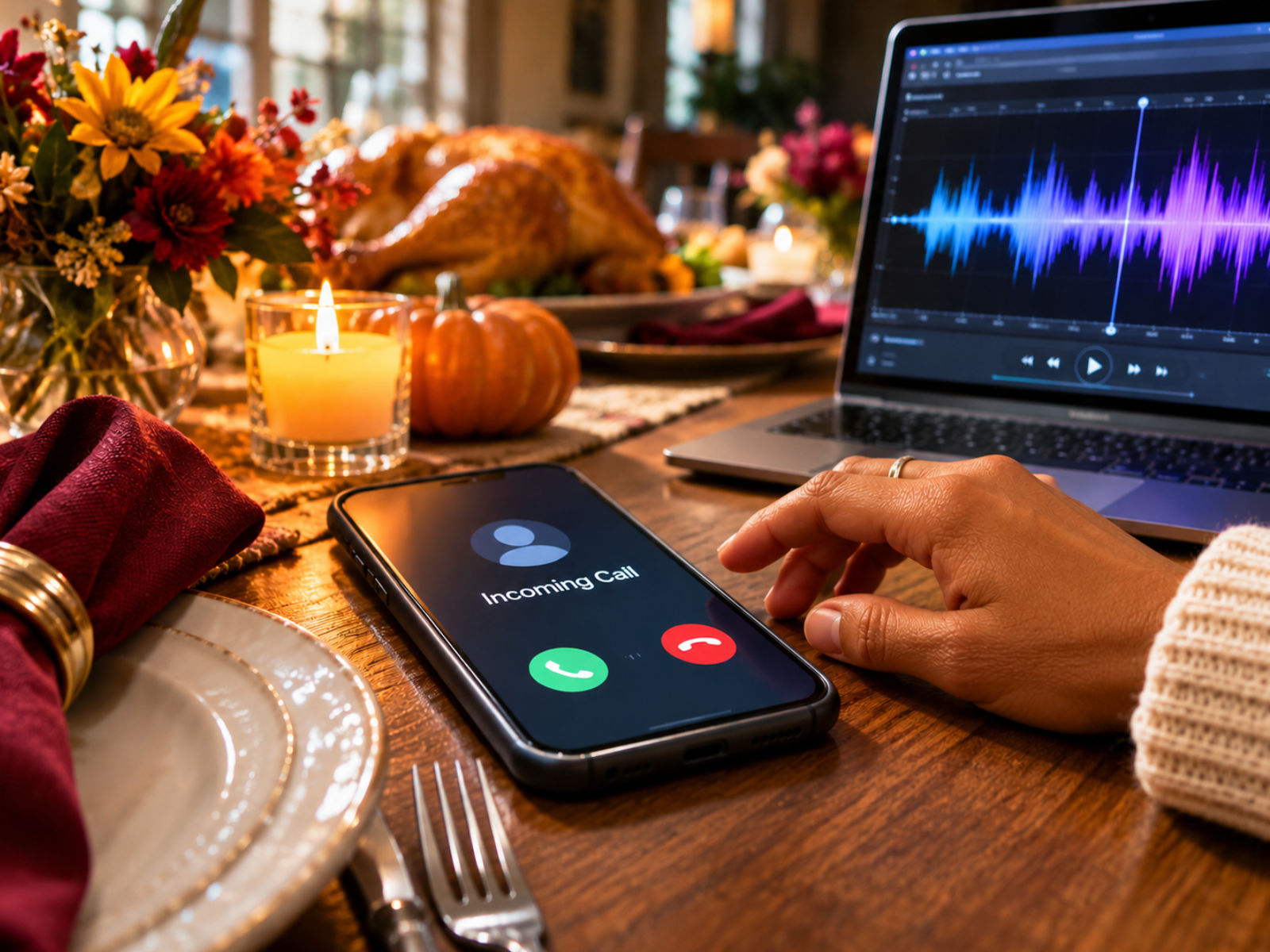
Phone listening ads got a federal reality check. The FTC says Cox Media Group’s Active Listening service was not based on voice data. Yet CMG had pitched it to advertisers as a way to find shoppers from conversations that smart devices overheard.
CMG agreed to pay $880,000 but did not admit wrongdoing, so the case ended in a settlement, not a ruling. Because the finding covers one company and one product, it does not settle what every app on your phone does.
What the FTC says about phone listening ads
According to The Desk, Active Listening was marketed as a way to find people in the market for a product. The Desk says CMG sold a “Voice Data AI” that could find buyers from casual talk. One pitch asked: “Creepy? Sure. Great for marketing? Definitely.”
The FTC found something different. It says the service was not based on voice data, and consumers had not opted into it. Instead, the agency says, CMG relied on consumer email lists bought from data brokers. It then resold them to advertisers at a significant markup, The Desk reports. The product also reached people across the country, though the pitch promised targeting within 10 or 20 miles. Only a fraction of those people were near the advertiser.
Two other firms, MindSift and 1010 Digital Works, settled for $25,000 each, so the total is $930,000. The FTC says the payments fund redress to CMG’s customers. CMG must pay within eight days of the order taking effect, The Desk reports. When the Commission finalized the orders, it voted 2-0.

What Cox Media Group and the final orders say
When the FTC announced the proposed settlement on May 21, CMG responded. It said its local marketing team relied on materials from a third-party vendor. It said it withdrew them quickly and no longer offers the products named in the complaint. CMG also said it was glad to have the matter resolved.
After a comment period, the FTC announced the final orders on Aug. 27. They bar each company from misrepresenting its marketing services. That includes whether the services collect or use voice data, whether consumers consented, and where ads can reach. The orders generally run for 20 years, The Desk reports, and require record-keeping and a compliance report after one year. CMG also provided customer information to help administer possible refunds.
Consent was part of the case against these phone listening ads. CMG had told customers that people agreed by accepting app or device terms. But the FTC says CMG did not obtain consent to collect or use voice data for marketing. The Desk reports that the FTC also says using voice data without adequate consent would break the law, even if the product had worked as advertised.
The leaked deck behind the phone listening ads claim
Before the FTC acted, the pitch was already public. In 2024, 404 Media obtained a marketing deck for Active Listening. Gizmodo reported that it claimed data from more than 470 sources of behavioral and voice data. The deck listed Google, Amazon and Facebook as partners, though Gizmodo said it was unclear whether any partnered with CMG on this tool.
After the deck surfaced, Google reportedly dropped CMG from its advertising partners program. It told 404 Media that advertisers must follow applicable laws and its Google Ads policies. Amazon said it had never worked with CMG on the program. Meta said the deck lists it only as a general marketing partner, and it pointed to its published policies on microphone use.
A sales deck told a story that matched what many people already felt. Because of that, the story spread long before a regulator checked the product. When Gizmodo published its report on Aug. 26, 2024, it said it had asked CMG for comment and would update the story if it learned more.

Why phone listening ads still feel so accurate
An AOL explainer by Brandon Marcus of Clever Dude, published Nov. 6, lists plainer reasons an ad can seem to read your mind. When you search or browse, that activity can follow you across a laptop, tablet and phone through cookies, tracking pixels and device identifiers. If you visit a showroom, the visit can show up as location data. The explainer notes that the FTC has documented cases of companies gathering location data through outside apps for targeted marketing. Household members share Wi-Fi, devices and shopping accounts, so overlapping information can link what one person researches to the ads another sees. Google acknowledges that ad personalization can use what an account has done, the apps installed and a rough location. People also remember the ad that fit, because they forget the many that missed.
On microphones, the explainer points to Northeastern University researchers who tested over 17,000 widely used Android apps. They saw no sign of apps quietly switching on microphones to leak audio. Still, the explainer adds that this does not prove every app behaves, since microphone misuse is not technically impossible. Some apps need the microphone for real features, yet careless or malicious developers can still cause privacy problems. The explainer ends on a wider point: the larger privacy issue is how many ordinary activities produce data that companies can pull together and study. It also notes that the FTC recommends reviewing browser privacy settings and the privacy controls inside individual apps.
What to check if you suspect phone listening ads
You can replace guessing with a few checks, although menu names vary by phone and software version.
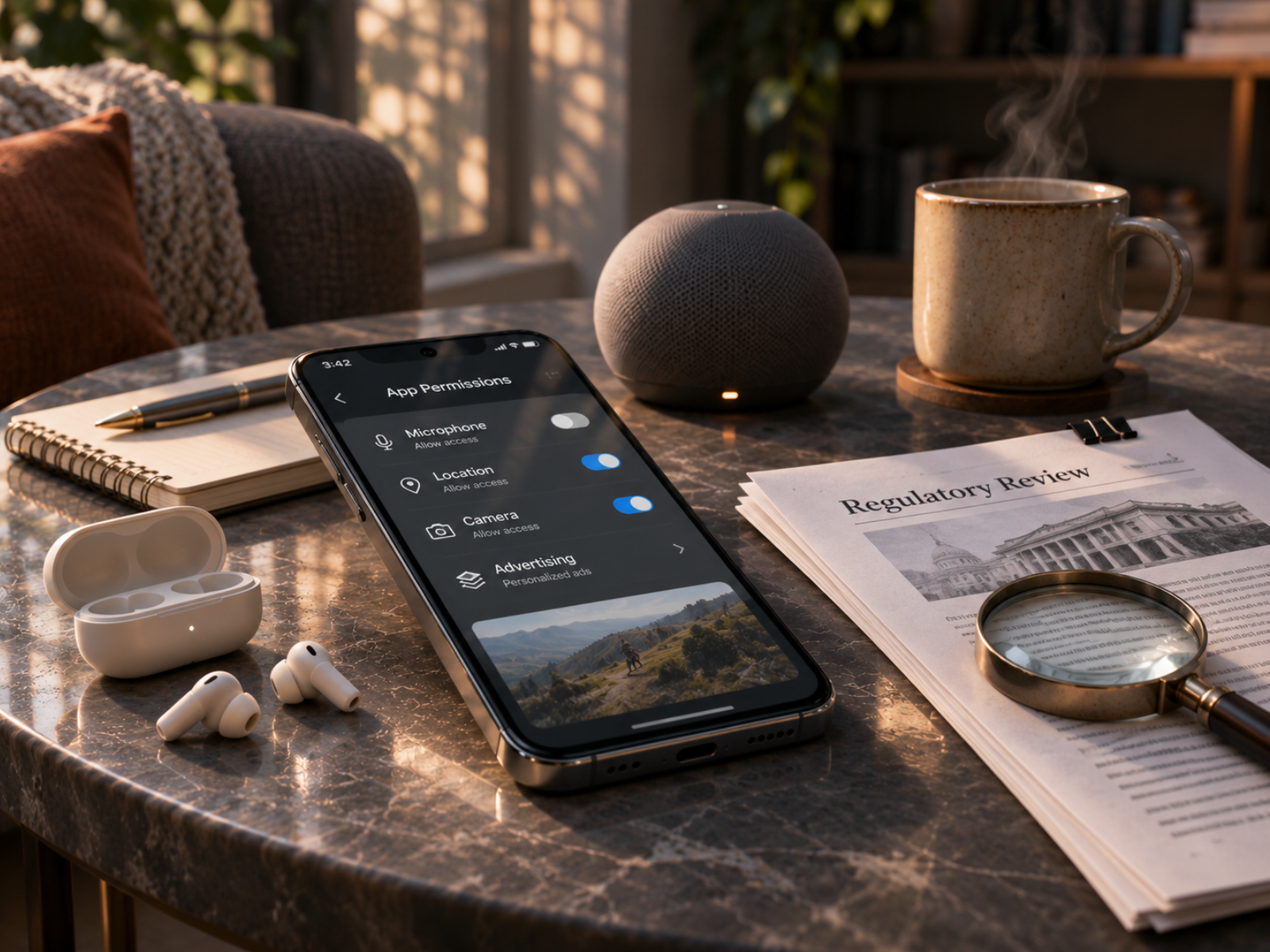
- On iPhone, open Settings, Privacy & Security, then Microphone. Turn off access for apps with no reason to hear you.
- On Android, open Settings, Security & Privacy, then Privacy Dashboard, then Microphone. It shows which apps used the microphone, and when.
- Watch the indicators. iPhone shows an orange dot during microphone use, while supported Android versions show a green one.
- On iPhone, open Settings, Privacy & Security, then Tracking. Turn off Allow Apps to Request to Track.
- On Google services, use My Ad Center to review your interests. You can turn off personalized ads there.
Microphone access is not proof of recording. The permission shows what an app can do, while the usage history gives clues, not a verdict. Tracking settings limit some cross-app tracking, but they do not end ads. Because ad companies run separate systems, one setting will not change every ad.
What remains unanswered about phone listening ads
The FTC case shows that a listening claim can be false and still sell. It does not show that no company has ever recorded audio for ads, and since the Android study covers only the apps it tested, it cannot settle that either. If other vendors made similar claims, or if advertisers checked them, neither the orders nor the reporting reviewed here says so. They also do not say how many advertisers bought Active Listening.
FROM KMOB1003

CMG says it no longer offers the products named in the complaint. The orders now bar it and the two other firms from misrepresenting what such services do. What the record does not yet show is how many advertisers paid for a listening claim that, by the FTC’s account, was not based on voice data.

Phone Listening Ads: Signal Breakdown
Not every claim about phone listening ads in this story carries the same weight.
Reported, Attributed to the Source
- FTC orders. Final orders announced Aug. 27 against CMG Media Corporation, MindSift and 1010 Digital Works; $930,000 in total, per the FTC.
- Targeting details. The email lists, the markup and the national reach are The Desk’s account of what the FTC says.
- Leaked deck. 404 Media obtained it in 2024; its claims are reported here as Gizmodo’s account.
Claims and Statements, Labeled
- Marketing claims. That devices overheard talk and ads followed it are CMG’s pitch; the FTC says the service was not based on voice data.
- CMG’s statement. It relied on a vendor’s materials, withdrew them and no longer offers the products; no admission of wrongdoing.
- Android study. More than 17,000 apps, as the AOL explainer describes it; not independently reviewed here.
Not Established Here
- whether any other vendor or app has recorded conversations for ads
- how many advertisers bought Active Listening
- whether the Northeastern findings hold for today’s apps and phones

PHONE LISTENING ADS / KEY FACTS
RADAR / WHAT TO WATCH

KMOB1003 SELECTS
Music, style, tools, art and objects worth your attention.





MORE FROM LEGACY & INSIGHTS