The Pardon Broker Economy: Inside the Business of Buying Access
A 60 Minutes investigation documented a pardon broker economy around presidential clemency, where brokers sell access, pressure campaigns and proximity to power for fees reaching into the millions.
A constitutional power can stay perfectly legal while the market built around reaching it becomes increasingly unequal.
September 17, 2026
The meeting looked ordinary enough. Jack Burkman and Jacob Wohl sat with Ammon Covino and his wife, Crystal, inside the Ritz-Carlton in Tysons Corner, Virginia. Covino had already tried the traditional clemency route. This time, the brokers proposed something different: a $300,000 lobbying campaign built around events, influencers, political contacts and repeated efforts to get his case closer to the president—the latest documented case in what CBS has described as a pardon broker economy operating around presidential clemency.
What This Article Is Actually About
This isn’t a story about one rapper who paid hundreds of thousands of dollars and failed to receive a pardon. It is about what happens when a constitutional power operates alongside a private market selling access to the people around it.
Signal One
The Scale
CBS News’s analysis found that roughly 70% of Trump’s second-term clemency actions had not gone through DOJ’s traditional process, rising to roughly 92% when Jan. 6 clemency is included.
Signal Two
The Access
CBS reported that pardon brokers may charge as much as $3 million. Brett Tolman told CBS he petitions the White House directly rather than through DOJ.
Signal Three
The Dispute
The White House and former pardon attorney Ed Martin reject the suggestion that paid lobbying determines presidential clemency outcomes.
Covino was genuinely seeking a pardon, but his meetings with Burkman and Wohl were arranged as part of CBS News’s hidden-camera investigation into the pardon economy. (CBS News)
Burkman described applying pressure to the president “from all directions” and said the strategy was “more energy and less process… and contacts.” The pitch involved political contacts, event access, influencers, and repeated efforts to put a client’s case in front of people close to the White House.
Covino wasn’t the only prospective client CBS traced.
CBS reported that rapper Boosie Badazz said he paid Burkman and Wohl $600,000 seeking a pardon in his federal gun case and never received one. By contrast, nursing-home operator Joseph Schwartz paid Burkman’s firm nearly $960,000 and did receive a pardon, according to CBS.
Other brokers identified in the investigation included Ches McDowell, Adam Katz and Stefan Passantino.
Taken together, these cases describe something bigger than any single client: a constitutional power operating alongside a private market that sells proximity to the people around it.
Inside the Pardon Broker Economy
The Constitution gives the president broad clemency authority. The Justice Department’s Office of the Pardon Attorney supports that authority by reviewing applications and making recommendations—but the president isn’t bound to follow them. (Department of Justice)
CBS News’s analysis found that roughly 70% of Trump’s second-term clemency actions had not gone through DOJ’s traditional process; including Jan. 6 clemency actions, the figure rose to roughly 92%. Sources told CBS that pardon broker fees can reach approximately $3 million.
None of that makes bypassing DOJ illegal—the president has always had that discretion. It describes the scale of a parallel route that has grown up beside it.
Burkman and Wohl aren’t the whole industry. CBS identified Brett Tolman, who told Covino he petitions the White House directly rather than through DOJ; Ches McDowell, who helped obtain clemency for a cryptocurrency executive; Adam Katz, an attorney who previously represented Rudy Giuliani; and Stefan Passantino, a former Trump White House official, among brokers working the clemency field.
University of St. Thomas law professor Mark Osler, who runs a pro bono clemency clinic, described the resulting divide in practical terms: applicants increasingly believe their odds improve if they can afford someone with access to the president.
Boosie and the Pardon Broker Economy
Torrence Ivy Hatch, the rapper known as Boosie Badazz, pleaded guilty to being a felon in possession of a firearm. He was sentenced January 9, 2026, to three years of supervised release, 300 hours of community service and a $50,000 fine. (Department of Justice)
CBS reported that Hatch said he paid Burkman and Wohl $600,000 upfront after being led to believe a pardon would follow. He did not receive one. CBS reported that he is seeking $300,000 back, while Burkman disputes the refund obligation, saying no final written agreement was ever signed.
Joseph Schwartz’s case shows the other side. Federal prosecutors said he withheld more than $38 million in employment taxes from workers at his nursing-home companies; he was sentenced in April 2025 to 36 months in prison, three years of supervised release, a $100,000 fine and $5 million in restitution. (Department of Justice)
Months later, JM Burkman and Associates disclosed receiving $960,000 from Schwartz for lobbying work. DOJ’s official clemency records confirm Trump pardoned Schwartz on November 14, 2025. (Department of Justice)
That chronology is documented. Causation is not—neither CBS nor KMOB1003 has established that the fee caused the pardon.
What’s Confirmed
CBS documented Burkman and Wohl’s $300,000 pitch to Covino, Hatch’s $600,000 payment and arbitration claim, Tolman’s direct-to-White-House petitions, and Schwartz’s $960,000 lobbying disclosure ahead of his pardon. CBS News’s analysis found the 70%/92% DOJ-bypass figures. DOJ records independently confirm Hatch’s sentence and Schwartz’s conviction, sentence and pardon date.
KMOB1003 Framework
Public Clemency vs. Private Access
Traditional DOJ Review
Applications reviewed by the Office of the Pardon Attorney.
Private Advocacy
Paid intermediaries using relationships, events and direct outreach.
Presidential Authority
The president retains final constitutional authority in either route.
Access Difference
Only one route requires the resources to finance a private influence campaign.
The reporting does not establish that money determines clemency outcomes. It does establish that money can finance a different route to presidential attention.
Signal Breakdown
Signal: CBS documented a private lobbying market operating around presidential clemency, while its analysis found most second-term clemency actions had not passed through the traditional DOJ route.
Impact: Applicants able to hire brokers can purchase additional advocacy, events, contacts and repeated outreach. That does not establish that those efforts determine the president’s decision.
Watch: Whether future disclosures establish how broker-driven petitions are evaluated, and whether any specific payment can be linked evidentially to a specific clemency outcome.
KMOB1003 After the Article
Continue the Signal
Choose what comes next — build your career, find something live, shop the KMOB1003 edit, or let the Culture Docent guide you.
KMOB1003 Artist Services
Artist Services
Visibility, strategy and media infrastructure for artists ready to move beyond the release link.
Put Your Release in Motion →

KMOB1003 Live Culture
Ticket Desk
Find concerts, sports, theater and live events through KMOB1003 access to Ticketmaster and StubHub.
See What’s Happening Live →
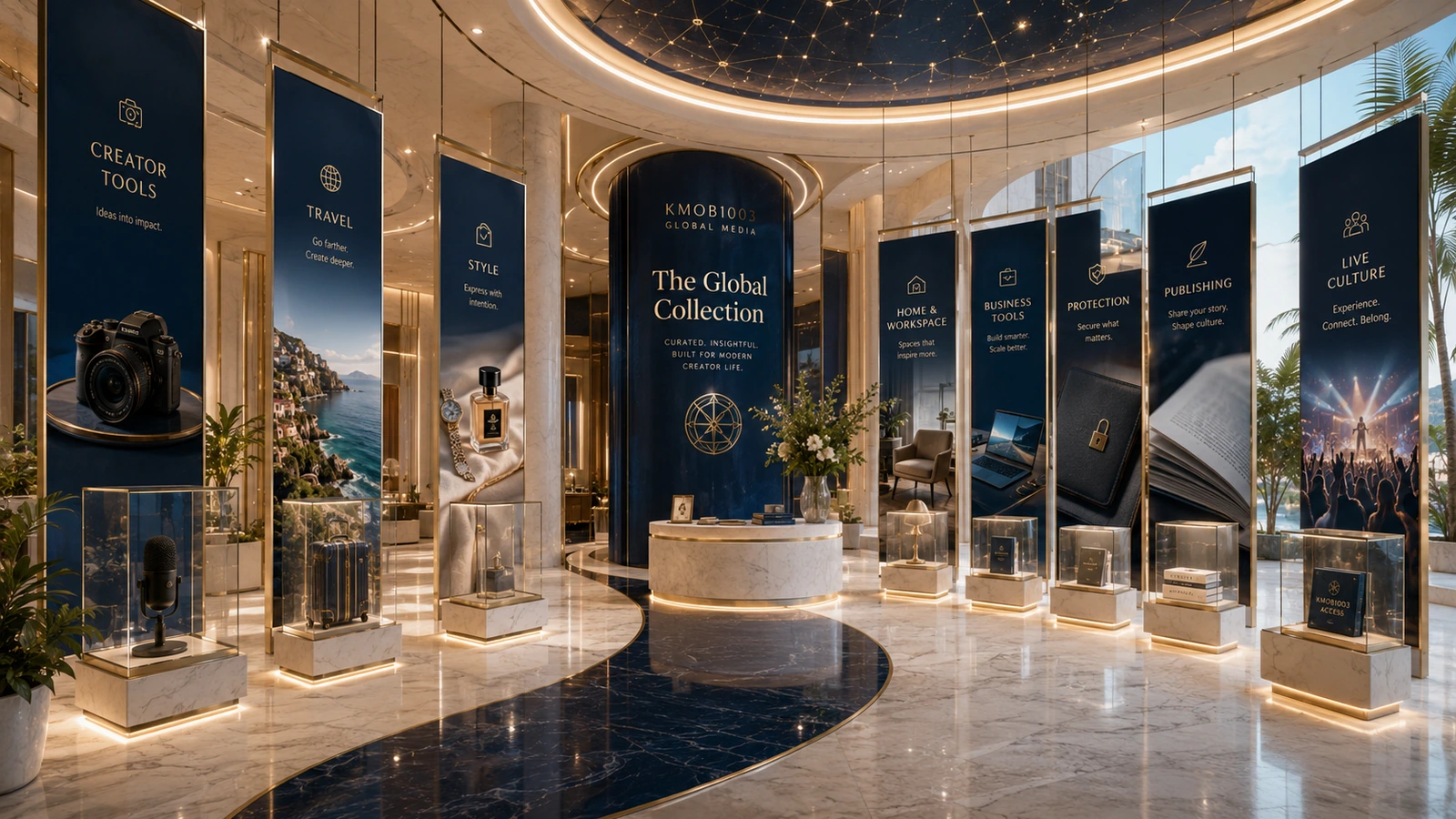
KMOB1003 Collection
The Global Collection
Curated tools, services, experiences and global partners selected for the way creators and culture builders move.
Shop What We’re Curating →

KMOB1003 Culture Docent
Culture Docent
Not sure where to go next? Start here. Tell the Culture Docent what brought you into the room and choose from six doors.
Tell Us What You’re Looking For →
Global Reach. Powerful Stories. Lasting Impact.
The People Around the Pardon Broker Economy
Ed Martin, who served as the Justice Department’s pardon attorney until earlier this month, told 60 Minutes: “When people say ‘there’s brokers, there’s quid pro quo,’ I’ve never seen it. I haven’t seen it. I haven’t heard it.”
A White House spokesperson said the administration runs its clemency decisions through a review process involving White House counsel, the Justice Department and pardon czar Alice Marie Johnson, with the president as final decision-maker, and that people paying brokers to lobby are “foolishly wasting their money.” (CBS News; full transcript: CBS News)
Those denials mark the actual boundary of what’s been shown: CBS documented a market selling access to the clemency process. It did not establish that a specific pardon was bought.
What Hasn’t Been Established
The documented record includes the $300,000 pitch to Covino, Hatch’s $600,000 payment and arbitration claim, CBS News’s 70%/92% DOJ-bypass analysis, Tolman’s direct-to-White-House petitions, and Schwartz’s $960,000 lobbying disclosure ahead of his pardon.
Still unresolved is whether any of that access actually moved a decision, or only bought a better shot at being heard. CBS did not establish that a particular payment caused a particular pardon.
The Aftermarket
“Pardon broker economy” may actually understate what this investigation surfaced. A broker connects two parties. An aftermarket forms after the official system already exists.
DOJ still maintains a public clemency process. Alongside it, a private layer has developed where money can buy advocates, event access, and repeated attempts to reach the president directly.
Applicants who cannot afford a broker may still receive clemency. What they do not have is the privately financed advocacy campaign documented by CBS—the events, intermediaries, influencers and repeated attempts to put a case closer to the president.
The constitutional authority has not changed. What has changed is the infrastructure operating around it.
That is the real significance of the pardon broker economy: money cannot be shown here to have bought a pardon, but it clearly paid for a different route to attention.
More From Legacy & Insights

Creator & Institutional Infrastructure
Practical infrastructure for the people running the operation.
Four standing KMOB1003 partners supporting research, operations, connectivity and workspace infrastructure—unrelated to the subjects of this article. Links not re-tested in this pass.
Genspark
AI-powered workflows for developing research, campaign ideas and business assets.
ClearCRM
A CRM for organizing partner conversations and opportunities across a growing operation.
Sakura Mobile
Mobile connectivity for creators and teams producing while moving across markets.
LuxeDecor
Furniture and decor for shaping the physical studio and workspace behind the creative process.
Disclosure: KMOB1003 may earn a commission from qualifying purchases through these partner links. Editorial coverage is produced independently.
The Operator’s Bookshelf
KMOB1003 READS

The Creative Act: A Way of Being
Rick Rubin
Rick Rubin’s broader case for trusting discernment over process — a theme that extends to institutions weighing judgment, not a book about clemency specifically.

The AI-Driven Leader
Geoff Woods
Geoff Woods’ broader case for keeping human judgment at the center of high-stakes decisions — a general leadership theme, not a book about presidential clemency.
As an Amazon Associate, KMOB1003 may earn from qualifying purchases.
