
The DNA Didn’t Fail. The Institution Around It Did.
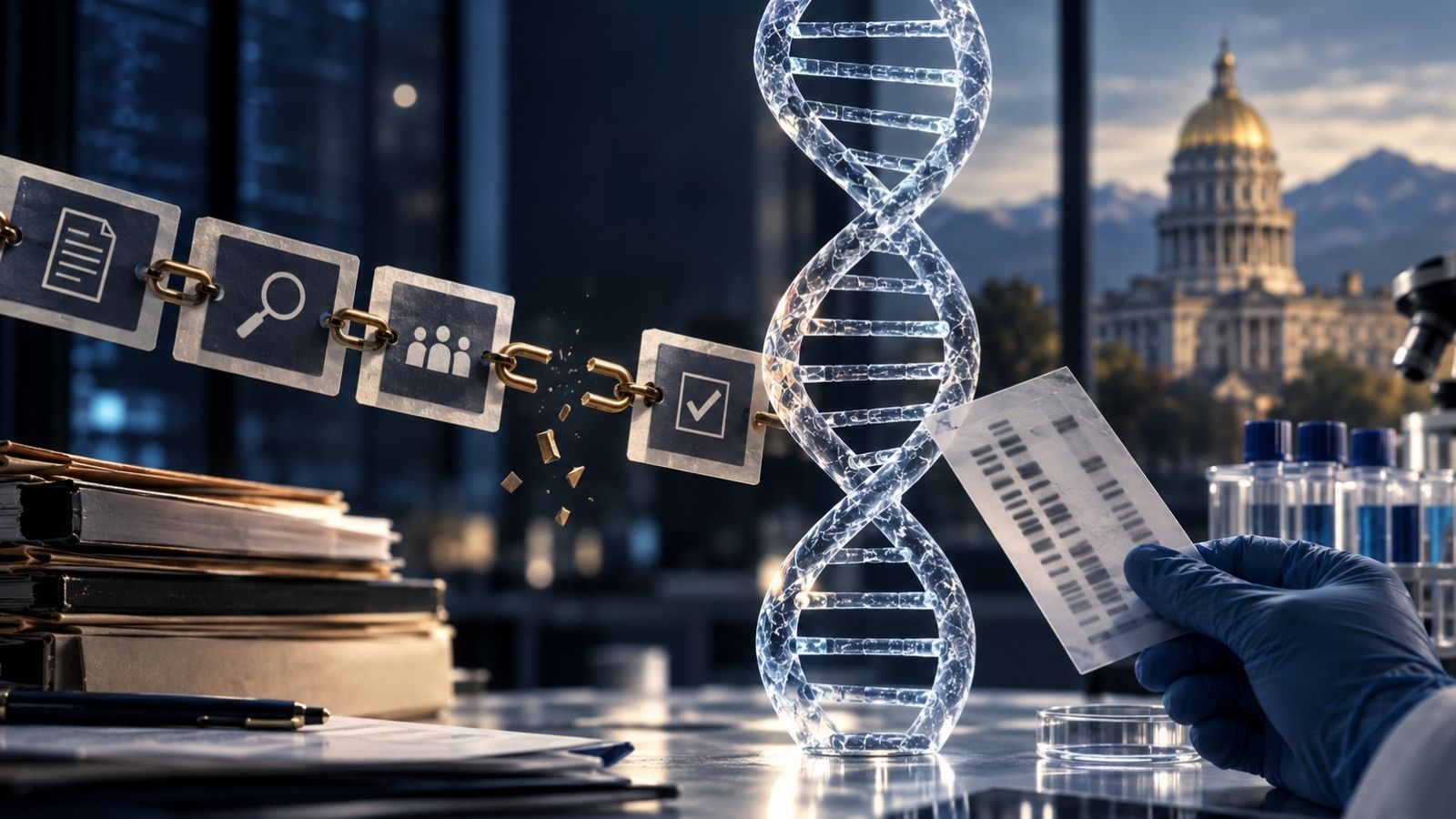
The Colorado DNA scandal sent Yvonne “Missy” Woods to prison for ten years. The harder question is how warnings, altered records and compromised reports moved through a trusted crime lab for years before an intern forced the system to look.
Scientific evidence earns its authority only when the institution around it makes verification unavoidable.
September 14, 2026
The Colorado DNA scandal is larger than a scientist who broke the rules. It is a test of whether a justice system can recognize warning signs inside its own most trusted evidence—and whether reform can become strong enough to earn public confidence back.
What This Article Is Actually About
Woods is responsible for deliberate misconduct. The institution is responsible for the conditions that allowed known concerns, incomplete verification and one analyst’s choices to affect cases involving homicide, sexual assault, robbery and other crimes. Accountability has to hold both truths at once.
Signal One
The Scale
CBI identified 1,045 cases requiring review after Woods’ work came under scrutiny.
Signal Two
The Warning
Concerns were raised by 2014; Woods was temporarily removed from DNA casework in 2018.
Signal Three
The Human Cost
False or misleading reports disrupted investigations and placed convictions under new doubt.
The Colorado DNA scandal reached a decisive point on September 8, 2026, when District Court Judge Andrew Poland sentenced Yvonne “Missy” Woods to ten years in Colorado state prison, followed by three years of mandatory parole. Woods had spent almost 30 years as a forensic scientist with the Colorado Bureau of Investigation. Prosecutors proved criminal conduct from 2008 through 2023.
She pleaded guilty to four felonies: cybercrime, first-degree perjury, attempting to influence a public servant and forgery. Her sentences on the latter three counts run concurrently with the ten-year cybercrime sentence. The plea guaranteed prison time within an agreed eight-to-sixteen-year range.
The numbers require care. Prosecutors identified 53 cases containing false or misleading laboratory reports. CBI’s broader review identified 1,045 cases affected by Woods’ work and requiring examination. Those are not interchangeable figures: one describes the criminally charged false-report findings; the other describes the larger universe of cases placed under review.
The investigation began in September 2023 when a CBI intern found missing DNA data in a sample Woods had processed in 2018. That discovery triggered a broader review, an internal-affairs investigation and an independent criminal investigation by the South Dakota Division of Criminal Investigation. The Kansas Bureau of Investigation separately evaluated technical and scientific questions.
What the Colorado DNA Scandal Actually Revealed
Investigators found that Woods deleted or altered data, concealed problems with testing controls, removed records that would have shown a failure to troubleshoot and left work incompletely documented. In some cases, she deleted values showing that male DNA was present and then issued a report stating that no male DNA had been found.
The criminal investigation did not establish that Woods created false DNA identifications, false comparisons or false-positive results. That distinction matters. It does not erase the harm. A missing value can end an investigative path. A false “no male DNA” report can prevent additional testing or comparison. An undocumented quality-control problem can place a courtroom conclusion on a foundation no one else can fully inspect.
Of the 53 false or misleading reports identified by prosecutors, 41 came from cases in which no suspect was charged. Thirty-two of those involved women and children who had reported sexual assault. Twelve reports were tied to cases in which charges were filed. Three reached trial: one ended in a conviction and two in acquittals. Woods’ perjury plea arose from false testimony in the trial that produced a first-degree murder conviction.
The Cases Behind the Numbers
In a separate part of the broader review, Michael Clark’s murder conviction was vacated in 2025 after his lawyers challenged DNA evidence handled by Woods; prosecutors said they intended to retry him. In two other homicide cases, prosecutors accepted plea agreements carrying lesser sentences because Woods’ involvement could have jeopardized convictions at trial. Other defendants have challenged convictions across Colorado.
Woods apologized at sentencing and said, “I failed that responsibility.” The apology acknowledged the breach. It could not restore the investigations that stopped, the victims who were told evidence was not there or the defendants now forced to question whether the evidence used against them was handled honestly.
What the Colorado DNA Scandal Means for Verification
That is why the scandal cannot be measured only by Woods’ sentence. The deeper measure is whether the evidence chain, supervisory review and corrective process can now protect every person whose case depends on the laboratory’s work.
What’s Confirmed
The First Judicial District Attorney’s sentencing record establishes the four convictions, the 53 false-or-misleading reports and the impact on cases involving women and children who reported sexual assault. AP and CBS Colorado document the 1,045-case review, the vacated conviction and the mandatory-parole terms. CBI’s internal-affairs findings and later audits establish the earlier warning signs and the continuing reform work.
The KMOB1003 Public Trust Test
A trusted system must be able to answer four questions.
Can another expert reproduce the work?
Documentation has to preserve every material decision, not only the final conclusion.
Do warnings change access?
A concern is not oversight unless it triggers review, limits and documented resolution.
Is quality control independent?
The person producing the result cannot be the final authority on whether the process was sound.
Can the public see the repair?
Reform requires measurable deadlines, completed reviews and transparent reporting.
Signal Breakdown
Signal: The scandal was not invisible. It was insufficiently acted upon.
Impact: An intern’s 2023 discovery reopened more than one thousand cases and forced victims, defendants, prosecutors and courts to revisit evidence that had carried the authority of the state.
Watch: Whether Colorado publishes measurable progress on case review, retesting, notification and the safeguards now governing flagged analysts.
Read Deeper
Blind Injustice
Mark Godsey
Why It Matters Here
Godsey’s account examines the psychology and institutional habits that let a trusted process reinforce flawed assumptions for years—the failure mode this case exposes directly.
KMOB1003 After the Article
Continue the Signal
Choose what comes next—build your career, find something live, shop the KMOB1003 edit, or let the Culture Docent guide you.

KMOB1003 Artist Services
Artist Services
Visibility, strategy and media infrastructure for artists ready to move beyond the release link.
Put Your Release in Motion →

KMOB1003 Live Culture
Ticket Desk
Find concerts, sports, theater and live events through KMOB1003 access to Ticketmaster and StubHub.
See What’s Happening Live →

KMOB1003 Collection
The Global Collection
Curated tools, services, experiences and global partners selected for the way creators and culture builders move.
Shop What We’re Curating →
KMOB1003 Culture Docent
Culture Docent
Not sure where to go next? Start here. Tell the Culture Docent what brought you into the room and choose from six doors.
Tell Us What You’re Looking For →
Global Reach. Powerful Stories. Lasting Impact.
The Warnings Came Before the Discovery
This is where the institutional story becomes unavoidable.
A 2024 internal-affairs report found that concerns about Woods’ work had surfaced at least a decade earlier. In 2014, a colleague questioned her testing of evidence. In 2018, Woods was temporarily removed from DNA casework after an accusation of data manipulation. Yet she returned to work, and the decisive break did not come until an intern encountered missing data in 2023.
That sequence changes the question. The issue is not only how one analyst concealed misconduct. It is what happened after colleagues raised concerns, who verified the corrective action and why the controls did not prevent access from being restored before the risk was resolved.
Woods reportedly told investigators that changing data helped her finish cases faster. At sentencing, prosecutors said her motive remained difficult to comprehend; the defense pointed to crushing caseloads and a drive to move work through the laboratory. Those explanations belong in the record, but neither should be mistaken for an established answer. Workload may explain pressure. It does not explain why an experienced analyst chose concealment, nor why institutional safeguards failed to stop it.
Why the Institution Cannot Stop at One Guilty Plea
CBI has taken significant steps since 2023. It brought in outside investigators, commissioned an independent assessment of its forensic services division and became the subject of a separate state performance audit. Colorado also directed millions of dollars toward retesting and created additional oversight and reporting requirements.
Those actions matter. So does the fact that the work is unfinished. Each affected case has its own evidence, procedural history and legal questions. Retesting alone cannot recreate every lost investigative opportunity. A later audit cannot undo the moment a survivor was told a sample contained no male DNA. A new quality-control policy cannot give a defendant back the years spent challenging evidence that carried the authority of the state.
Reform should therefore be judged by outcomes, not announcements: how many cases have been reviewed, how many require new reports or retesting, how quickly affected people are notified, what happens when an analyst is flagged and whether supervisors can prove that exceptions were investigated rather than merely recorded.
What Public Trust Requires Now
CBI Director Armando Saldate said Woods’ actions do not define the organization or the public servants who continued doing their jobs with integrity. That defense of the institution is understandable. It is also incomplete unless the institution can show precisely how its new safeguards prevent a similar failure.
Public trust is not restored by asking people to separate one employee from the agency. It is restored by showing that no employee can again become a single point of failure.
The case against Woods is over. The Colorado DNA scandal is not. Its final measure will be whether Colorado can build a forensic system in which concerns are investigated early, data remains auditable, affected people are told the truth and scientific authority is earned through visible, independent verification.
More From Legacy & Insights



Creator & Institutional Infrastructure
Build the system around the work.
Four verified KMOB1003 partners supporting research, operations, connectivity and the spaces where serious work happens.
Genspark
AI-powered workflows for developing research, analysis and business assets.
ClearCRM
A CRM for organizing relationships, documentation and opportunities across a growing operation.
Sakura Mobile
Mobile connectivity for professionals and teams working across markets.
LuxeDecor
Furniture and decor for shaping the physical workspace behind the operation.
Disclosure: KMOB1003 may earn a commission from qualifying purchases through these partner links. Editorial coverage is produced independently.
The Operator’s Bookshelf
KMOB1003 Reads
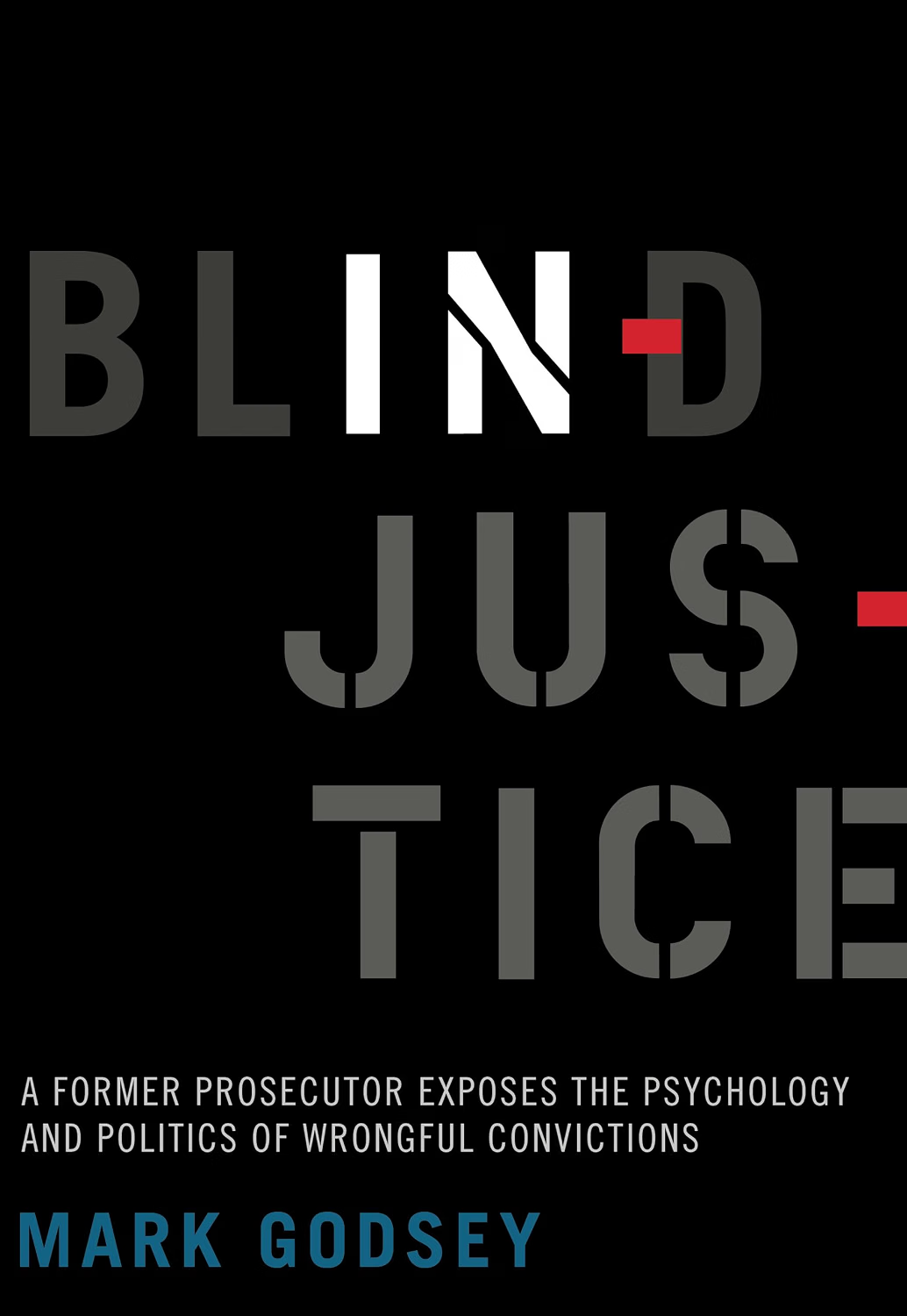
Blind Injustice
A former prosecutor examines the psychology and institutional habits that allow flawed assumptions to harden into convictions.
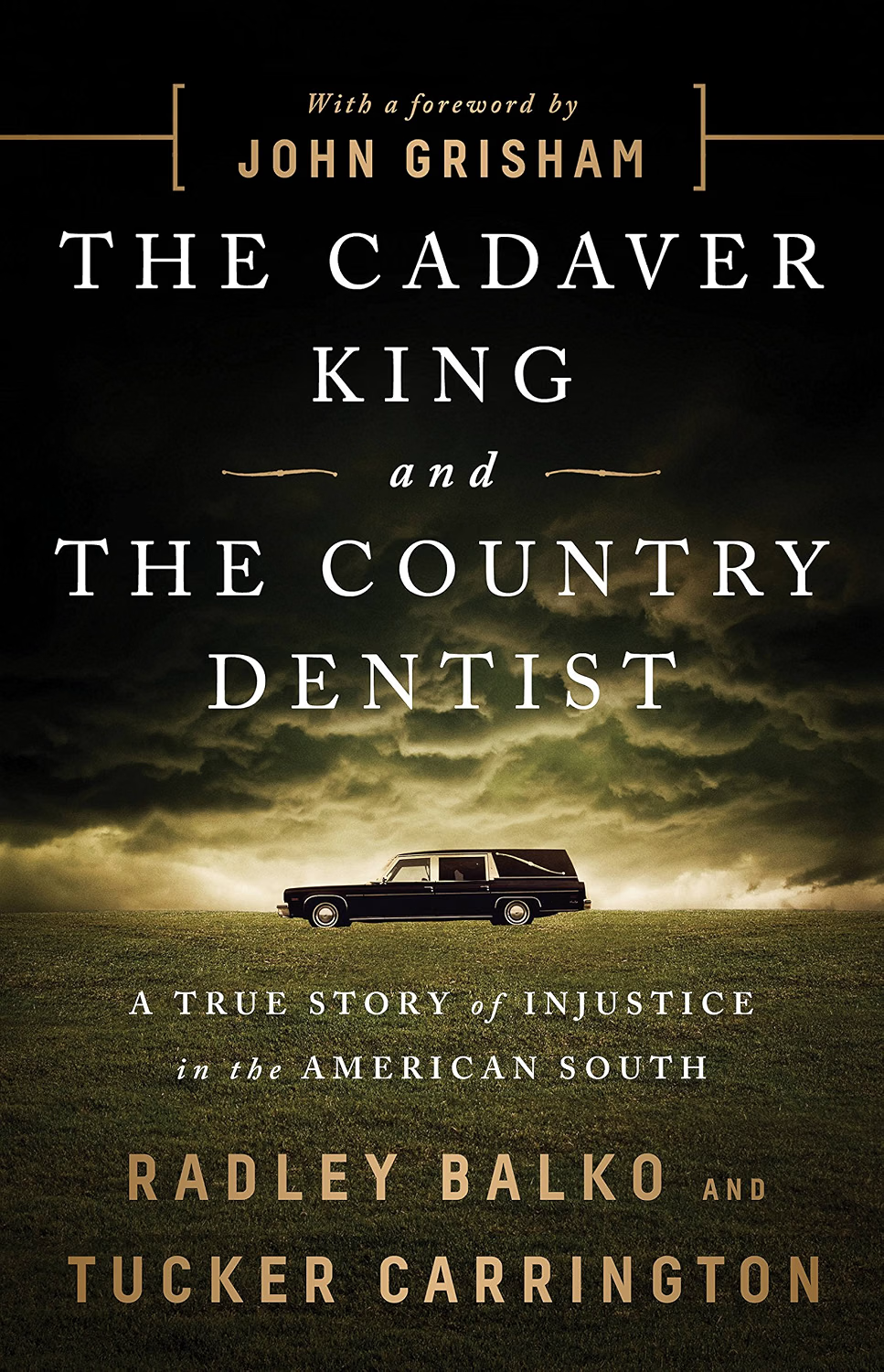
The Cadaver King and the Country Dentist
A documented account of what happens when weak forensic practices are treated as unimpeachable courtroom authority.
As an Amazon Associate, KMOB1003 may earn from qualifying purchases.
