

Kwanza Jones Makes Powerful History in the Padres Ownership
A record $3.9 billion sale makes Kwanza Jones the first Black woman MLB has recognized as a majority owner in Major League Baseball — and turns a historic first into a sharper question about what ownership itself is worth.
“We are all in — it’s not lip service.”
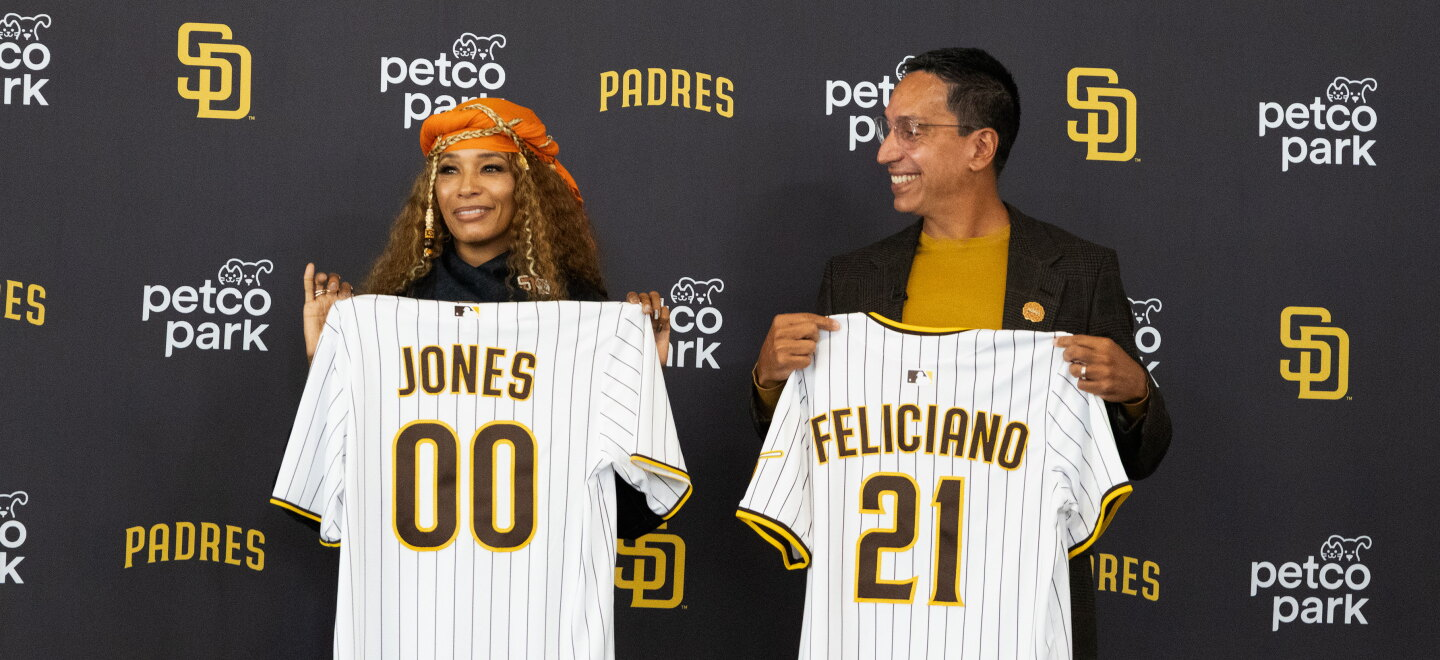
Before Kwanza Jones and José E. Feliciano walked into Petco Park on August 24, the room heard a song first — one Jones wrote and recorded herself. It was an unusual way to begin an ownership era, and it was the point: the Kwanza Jones Padres ownership story is about real equity, not a ceremonial appearance. Jones is now recognized by MLB itself as the first Black woman to hold majority ownership in Major League Baseball history, in a deal worth understanding for what it reveals about who gets to own the institutions America watches, not just play or work inside them.
What Happened
MLB’s owners unanimously approved the sale on August 17, with Feliciano designated the club’s control person under league governance rules and both him and Jones named Principal Owners who jointly lead the group. The deal officially closed the following Friday, August 21, and the two were introduced to San Diego three days later at Petco Park, where Jones entered to her own recorded song.
The transaction carries a reported $3.9 billion valuation, the highest price ever paid for an MLB franchise, with Feliciano and Jones reportedly holding a combined 40 percent stake funded from their own wealth rather than an institutional private-equity vehicle. It’s worth being precise here: MLB Commissioner Rob Manfred himself welcomed the pair as the Padres’ “new majority owners” in the league’s own announcement, so this characterization now carries MLB’s direct endorsement — not just widely corroborated reporting. MLB’s team pages still list Jones and Feliciano only as “Principal Owner” and “Control Person & Principal Owner” respectively, without disclosing an exact ownership percentage for either of them.
The Bigger Story Behind Kwanza Jones Padres Ownership
No Black woman had previously been reported to hold majority ownership of one of MLB’s 30 franchises. That changes with this sale. It’s the right headline. It’s also not the whole story. Professional sports has gotten comfortable with Black visibility — Black athletes are the product on the field, Black executives increasingly run front offices. What has stayed almost entirely closed is the room where the institution itself is owned, where a $3.9 billion asset appreciates for whoever holds equity in it. That distinction is what makes the Kwanza Jones Padres ownership story bigger than the historic first itself: the difference between being seen inside a system and holding a piece of it.
Why the Money Matters
The Seidler-Fowler group that previously controlled the Padres paid roughly $800 million for the franchise in 2012. Fourteen years and one $3.9 billion sale later, that comparison says less about the Padres’ on-field success than about what has happened to professional sports franchises as an asset class: scarce, media-rich institutions that private capital, billionaires and now family offices are competing to own.
None of that appreciation is personal profit belonging to any individual absent disclosed financing terms. What it does establish is the scale of the asset Jones now holds a reported stake in — not a symbolic seat, but partial ownership of one of the fastest-appreciating institutions in American sports. That pattern isn’t unique to San Diego: private capital, billionaires and now family offices have driven a wave of record sports-franchise sales across MLB, the NBA and English soccer over the past several years, and the Padres are simply the newest, largest example of it.
A Partnership Built for This
Jones’s path runs through law, negotiation and media rather than baseball. She holds a J.D. from Cardozo and a Master of Dispute Resolution from Pepperdine, taught negotiation as an adjunct at NYU, and built a career as a recording artist before turning to investing; she also sits on the boards of the Apollo Theater and UCLA’s Ronald Reagan Medical Center, and previously chaired Bennett College’s board. Feliciano co-founded Clearlake Capital Group, the private equity firm he still leads, and is separately a co-controlling owner of Chelsea F.C. In 2014 the two co-founded a family office together, and Feliciano becomes just the second Latino principal owner in MLB history, alongside the Angels’ Arte Moreno, according to the Associated Press. Both are described by the Padres as Principal Owners who lead the group jointly — a distinction worth preserving, since neither the milestone nor the governance role belongs to only one of them.
What Changes for the People Watching
The reaction inside San Diego went beyond box scores. Dr. Ashanti Hands, president of San Diego Mesa College, told NBC San Diego that a Black woman stepping into a room like this one widens what people believe is possible — that once the picture changes, “you cannot unsee it.” For a city where Black and Latino excellence has long been visible on the field but rarely at the ownership table, that’s the plainer version of what this sale means: not a resolved wealth gap, but a specific, verifiable example that the top of the sports economy isn’t permanently closed to people who look like Jones and Feliciano. It doesn’t erase how rare that example still is, or how much has to happen after the introduction for it to mean more than a good headline.
Signal Breakdown
Signal: MLB approved the sale August 17; it closed August 21; Jones and Feliciano were introduced August 24 as the Padres’ new Principal Owners, with MLB itself recognizing Jones as its first Black woman majority owner.
Impact: A $3.9 billion valuation is an MLB record; a reported 40 percent combined stake, funded personally rather than through institutional capital, puts real equity — not just a title — behind the milestone.
Watch: Whether the promised listening tour, community investment and stated urgency to win outlast the introductory press conference.
The Test for Kwanza Jones Padres Ownership
The Padres are San Diego’s only major professional franchise, and the fan base has shown up for it: the club has broken its own attendance record for three straight seasons and ranked second in the majors in attendance last season. On the field, the team has reached the postseason four times in the past six seasons without ever winning a World Series. Jones has described a planned listening tour with CEO Erik Greupner before deciding what to change, and Feliciano has been blunter about the on-field mandate: the Padres need to win. Both are the kind of commitments that mean little in a press conference and quite a lot two or three years from now, once they can be checked against what actually got built, funded or ignored.
The Kwanza Jones Padres ownership story is already historic — nothing that happens next undoes the fact that a Black woman now holds a stake in a Major League Baseball franchise’s ownership group for the first time. What remains open is how Jones and Feliciano use the power that comes with it: whether what they said about listening and community translates into actual policy, whether investment reaches the neighborhoods around Petco Park as deliberately as it reached the balance sheet, and whether the commitment to win outlasts the introduction.
Experience the Signal
If This Story Made You Want to Be in the Room
Whether that means catching a Padres game at Petco Park, getting to San Diego, or holding a piece of the culture Jones has spent her career moving through — these are the paths KMOB1003 trusts for it.
Live Culture
Ticketmaster
The Padres just broke their own attendance record three years running. If this story made you want to see the new ownership era in person, single-game and season tickets move through Ticketmaster.
Live Culture
StubHub International
Petco Park has ranked among baseball’s toughest tickets for three straight seasons. For fans traveling in or chasing a specific matchup, StubHub’s resale marketplace covers what primary sales miss.
Travel
Hilton Honors
San Diego is a destination as much as it is a ballpark city. Book a downtown stay near the Gaslamp and Petco Park and earn Hilton Honors points on the trip.
Music & Archive
RareVinyl
Jones wrote and recorded her own entrance song for this moment. For readers who trace culture through the records that carried it, RareVinyl’s collection runs deep.
Affiliate disclosure: KMOB1003 may earn a commission if you purchase through qualifying partner links. Partner terms, availability and pricing are controlled by the partner and may change.
The Operator’s Bookshelf
KMOB1003 READS
As an Amazon Associate, KMOB1003 may earn from qualifying purchases.
KMOB1003 After the Article
Continue the Signal
Choose the next move – build, attend, discover, or let the Culture Docent guide you.

KMOB1003 Artist Services
Artist Services
Visibility, strategy and media infrastructure for artists ready to move beyond the release link.
Explore Packages →
KMOB1003 Live Culture
Ticket Desk
Find concerts, sports, theater and live events through KMOB1003 access to Ticketmaster and StubHub. The best seats move fast – check availability and lock in your tickets while they are there.
Get Your Tickets →

KMOB1003 Collection
The Global Collection
Curated tools, services, experiences and global partners selected for the way creators and culture builders move.
Explore the Collection →
KMOB1003 Culture Docent
Culture Docent
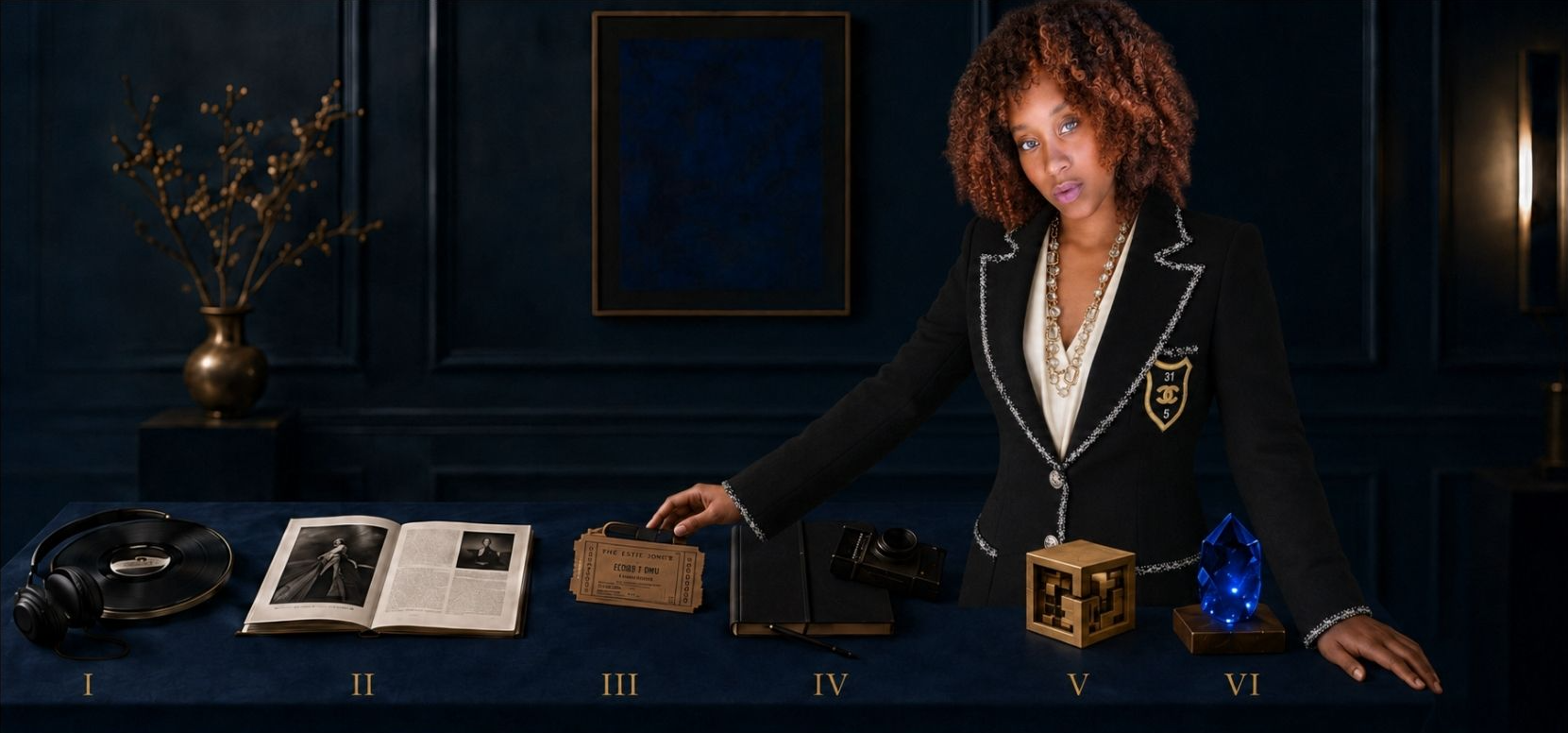
Not sure where to go next? Start here. Tell the Culture Docent what brought you into the room and choose from six doors – listen, read, find an event, build your creative career, discover products and tools, or see what’s moving now.
Find Your Door →
Global Reach. Powerful Stories. Lasting Impact.
