KMOB1003
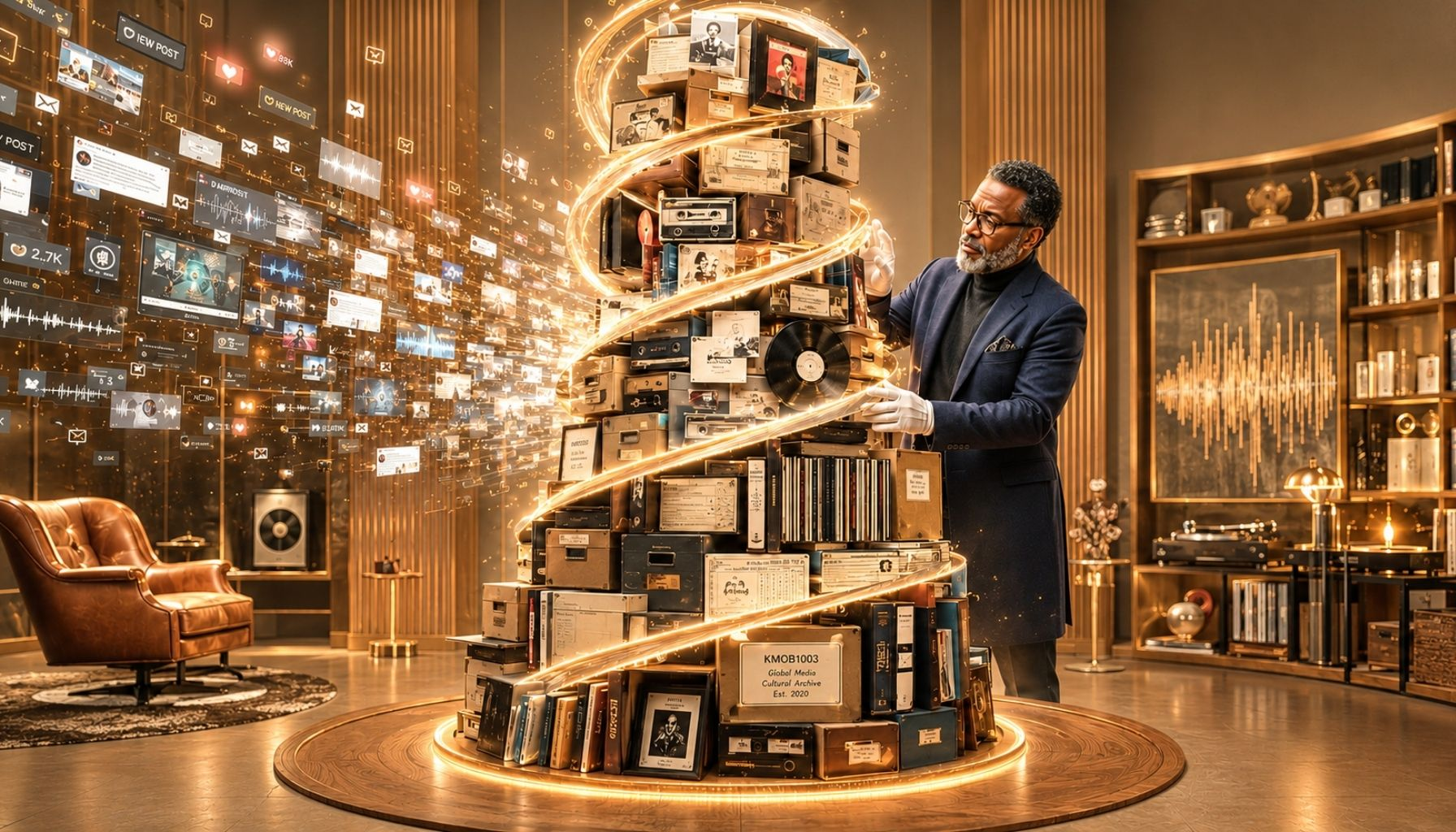
KMOB1003 Global · Music · Culture · Media Infrastructure · Tuesday PM · June 9, 2026
The feed forgets fast. The archive makes culture durable. Catalog becomes luxury when attention becomes disposable.
Preserve what the signal carried.
The feed is fast by design. It was built to replace what came before it with what comes next — to keep the attention moving forward and never stay long enough to remember. That architecture is efficient for platforms and expensive for culture. When everything arrives at the same velocity and leaves at the same speed, the things worth keeping — the performances, the recordings, the ideas, the voices — compete for shelf life in a system that was never designed to hold anything. Less than half of U.S. on-demand audio streams in 2025 came from tracks released in the last five years, according to Luminate’s year-end data — meaning the archive is already winning on the platforms that were built on newness. The question is not whether the archive has value. The question is who controls it, who preserves it, and who profits when the feed moves on.
What This Article Is Actually About
Why the archive wins when the feed forgets — and what it means for culture, music, media infrastructure, and every operator building something worth keeping. This is not a nostalgia argument. It is a media-infrastructure argument: the feed creates velocity, but the archive creates durability. In a disposable attention economy, catalog becomes luxury.
The Feed
Velocity
Optimized for what is new. Rewards recency, volume, and frequency. Built to replace yesterday with today. Forgets fast by design.
The Archive
Durability
Optimized for what endures. Rewards clarity, specificity, and ownership. Built to hold what the feed discards. Compounds over time.
The Catalog
Luxury
When attention becomes disposable, the catalog becomes rare. The body of work that survives the feed cycle is worth more — not less — as the feed keeps moving.
The Operator
Ownership
The operator who owns the archive controls the asset that the platform cannot take back. Preservation is infrastructure. The archive is the room the feed cannot enter.
The feed creates velocity. The archive creates durability. — KMOB1003 Global Media · June 2026
Every major streaming and social platform was architected around the same core principle: the next thing should arrive before the current thing is finished. That principle drives engagement, time-on-platform, and the behavioral data that makes the platform valuable to advertisers. It also means that the platform’s interest and the culture’s interest are fundamentally misaligned. The platform profits from replacement. The culture profits from memory. The artist who goes viral in February is competing for the same feed position in March as every other piece of content produced in the intervening weeks. The performance, the recording, the voice — these things do not depreciate any more slowly in the feed than a sponsored post does. 88% of all tracks on streaming platforms received 1,000 or fewer plays in 2025, while 0.2% of available tracks accounted for nearly half of all global streaming consumption. The feed concentrates attention at the top and forgets everything else at scale.
This is why the archive is not a nostalgic idea. It is a structural response to a structural problem. When a system forgets by design, the only counterforce is deliberate preservation. The archive does not compete with the feed on the feed’s terms — it operates on a different timeline, a different ownership model, and a different relationship with time. The feed asks: what are people watching right now? The archive asks: what is worth keeping, and who decided?
“The feed creates velocity. The archive creates durability. In an attention economy that treats culture as content, the catalog becomes the most valuable room in the building.”
— KMOB1003 Global Media · Music · Culture · June 2026
The institutional money has understood what the feed obscures: the archive is an asset class. In February 2026, Britney Spears sold her entire catalog to Primary Wave for approximately $200 million — and catalog valuations in 2026 typically range from 6x to 15x annual earnings, with legendary artists commanding multiples that push far higher. These transactions are not driven by sentiment. They are driven by the recognition that a body of work with proven cultural resonance generates streaming royalties, sync licensing fees, and brand partnership revenue across decades — independent of what the feed is currently amplifying. Bruce Springsteen, Bob Dylan, Pink Floyd, Neil Young — the pattern across all of these sales is the same. The catalog outlasted the moment it was created for and compounded in value precisely because the culture kept returning to it.
Warner Music and Bain Capital announced a joint investment vehicle of up to $1.2 billion earmarked for catalog acquisitions in 2026, following a brief cooling in 2023 and 2024 as interest rates rose. The market is reopening at the top because the underlying logic has not changed: catalog music, when it is culturally durable and broadly licensed, produces income that the feed cannot produce and that platforms cannot take back. The most important infrastructure in music right now is not a streaming algorithm. It is an archive.
Archive Layer · Preserve What the Signal Carried
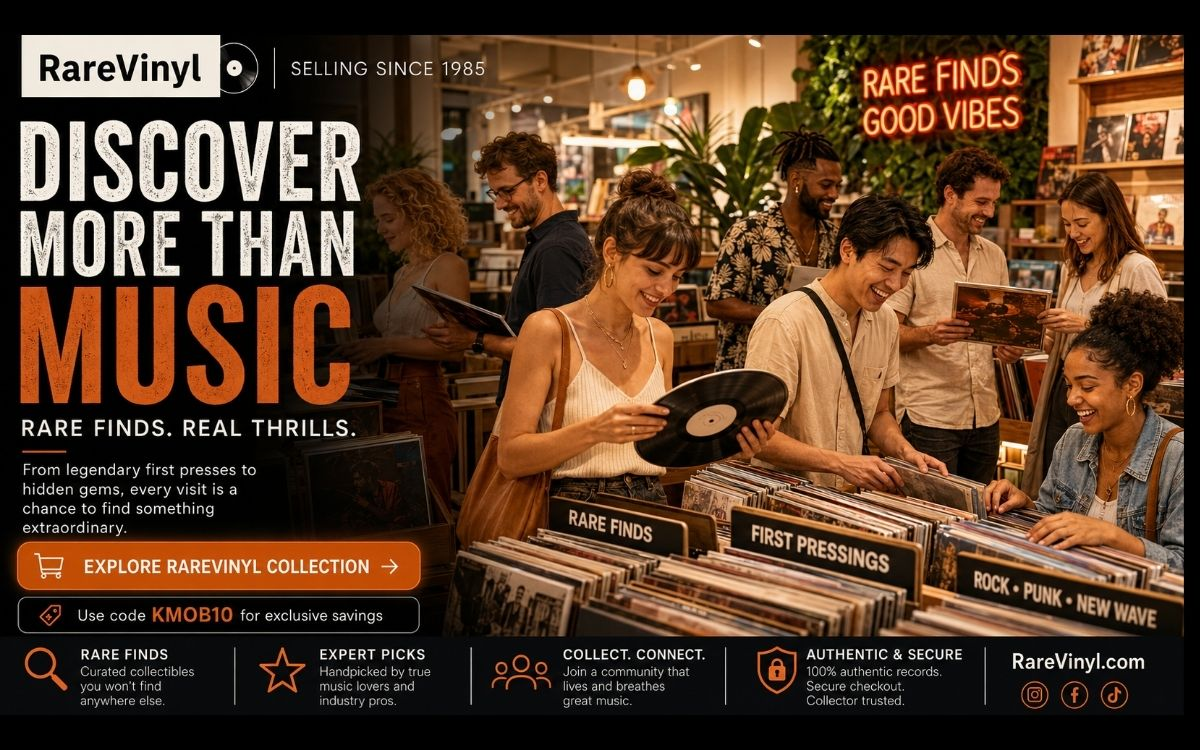
Vinyl is the physical form of the archive argument. The recording that survived the feed cycle, the pressing that held its value through every format shift, the record that occupies space on a shelf rather than a position in an algorithm — these are not relics. They are the proof that some signals were worth keeping. RareVinyl is where the serious collector and the cultural operator find what the feed forgot. Use code KMOB10.
Scarcity in an attention economy does not work the way scarcity works in a physical market. The feed is not short on content — it is structurally overloaded. Global music streams hit a record 5.1 trillion in 2025, up 9.6% from the prior year, according to Luminate’s year-end report — but the listeners are not spreading that attention equally. They are concentrating it on the work they trust, the recordings they return to, and the catalog that has proven over time that it deserves the room. In a market where anyone can upload and everything is available, the scarce resource is not access. It is curatorial intelligence — the ability to identify what is worth keeping and give it a context that survives the feed cycle.
This is where cultural memory becomes economic logic. The vinyl record that holds a recording from 1971 is not competing with the streaming release from this morning. It is occupying a completely different position in the audience’s relationship with music — one built on deliberate choice, physical commitment, and the understanding that this recording was worth owning rather than merely streaming. The collector who builds an archive of that kind of object is not living in the past. They are preserving the evidence that some signals were worth more than the feed’s attention span allowed for. That evidence has a market. It always has.
The feed is the room where culture passes through. The archive is the room where culture lives. The operator who understands the difference builds for both — knowing that the feed will always move faster than the archive, and that the archive will always outlast the feed.
Building for permanence is a different discipline than building for reach. Reach is optimized through volume, frequency, and format compatibility with the platform’s current algorithm. Permanence is built through clarity of argument, specificity of voice, and the accumulation of work that holds its meaning outside the original context in which it was produced. The media operator who only builds for the feed produces work that is calibrated to disappear — because the feed is designed to surface and replace, not to hold and return. The operator who builds for the archive produces work that earns its value over time, that can be found and returned to long after the moment of original publication, and that compounds in authority rather than decaying in relevance.
In practice this means: the editorial voice has to be specific enough to be cited. The argument has to be clear enough to survive summarization. The published work has to exist in a form that can be owned — not just streamed, not just scrolled past, not just algorithm-served and forgotten. In 2026, the metrics that move music catalog valuations include save rates and listener engagement — signals that high saves indicate lasting listener value, according to the Creative Funding Agency’s valuation guide. The language of the catalog investor and the language of the media operator are converging around the same question: what did the audience keep, and why? What they kept is the archive. What they kept is the luxury. What they kept is the room that the feed cannot enter.
Publishing Layer · Turn the Signal Into Something Permanent
The archive argument applies to words as much as to recordings. The idea that lives only in a feed post is subject to the feed’s timeline. The idea that exists in a published, owned, authored work — a book, a monograph, a documented body of thinking — is infrastructure. Spines gives creators, operators, and cultural voices the publishing layer to take what the feed carries and build something that outlasts it.

The cultural operators who have built archives that outlast platform cycles share a common discipline: they treated preservation as production. They documented the work. They maintained the rights. They built the infrastructure that allowed the body of work to be found, licensed, cited, and returned to — independent of whether the current platform was amplifying it. The vinyl pressing that sits on a shelf in a collector’s home is generating cultural authority whether or not the streaming algorithm surfaces the same recording today. The book that documents a voice or a movement or a decade of cultural intelligence is available to anyone who searches for it, regardless of when the feed that originally amplified it has moved on to something else.
KMOB1003 is built on this understanding. The spoken-word archive, the radio programming across 50+ countries, the editorial record of cultural infrastructure — these are not feed assets. They are archive assets. They are worth more than the engagement numbers from the week they were produced, because they accumulate authority and reference value over time in a way that feed content structurally cannot. The feed will keep moving. It was built to. The archive stays — and earns the return visit that the feed gave up by design. Preserve what the signal carried. That is not a sentimental instruction. It is an infrastructure argument. The archive wins when the feed forgets because the archive was built to remember.
The feed is the room where culture passes through. The archive is the room where culture lives. Build the room the feed cannot enter — and preserve what the signal carried before the platform moves on.
Some links in this article are affiliate links. KMOB1003 may earn a commission from qualifying purchases at no additional cost to you. All affiliate partnerships are editorially independent.