
LEGACY & INSIGHTS: BUSINESS & TECHNOLOGY
The FTC Wants to Know Whether Nine Companies Use Your Data to Set Prices and Pay
Algorithmic pricing data, loyalty programs and personal information are now the subject of federal orders to nine companies. The FTC has not said that any of them broke the law.
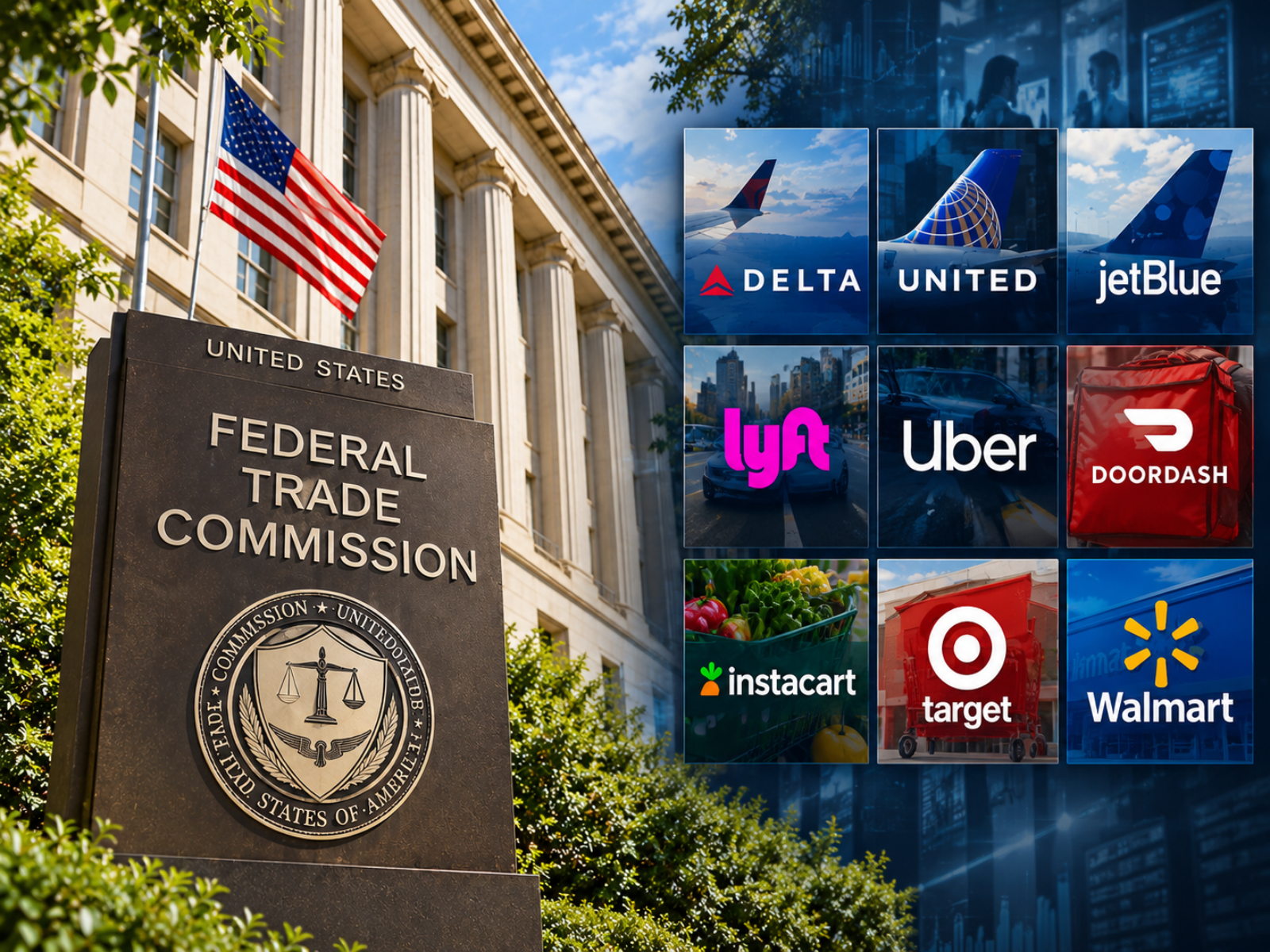
The Federal Trade Commission wants nine major companies to explain whether algorithmic pricing data, loyalty programs and other personal information change what customers pay and what workers earn.
On October 28, the agency announced orders to Delta Air Lines, United Airlines, JetBlue, Uber, Lyft, DoorDash, Instacart, Target and Walmart, according to the FTC. Issued under Section 6(b) of the FTC Act, the orders are a study rather than a case. Approved 2–0 by the commission, they give each company 45 days from receipt to respond.
The distinction matters. So far, the FTC has not announced that any of the nine used personal data to set an individual’s price or pay. It is requiring the records that would show whether they did.
For shoppers, the question is plain: when two people want the same ticket, ride or bag of groceries, does the price change because of the market or because of what a company knows about each of them? For workers, it is just as direct. Does a platform’s knowledge of one driver’s habits change the pay it offers?
What the FTC Wants to Know About Algorithmic Pricing Data
Airline fares, delivery fees and ride prices have long moved with demand, seat availability, location and other operating conditions. Personalized pricing is a different question. A company may know where a customer is, whether that customer belongs to a loyalty program and how that customer uses its app or website. The FTC wants to know whether information like that, the algorithmic pricing data behind a single price, decides what one person sees.
Chairman Andrew Ferguson said the agency intends to scrutinize what he called “opaque methodology” for setting prices and gig-worker pay. He said consumers deserve to know whether companies use browsing habits or other personal data to estimate the highest price a customer will pay.
The inquiry follows earlier federal work. In 2024, the FTC’s surveillance pricing study went to intermediary companies that sell pricing technology. The new orders go directly to the businesses that set prices and pay.

When a Price Changes, Is Algorithmic Pricing Data the Cause?
A price difference does not by itself show that a company is using personal data. Fewer open seats push a ticket up, a demand spike lifts a ride, and inventory, shipping costs or a competitor can move a retailer’s price. Each of those differs from using an individual’s information to estimate the most that person will pay.
Telling them apart takes more than a company’s description of its own system. It takes the inputs, the models and the procedures that turn them into an offer. The FTC says its orders seek information about those inputs, tools and procedures.
Some of the companies have already answered publicly. Fox Business reported that Delta said it has never used, tested or planned a fare product that targets individual customers with offers based on personal data. JetBlue told the outlet that it does not use personal information or browsing history to set individual prices, and that fares reflect demand and seat availability. An Instacart spokesperson said the company does not use personal information to set prices. Fox Business said it contacted United, Uber, Lyft, DoorDash, Target and Walmart and reported no reply from them.
Instacart’s pricing has drawn separate attention. Newsweek reports that Instacart has described its price tests as limited, short-term and randomized, and has said it does not use personal, demographic or individual behavioral information to set online item prices.
Neither a denial nor an inquiry settles what the algorithmic pricing data would show.

The Other Question Is What Workers Earn
The FTC is also looking at what ride-hailing and delivery platforms pay the people who work on them. A driver may see an offer calculated by software that weighs distance, expected demand and other features of the job. The FTC says it is concerned that offers may also depend on personal data about the worker, such as phone usage or a record of accepting past offers.
The difference is important. Pay that varies because one job is longer or harder is not the same as pay that varies because software has learned what a particular worker will accept. The FTC has not established that any of the companies does the second. It wants the records that would show.
What the Orders Can Reveal About Algorithmic Pricing Data
Section 6(b) lets the FTC run broad studies and require companies to provide information without a specific law-enforcement case. According to the agency’s announcement, the orders ask two kinds of questions. For all nine companies: do prices for tickets, rides, deliveries and other products vary from person to person, including because of loyalty-program participation or algorithmic analysis of personal data? For ride-hailing and delivery companies: what inputs, tools and procedures set or adjust worker pay and pricing?
The commission approved the orders 2–0. If a company does not comply, the FTC can ask a federal court to compel it.
FROM KMOB1003

What the Inquiry Does Not Establish About Algorithmic Pricing Data
A Section 6(b) order collects information, here about algorithmic pricing data and worker pay. It is not a ruling that a company broke the law, and it does not require any company to change how it prices or pays. Any enforcement action would be a separate matter with its own legal questions and procedures.
Algorithms are also not the same as personalization. A company can use software to manage demand without using personal data to set individual prices. It can also personalize promotions or offers in ways that raise their own questions. Whether any practice is lawful depends on facts the public record does not yet contain.
What Happens Next in the Algorithmic Pricing Data Inquiry
Each of the nine companies has 45 days from the day it receives its order. Because the period runs from receipt, the deadlines may not fall on the same date for every company.
The FTC also has a separate policy item open. In August, it proposed an enforcement policy statement on the undisclosed use of personal data to set individualized prices and invited public comment.
The next consequential development is what the agency does with the records it receives about algorithmic pricing data, and how much of what the companies say reaches the public. For now, one question stands, and nine companies have been ordered to answer it: when a company knows more about a customer or a worker, does that knowledge change the price it charges or the pay it offers?
Signal Breakdown
Not every claim about algorithmic pricing data carries the same weight.
Reported by the FTC
- Orders. Nine Section 6(b) study orders, announced October 28, 2026, to Delta, United, JetBlue, Uber, Lyft, DoorDash, Instacart, Target and Walmart.
- Vote. The commission approved them 2–0.
- Deadline. 45 days from receipt, with court enforcement available if a company does not comply.
- Focus. Whether prices vary by person, and how ride and delivery platforms set worker pay, including any use of phone usage or past offer acceptance.
Company Statements and Context
- Delta. Told Fox Business it has never used, tested or planned fares targeted to individuals based on personal data.
- JetBlue. Told Fox Business it does not use personal information or browsing history to set individual prices.
- Instacart. Said it does not use personal information to set prices; Newsweek reports it calls its price tests limited, short-term and randomized.
- Others. Fox Business reported no reply from United, Uber, Lyft, DoorDash, Target or Walmart.
Not Established
- whether any of the nine used personal data to set an individual’s price
- whether any ride or delivery platform used personal data to set pay offers
- which specific documents each company must produce
- the calendar date each company’s deadline falls on
- whether the companies’ responses will be made public
Sourcing: facts about the orders, the 2–0 vote, the 45-day period, the agency’s stated concerns and Chairman Ferguson’s remarks come from the FTC’s October 28, 2026 announcement. The 2024 study comes from the FTC’s surveillance pricing page. Company statements are as reported by Fox Business and Newsweek. We did not review the orders themselves.

FTC INQUIRY / KEY FACTS
RADAR / WHAT TO WATCH


KMOB1003 SELECTS
Music, style, tools, art and objects worth your attention.