
How Much Should You Trust Your Sleep Ring?
The problem is not that wearables estimate. The problem begins when an estimate starts to feel like a fact.
Your ring can tell you when you slept, how long you slept, and which stages it thinks you moved through. Oura Ring sleep accuracy is now at the center of a proposed class action filed August 20 in federal court in California, alleging the company oversold what its sensors can actually know. Oura disputes the claims and says its sleep staging has been validated against polysomnography, the clinical gold standard. That disagreement matters. But the more useful question starts before the courtroom: what exactly are we asking a ring on our finger to know?
What This Article Is Actually About
This is not an argument that sleep rings are useless, and it is not a diagnosis of anybody’s sleep. Oura’s own materials explain that its ring infers sleep stages from movement, skin temperature, heart rate, heart-rate variability and respiratory rate rather than the electrical brain activity a clinical sleep study records directly. That doesn’t make the ring meaningless. It makes the distinction between measuring and inferring worth understanding, especially now that a lawsuit has put Oura Ring sleep accuracy under formal scrutiny.
Signal One
A Precise Number Is Not a Direct Measurement
Sleep-stage scores look exact. They are algorithmic estimates built from indirect signals, not a direct read of brain activity.
Signal Two
Two Accuracy Claims, One Lawsuit
A proposed class action challenges both Oura’s older 79% accuracy claim and its newer marketing of 95% sleep-staging accuracy.
Signal Three
Independent Research Shows How Much Accuracy Can Vary
A 2025 clinical study of an earlier-generation Oura ring found 53.18% four-stage accuracy in a sleep-lab patient population, underscoring how much testing conditions shape an accuracy figure.
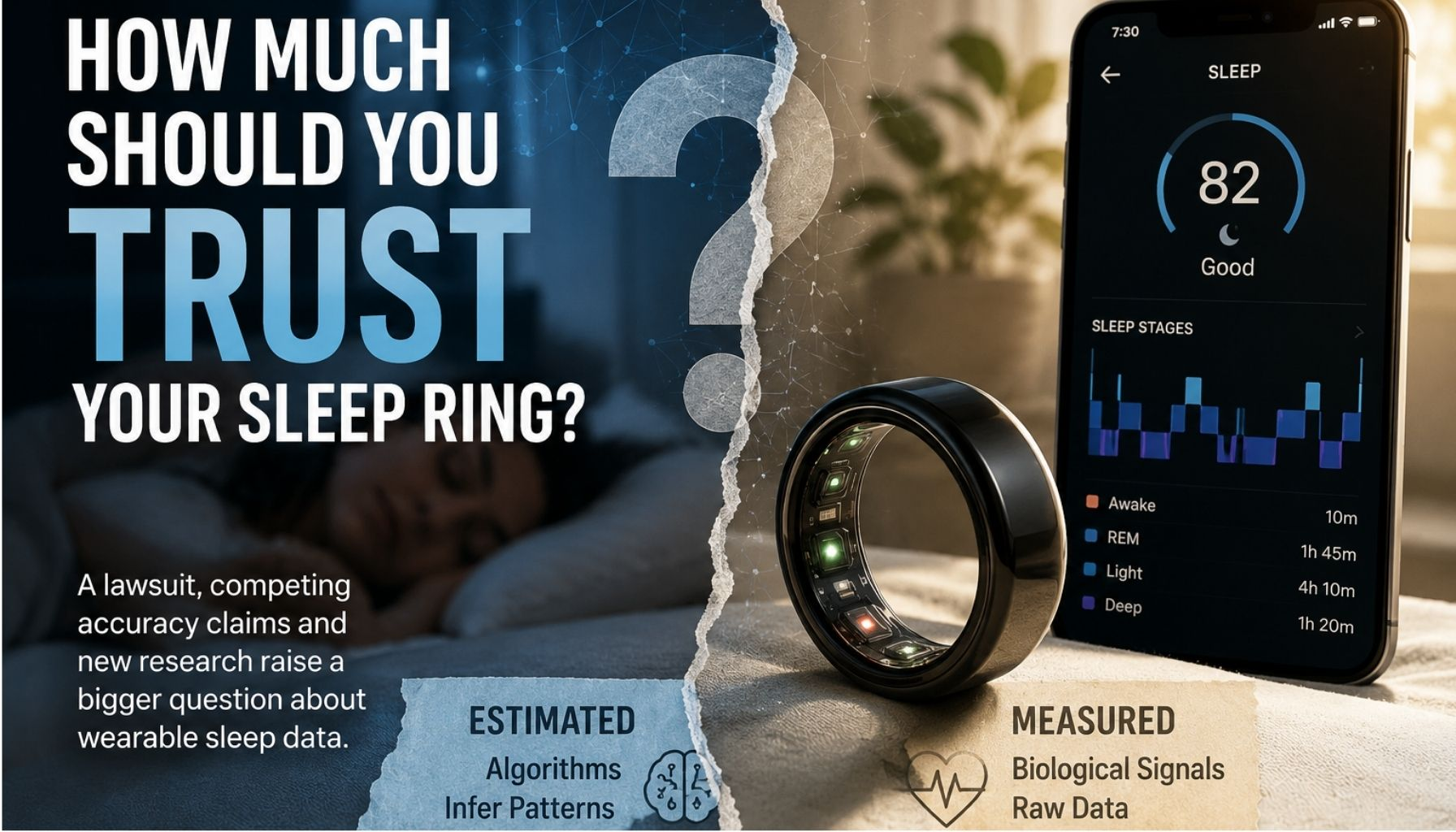
Your Ring Knows a Lot. It Doesn’t Know Everything.
A formal sleep study is an elaborate affair. Polysomnography records brain activity, eye movement, muscle activity, heart signals, respiration and blood oxygen, all at once, while a trained technician scores the results by hand. It requires a lab, electrodes, and a night spent sleeping somewhere unfamiliar with wires attached to your scalp. A consumer ring has a different job entirely: small enough to wear to bed, comfortable enough that you’ll actually wear it night after night, and sophisticated enough to turn the handful of signals available from a finger into something a phone screen can display in the morning. Oura’s own support materials describe an algorithm that combines movement, skin temperature, heart rate, heart-rate variability and respiration to determine whether a wearer is awake or in light, deep or REM sleep, and the company has cited 79% agreement with polysomnography for that classification. That is company-cited validation evidence. It is simply not the only evidence, and it does not answer every accuracy question.
What Oura Ring Sleep Accuracy Actually Means
A 2025 study published in Scientific Reports, a Nature Portfolio journal, tested three consumer sleep rings against polysomnography in a university sleep-lab population, patients with real, diagnosed sleep and medical conditions rather than healthy volunteers. The Oura device tested was the third-generation Oura Ring, with data collected between August and November 2022; it is not a test of the current Oura Ring 5 or its algorithm. On the simpler question of whether a wearer was asleep or awake, that earlier-generation ring reached roughly 85% accuracy. On the harder question, sorting each period into wake, light, deep or REM sleep, its overall four-stage accuracy was 53.18%. Those two numbers aren’t contradictory; they answer two different questions, and treating either alone as “the” accuracy figure would flatten a more complicated picture. The same research found the ring underestimated light sleep by nearly 14 minutes on average, underestimated deep sleep by roughly 6 minutes, and overestimated REM sleep by more than half an hour. The researchers note their sleep-lab sample differs meaningfully from the younger, healthier populations used in earlier validation studies. Different device generations, algorithms, populations and testing conditions can all produce different accuracy figures, which is part of why a percentage alone can’t be treated as a universal statement of accuracy.
The Number on Your Screen Is the End of a Long Chain
A sensor detects something. Software cleans the signal. An algorithm interprets the pattern against a model trained on other people’s nights. The model assigns a probable state, and the interface turns that probability into a clean number you can read at a glance. Then you wake up, still half asleep, and see: REM, 1 hour 47 minutes. The complexity behind that number disappears, and what remains is just the number itself. Good product design does exactly that: it makes an invisible process legible in a single glance. It’s also where consumer understanding can get fragile, because the more confident the number looks, the easier it is to forget it may represent an algorithmic best guess built from indirect signals, rather than a direct observation of what your brain was actually doing at 3 a.m. Oura’s own documentation quietly acknowledges some of this uncertainty: lying very still while awake can resemble sleep to the ring, and movement or an elevated heart rate can make genuine sleep look like wakefulness. That kind of uncertainty is simply part of inference, when the sensor doing the guessing sits on a finger instead of a scalp.
The Lawsuit Changes the Question
The lawsuit itself is a proposed class action, and its allegations remain exactly that until a court says otherwise. Filed August 20 in the U.S. District Court for the Northern District of California, the complaint challenges Oura’s messaging directly: an older claim of 79% agreement with polysomnography, and a newer one, printed on the Oura Ring 5’s product page, of 95% sleep-staging accuracy compared with a clinical sleep lab. The Scientific Reports research discussed above provides useful context, but with an important boundary. It tested an earlier ring, running an earlier algorithm, with data collected back in 2022, and it was never designed to grade the Ring 5’s current marketing claim. What it offers instead is context: a working example of how differently accuracy can behave across devices, algorithms and populations, the exact nuance a single marketed percentage tends to erase. Oura disputes the lawsuit’s characterization entirely, saying its sleep staging has been validated against polysomnography across multiple independent studies, with an algorithm built on more than 1,200 nights of clinical data. Validation research can support those numbers while still leaving consumers with a harder question: what device, population and testing conditions produced the percentage they see in the marketing?
A Short Test Before You Trust the Number
Before letting a wearable score change your behavior, it helps to hold four things in mind at once: what the device actually sensed, like heart rate or movement, versus what the algorithm went on to infer, since a sleep stage is rarely a direct read; what population and setting produced the accuracy figure being cited, since healthy volunteers and clinical sleep-disorder patients have produced meaningfully different results in the research above; and whether tonight’s single number matters less than the pattern building across weeks. When a decision is significant enough to depend on the answer, that belongs with a healthcare professional and, where appropriate, an actual clinical test, not an app.
We Are Entering the Age of the Personal Score
The sleep ring is really just the clearest example of something larger: an entire industry learning to translate complex, hard-to-observe biological states into a single consumer-facing number. Sleep score. Readiness score. Recovery score. Stress score. Biological age. The wellness industry has learned something powerful: people understand numbers. A score makes an invisible biological process feel visible, and it lets you compare Tuesday with Friday, this month with last month, before a new routine with after it. That can be genuinely useful. But a score can also acquire authority simply by existing on a screen. Once an app displays 73, people naturally start asking why it wasn’t 83, and sometimes that curiosity encourages healthier habits. Sometimes it makes someone anxious about a body that felt perfectly fine right up until an algorithm told them otherwise. The interface doesn’t just report information back to you. It can quietly change how you relate to your own body.
The Better Way to Use a Sleep Ring
Maybe the healthiest relationship with a wearable isn’t “tell me the truth about my body.” Maybe it’s closer to “show me patterns I might otherwise miss.” Is bedtime quietly drifting later week over week? Does a glass of wine reliably correlate with a worse night, according to your own data over months rather than one dramatic evening? Did a change in your routine, a new job, a new gym schedule, a new medication, track with a different pattern over time? Even Oura’s own tools are built around long-term trends and comparisons over time, not one isolated nightly chart taken in isolation. Used that way, the ring becomes a notebook, not a verdict. Tomorrow morning, when the number comes up on the screen, let it point toward a question worth asking. It shouldn’t have the last word on how you actually feel.
KMOB1003 Framework
Four Layers Behind Every Wearable Number
Measured
Movement, heart rate, temperature and other signals sensors actually capture.
Inferred
The sleep stage or state an algorithm believes those signals represent.
Scored
A simplified number designed to make several variables readable at a glance.
Interpreted
The meaning the person wearing the device attaches to that number.
Our devices increasingly collapse these four layers into one experience. Consumers need to learn how to separate them again.
Signal Breakdown
Signal: A proposed class action against Oura challenges both its 79% and newer 95% sleep-staging accuracy claims, while independent research on an earlier-generation ring shows how much accuracy figures can shift with device, population and test conditions.
Impact: Millions of people adjust sleep, exercise and daily behavior based on scores that look precise but are built from indirect signals with documented, sometimes significant, margins of error.
Watch: Whether the lawsuit proceeds to class certification, and whether wearable makers change how confidently they market algorithmic health estimates as a result.
An Estimate Is Not the Same Thing as a Fact.
Legacy & Insights follows how technology, data and institutions shape ordinary decisions, including the quiet ones we make every morning based on a number on a screen.
Beyond the Score
A number on a ring is one input among many. Understanding sleep, supporting it, slowing down before it starts, and building the room around it all matter more than any single score.
Sleep Doctor
Better Sleep Should Be Bigger Than a Score
If this story makes you curious about improving sleep rather than simply measuring it, Sleep Doctor offers independent sleep education and resources built around the broader sleep environment.
King Koil Airbeds
Your Ring Can Score the Night. Your Bed Still Has to Support It.
King Koil Airbeds offers another way to think about the physical sleep environment: comfort first, score second.
RareVinyl
Not Every Nighttime Ritual Needs a Score.
Some wind-down rituals don’t need an app at all. RareVinyl’s collection is built for the kind of unhurried listening that has nothing to do with tracking anything.
LuxeDecor
The Bedroom Still Matters.
The room you sleep in is part of the nightly experience a score cannot capture. LuxeDecor helps build a bedroom environment worth spending eight hours in.
Disclosure: KMOB1003 may earn a commission from qualifying purchases through these partner links. Editorial coverage is produced independently.
The Operator’s Bookshelf
KMOB1003 READS
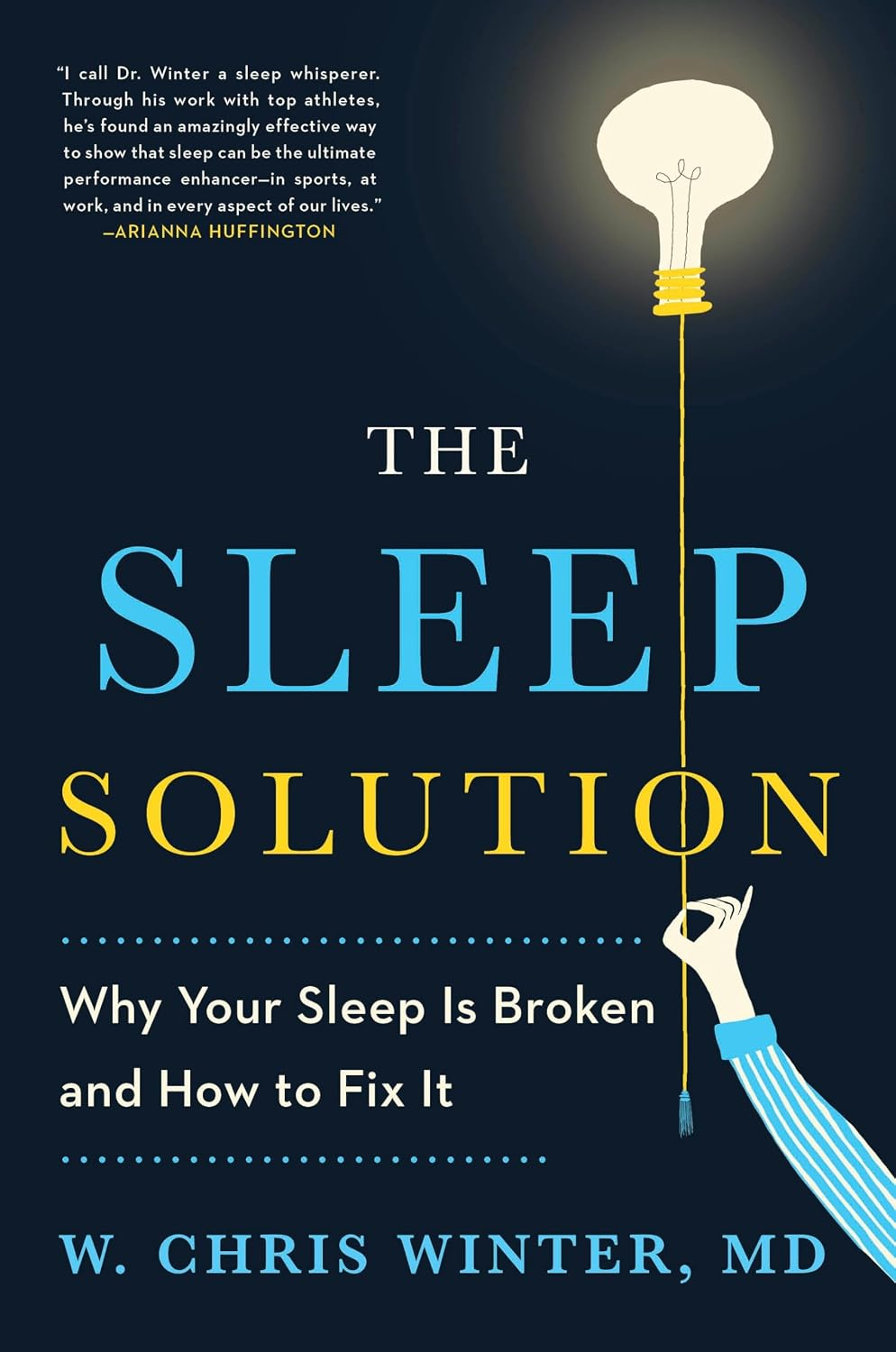
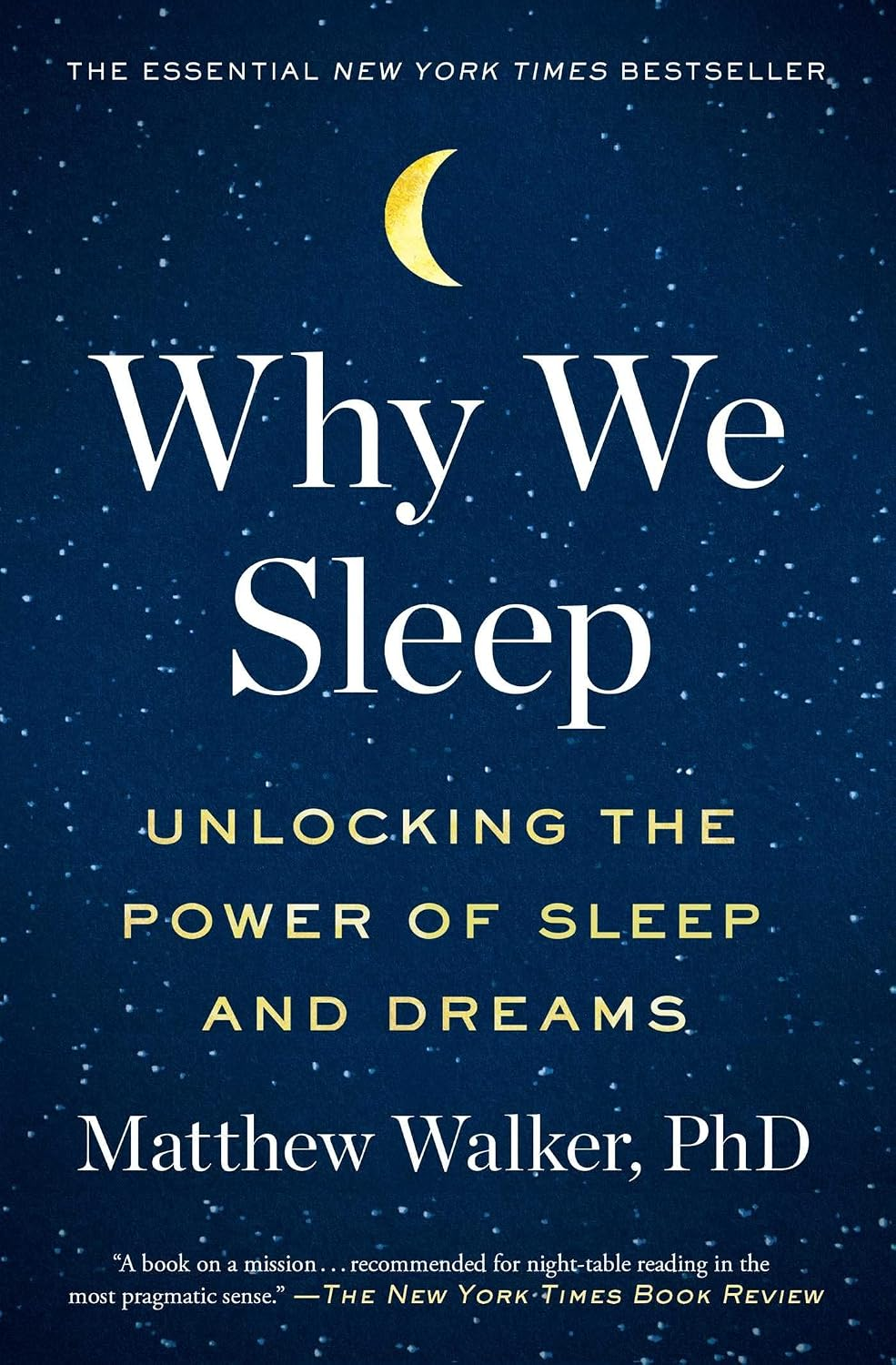
As an Amazon Associate, KMOB1003 may earn from qualifying purchases.
Disclosure: KMOB1003 may earn a commission from qualifying purchases through select partner links. Editorial coverage is produced independently.
KMOB1003 After the Article
Continue the Signal
One number on a screen changes a routine. Here’s where the pattern keeps building.

KMOB1003 Collection
The Global Collection
Explore the tools, platforms, books and infrastructure shaping how people create, work and protect themselves.
Explore the Collection →
KMOB1003 Culture Docent
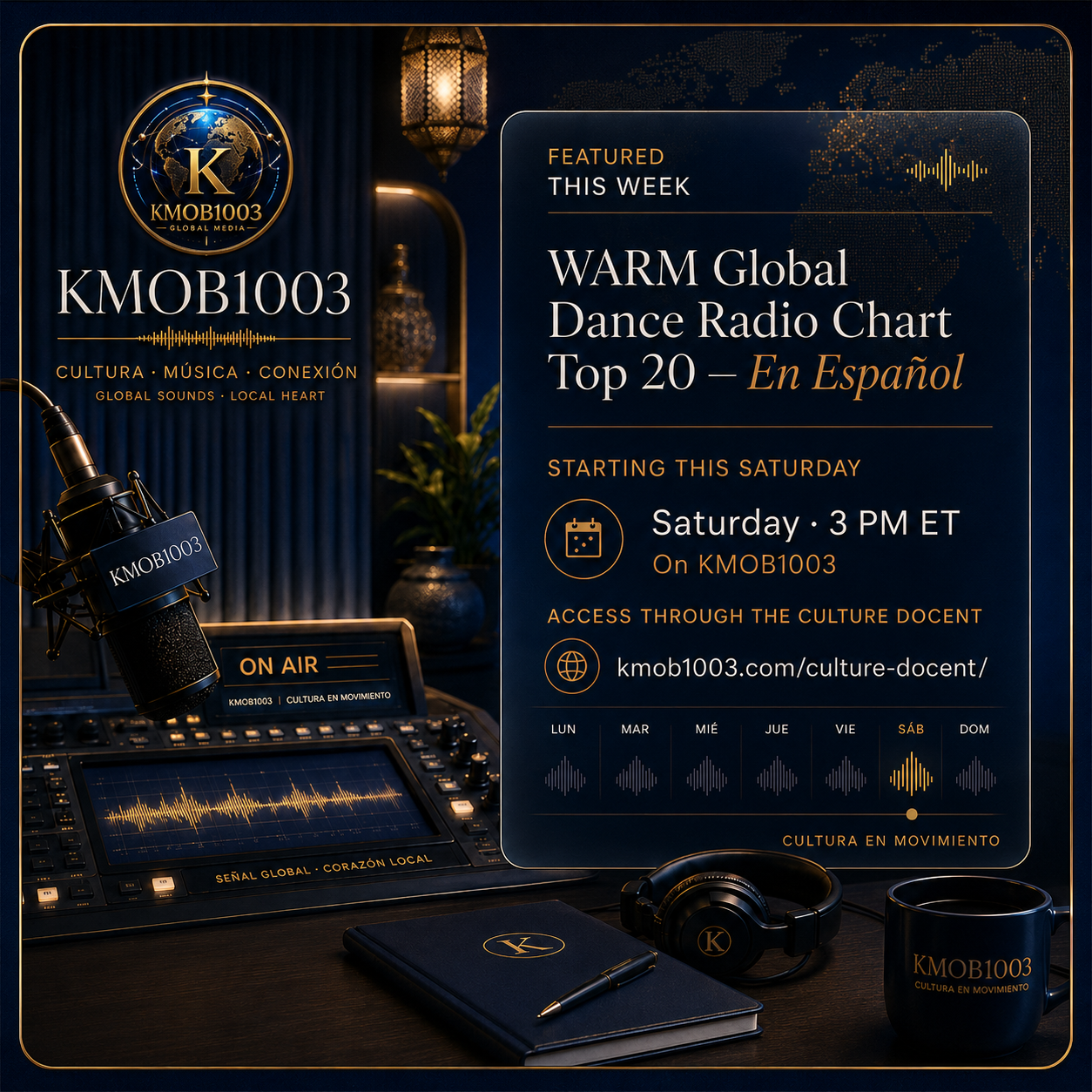
Culture Docent
Follow how new technology reshapes culture, trust and everyday behavior through KMOB1003’s guided intelligence room.
Ask the Docent →

KMOB1003 Spoken Word
The Voice Gallery
Enter an archive built around voices that do not wait for permission to be heard.
Enter the Voice Gallery →
KMOB1003 Artist Services
Artist Services
For artists ready to move from visibility into infrastructure, explore KMOB1003’s media placement and rotation pathways.
Build the Signal →
Global Reach. Powerful Stories. Lasting Impact.
