
AI · Labor · Physical Space · Infrastructure · Future of Work · Friday AM
The World Is Becoming a Robot Training Ground
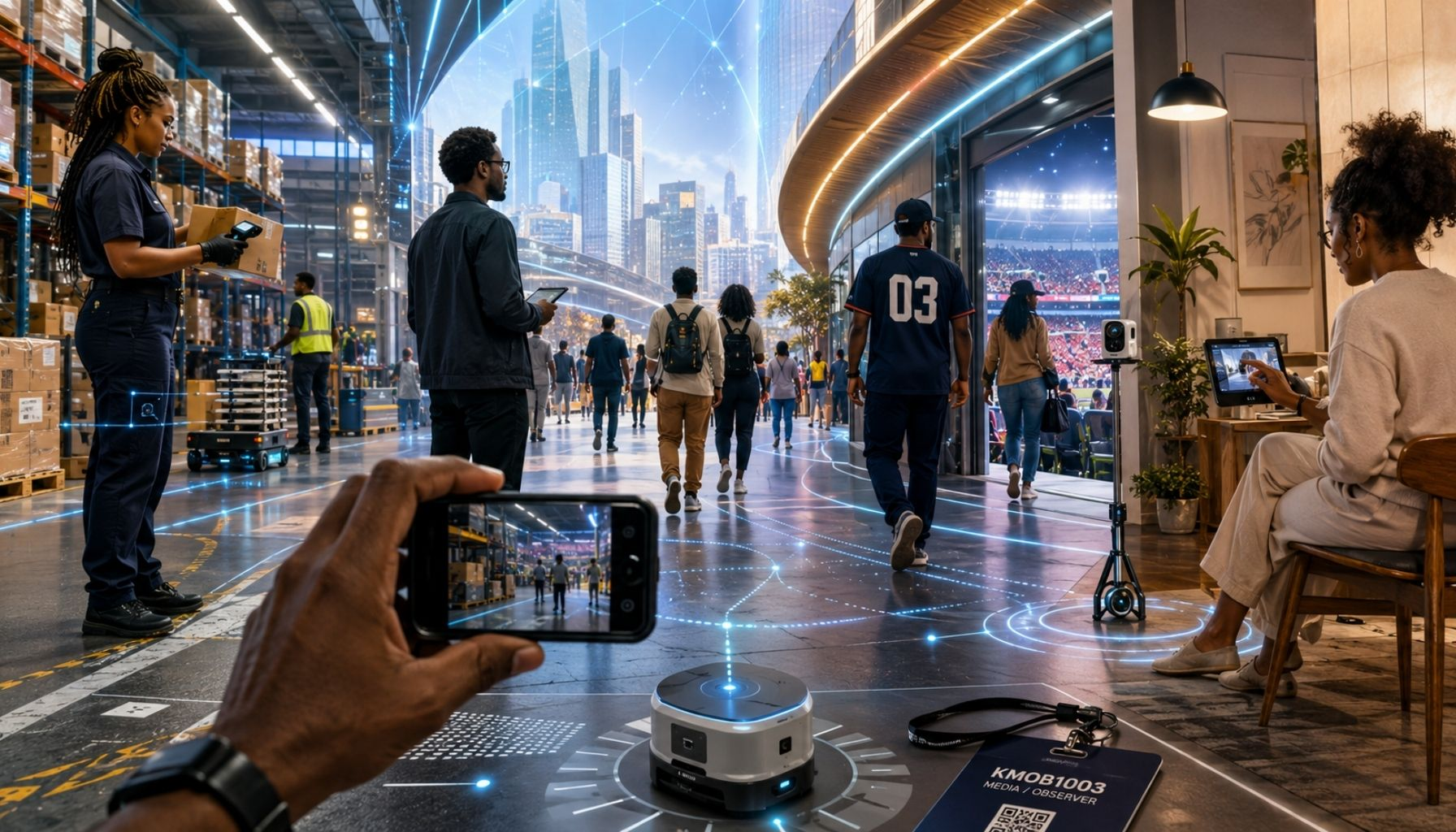
Physical AI is moving out of the lab and into the street, the warehouse, the stadium, and the home. The next AI shift will not just answer questions. It will learn the room.
A robot does not learn the world from a press release. It learns from a floor it almost slips on, a box it cannot quite grip, a curb that interrupts its balance, a crowd that refuses to move in neat lines, a kitchen where one drawer sticks and another one opens too fast. For years, AI felt like something that lived behind glass: a search bar, a prompt box, a dashboard, a feed. Now the ambition is changing. The next system does not only want to answer the room. It wants to read it, map it, move through it, and learn from what bodies do when life refuses to behave like a clean dataset.
The feed taught AI attention. The world is teaching it consequence.
What This Article Is Actually About
This is not about robot dogs, warehouse demos, or viral videos of machines opening doors. This is about the next layer of AI infrastructure: systems trained not only on language and images, but on motion, context, labor, risk, emotion, sport, and the physical routines of daily life. Once the world becomes training material, the question is no longer whether AI can learn the room. The question is who benefits when it does.
Signal One
AI is leaving the prompt box
Physical AI and embodied systems are moving toward streets, warehouses, homes, hospitals, stadiums, factories, and other environments where software has to deal with friction, mess, movement, and people.
Signal Two
Automation still has workers behind it
The systems that look automatic often depend on human data workers, labelers, reviewers, operators, and hidden infrastructure that make machine intelligence usable.
Signal Three
The room is becoming data
Context-aware AI does not only process what people say. It begins interpreting where they are, how they move, what they feel, what the room demands, and what the system thinks should happen next.
I. AI Is Leaving the Screen
The last decade of AI progress happened almost entirely behind glass. A search bar, a prompt box, a dashboard, a feed — the systems learned from language, images, clicks, and attention, and they got remarkably good at it. That era trained machines to predict the next word, the next pixel, the next likely answer. It did not require a model to understand weight, balance, friction, or the difference between a floor that is dry and one that is not.
Physical AI is a different ambition. It is the attempt to give software a working model of space, movement, timing, and consequence — the kind of intelligence a body uses just to cross a room without thinking about it. That shift is why a growing number of AI builders are leaving the chatbot race entirely to chase something harder: systems that do not just talk about the world, but move through it.
II. The World Is Messier Than a Dataset
The Associated Press reports that a growing number of AI entrepreneurs are pivoting from language models toward “world models” — systems built to learn the physical structure of space and time, not just the structure of a sentence. A chatbot can describe a coffee mug. It cannot pick one up, account for its weight, or adjust its grip when the mug is half full. That gap between description and action is the entire reason physical AI is hard.
Real environments do not arrive pre-cleaned. A robot in the world has to handle uneven surfaces, interrupted routines, unpredictable people, changing light, ambient noise, fatigue, and risk — all the friction a dataset normally edits out. That is precisely why the field remains uneven: some systems perform impressively in a controlled warehouse aisle and struggle the moment the floor, the lighting, or the crowd changes. The promise is real. The maturity is not evenly distributed yet.
III. The Worker Is Still Inside the Machine
Nowhere is that hidden labor clearer than this summer’s World Cup. Rest of World reports that the tournament’s sensor-fitted ball, real-time tracking, and AI-assisted offside calls run on a global workforce of human data annotators — based in cities including Manila, Cairo, Chennai, and Ternopil — who can log up to 3,000 actions per match by hand. Automated detection still struggles with the calls that matter most; a human eye remains the part of the system nobody sees on the broadcast.
The public sees the highlight reel. The system runs on the annotator three time zones away, logging a pass at 2 a.m. so the broadcast graphic can update in real time.
Creator Studio · Proof Layer
As AI systems get better at producing the finished surface, the value of showing process rises. The clip, the edit, the before-and-after, the behind-the-scenes proof — these are how creators make human work visible in a machine-shaped media environment.
Create the Signal They Keep Sharing →
Affiliate link · KMOB1003 may earn a commission from qualifying purchases.
IV. When AI Starts Reading the Room
IEEE Spectrum reports on a growing field of “human-context AI” — systems that combine facial dynamics, voice, tone, language, and behavior, and evaluate all of it against the specific environment it happens in, such as a performance review or a coaching session. The shift is from labeling a single signal to interpreting a whole scene.
The caution here matters. AI does not feel anything, and these systems remain experimental and uneven, prone to misreading tone, culture, and context. The real danger is not that the machine has an inner life. It is that an institution — a manager, an insurer, a school, a court — may start treating its interpretation of a room as authority, long before the underlying system has earned that trust.
V. Who Owns the Room?
If homes, jobs, streets, arenas, cars, and platforms become AI training environments, the questions stop being technical and start being structural. Who owns the data a room produces simply by being lived in? Who gave consent — the homeowner, the employee, the fan walking through a stadium gate? Who gets compensated for the behavior that trains the model, and who gets watched, mislabeled, or quietly optimized out of the system once it learns enough to replace the role it was trained on?
This is the KMOB1003 doctrine question underneath all of it: a room does not stop belonging to the people in it just because a sensor started watching.
Visual Intelligence · Creative Infrastructure
Before a room becomes a product, campaign, installation, interface, or story system, it has to be visualized. Use the visual layer to test what the audience should understand before the technology speaks for itself.
Affiliate link · KMOB1003 may earn a commission from qualifying purchases.
VI. The Future Will Be Physical
Prompting well was the skill of the last AI wave. It will not be the skill that decides the next one. As intelligence moves off the screen and into streets, stadiums, warehouses, and homes, the divide that matters shifts too — toward who controls the physical systems, the sensors, the data, the models, and the labor that actually teach a machine how the world works.
The companies that win this next layer will not only own models. They will own access to environments: the camera, the sensor, the arena, the factory floor, the home device, the workplace tool, the training footage, the human feedback, and the labeled behavior. That is why this moment matters. Physical AI is not only a product category. It is a new claim on the spaces where people live, work, gather, perform, and move.
The next AI divide is not only who can prompt well. It is who controls the room.
The Physical AI Map · Four Layers of the Room
The Room
What AI is learning: space, movement, context, objects, timing, friction, human behavior.
The Worker
What the public often misses: data labor, labeling, review, maintenance, safety checks, and operational judgment.
The Machine
What changes: AI moves from answering questions to making decisions in physical environments.
The Owner
What matters: who controls the sensors, data, models, permissions, and value created by the room.
Signal Breakdown
When AI lived mostly in the feed, the fight was over attention. When AI enters the physical world, the fight becomes larger: access, labor, movement, safety, privacy, ownership, and who gets to define what the room means. The next intelligence layer will not only read the internet. It will read us moving through the world.
Disclosure: KMOB1003 may earn a commission from qualifying purchases or transactions through select partner links. Editorial coverage is produced independently.
KMOB1003 Radar
Tools and rooms for the next intelligence layer.



KMOB1003 Saturday Soul Signal
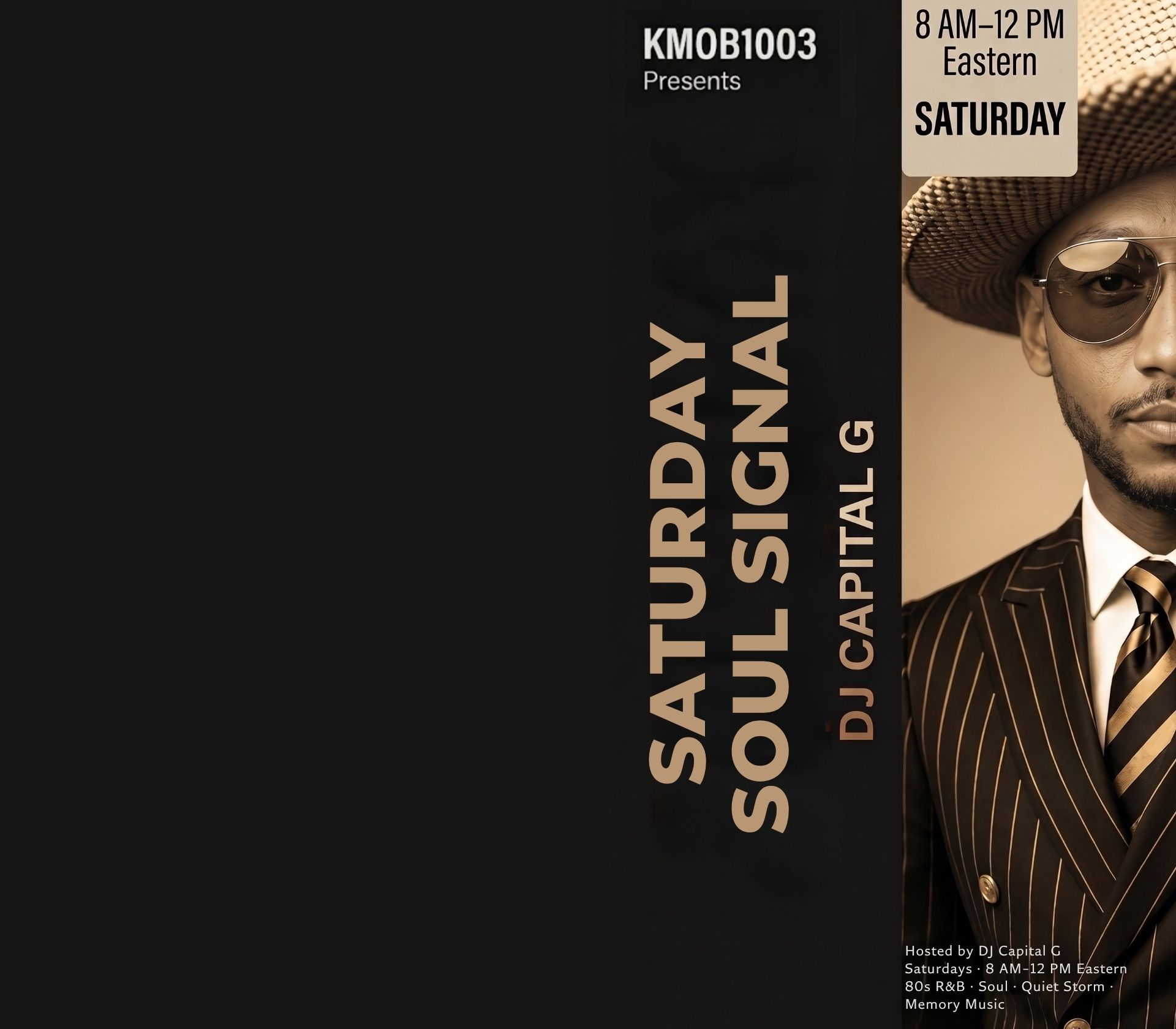
Saturday Soul Signal with DJ Capital G
Saturday mornings belong to the room: R&B, soul, quiet storm, memory music, and live signal with DJ Capital G.
Saturdays · 8 AM–12 PM Eastern
Stream Saturday Soul Signal through KMOB1003’s live player. Additional platform links can be added as they are confirmed.
