

KMOB1003 Global Intelligence | Editorial Desk
On January 22, 2026, job seekers gathered outside the EmployNV Career Hub in Sparks, Nevada, for a hiring event at the Tesla Gigafactory—a scene that still belonged to the visible economics of an earlier era.
But while the physical lines in Nevada provide a clear visual for the evening news, a far more profound shift is occurring in the digital economy.
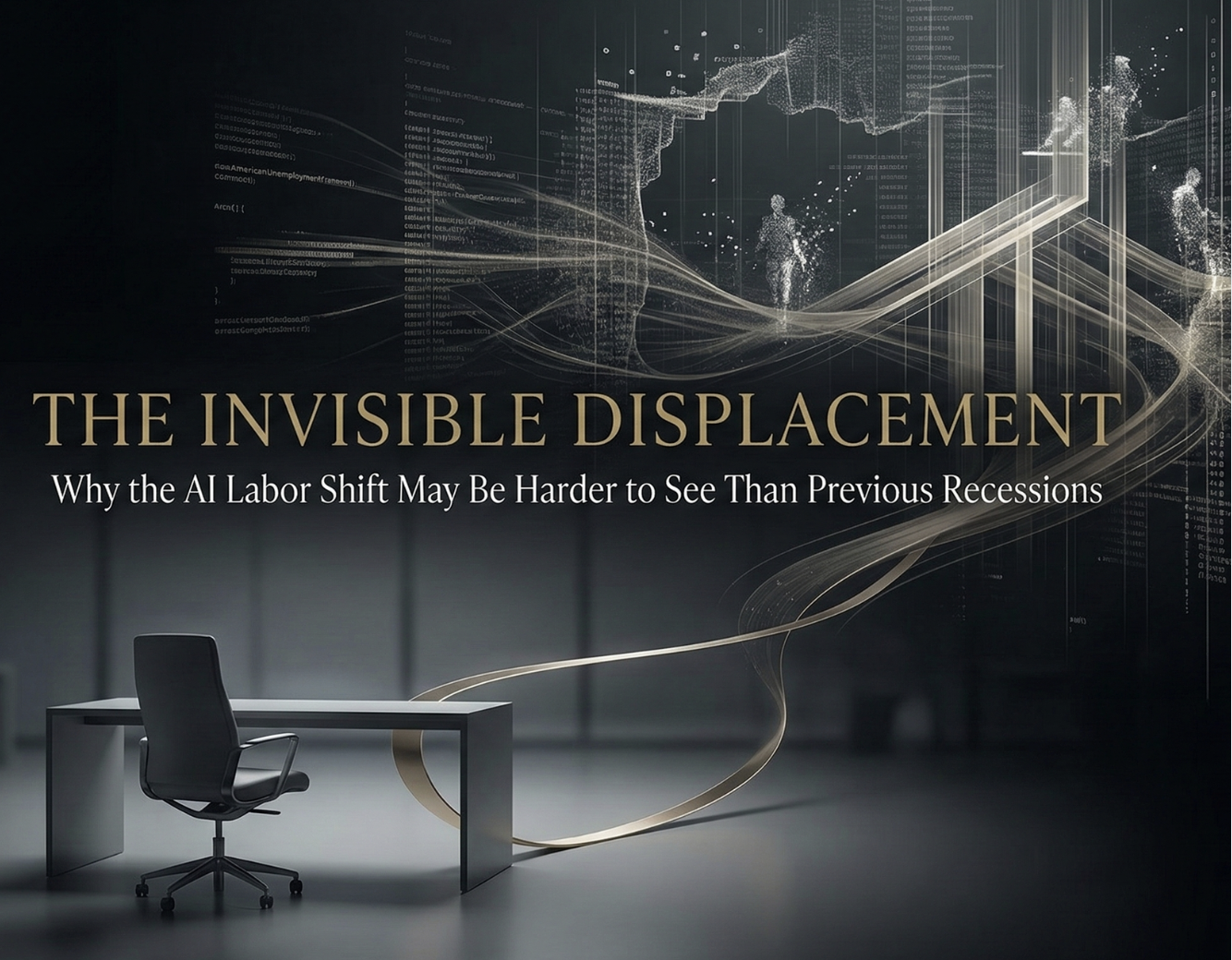
As consensus grows across Silicon Valley and Wall Street about the scale of AI layoffs and artificial intelligence labor disruption, a new architecture of unemployment is emerging. It is a transition defined not by the sudden closure of factories, but by a quiet, systemic erosion of the white-collar career path. And for the first time in modern history, the disruption is arriving without a clear paper trail.
The Missing Signal
In recent months, leaders at the forefront of the AI transition—including Anthropic’s Dario Amodei and Microsoft’s Mustafa Suleyman—have suggested that a significant portion of white-collar roles could be automated within the next five years. JPMorgan’s Jamie Dimon has echoed the sentiment, urging institutions to begin the long-term thinking required for large-scale labor disruption.
Yet as these shifts begin to manifest, they are meeting an unexpected friction: silence. According to the Bureau of Labor Statistics, nearly 75% of unemployed Americans never apply for unemployment benefits or unemployment insurance. They are becoming part of an unrecorded workforce—a demographic navigating one of the most significant labor transitions of the modern economy without ever touching the safety net designed to support them.
Infrastructure Partner
Own the Automation.
Digital Sovereignty
Operators who own their platform cannot be deplatformed.
When three-quarters of a workforce chooses to remain outside the system, the labor disruption becomes a ghost. The data remains stable. The headlines remain tempered. The institutional response remains slow. Because the true scale of the transition is hidden by the very people experiencing it.
The Architecture of Avoidance
The failure to file is rarely a matter of negligence; it is a matter of institutional friction. Data suggests that 55% of workers who lose their jobs do not apply for unemployment benefits because they believe they are not eligible. Many assume that leaving a role voluntarily—even due to workplace toxicity or unsafe conditions—automatically disqualifies them. Others believe contract work, freelance employment, or remote digital labor falls outside the traditional safety net.
For many white-collar professionals, there is also a psychological barrier. To apply for unemployment benefits is to admit that a once-stable career path has fractured. Instead of entering a system that feels bureaucratic and legalistic, many professionals choose to burn through savings, pivot into gig work, or quietly attempt to rebuild their careers.
In leadership terms, this creates what might be called the Architecture of Avoidance. A labor market where workers self-filter out of official systems, leaving policymakers and institutions to interpret incomplete data.
Intelligence Partner
Architect the Relationship.
When the signal is fragmented, relationship intelligence matters. Build continuity where the data thins out.

A System Out of Sync
The American unemployment framework was designed during the New Deal era for a workforce built around factories, assembly lines, and geographically fixed employment. It has not undergone a wholesale structural redesign since its creation. Its federal funding mechanisms have remained largely unchanged since the 1980s.
But the modern labor market operates very differently. In 2026, a machine-learning model can replace an entry-level analyst in a single weekend. An algorithm can absorb the workflow of a marketing assistant, junior programmer, or financial researcher without ever appearing on a payroll.
The safety net was designed for a world where layoffs were visible events. Factories closed. Plants shuttered. Entire towns felt the impact simultaneously. Today’s disruptions often occur quietly—through automation of tasks rather than elimination of entire departments.
The Measurement Problem
Another structural shift has quietly removed one of the traditional guides through the unemployment system. Labor unions. Union membership fell to 9.9% of U.S. workers in 2024, the lowest level in modern history. For decades, unions functioned as translators of the safety net—helping workers understand eligibility rules, application processes, and legal protections.
Without that guidance, many individuals now navigate the process alone. The unemployment application process can resemble a legal proceeding. In roughly one quarter of cases, employers actively contest unemployment claims because successful filings can increase their tax liabilities. The result is a system that many displaced workers perceive as adversarial. So they avoid it entirely.
KMOB1003 Audio Intelligence Partner
Build the Listening Archive

Long-form listening remains one of the strongest tools for understanding labor shifts, technological change, and the future of work.
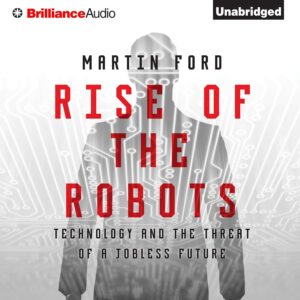
KMOB1003 Curated: The Future of Work


The Leadership Lesson
Reputation and data share a common function in institutional systems. They are both forms of infrastructure. When infrastructure works, nobody notices it. People move through systems with confidence. But when infrastructure begins to fail—or when the data that measures it disappears—leadership becomes guesswork.
The AI labor transition is already underway. But because the disruption is unfolding in living rooms, laptops, and private digital workflows rather than factory gates, its velocity is easy to underestimate. True leadership requires looking beyond official metrics. It requires recognizing that a safety net designed in 1935 cannot fully support a workforce being reshaped in 2026.
K M O B 1003 Global Intelligence
The signal is in the silence.