KMOB1003
KMOB1003 Global · The Culture Docent · The Price of Live
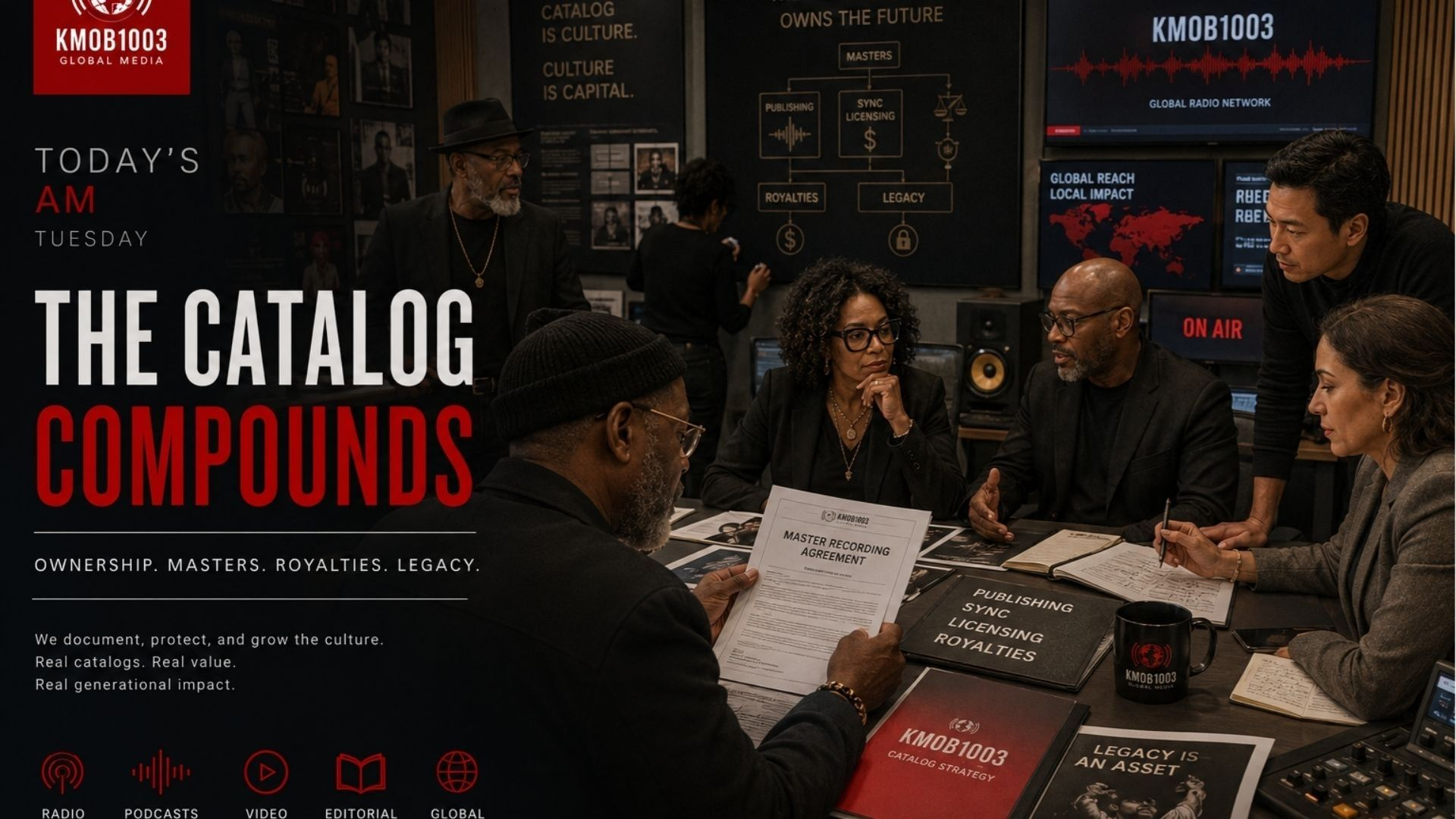
The catalog acquisition wave is not about music. It is about who controls the compounding asset — and what the artist signed away before they understood what it was worth.
Warner bought the catalog. The artist made the music. Those are two different transactions — and only one of them compounds.
The catalog acquisition business is one of the largest wealth transfers in modern entertainment — and most of it flows away from the people who created the music. Warner Music Group, Sony, Universal, and a growing number of private equity-backed catalog funds have spent the last decade acquiring masters, publishing rights, and songwriter royalties at scale. The artists whose names are on the recordings are frequently not participants in that transaction. They signed the rights away years earlier, often in exchange for an advance that was framed as opportunity and functioned as debt.
Questions This Article Answers
Why is Warner and the broader industry buying catalogs now — and what does it reveal about where music’s value actually sits? What does the artist lose when they sign away the master? What is the difference between a royalty and an ownership position? How does the catalog acquisition wave relate to the streaming economy?
The catalog business is not new. What is new is the scale, the speed, and the explicit acknowledgment — now visible in quarterly earnings reports and investor calls — that recorded music catalogs are long-duration compounding assets. They generate royalties from streaming, sync licensing, sample clearances, live performance, and brand partnerships. They do not expire. The institution that holds the catalog owns a revenue stream with no natural end date. The artist who created it owns a memory and a royalty check — if they recouped.
“The catalog compounds. The royalty pays and stops. The artist who signed the master away signed away the compounding asset — not just the advance.”
— KMOB1003 Global Media · The Culture Docent · May 2026
A music catalog is an ownership position in a set of recordings or compositions. The owner of the master recording collects the lion’s share of streaming royalties every time one of those songs is played. The owner of the publishing rights collects every time the composition is performed, broadcast, synced to film or television, or sampled. These are recurring revenue streams attached to the cultural permanence of the music — and cultural permanence, in an era of streaming, is more stable than almost any other commercial asset.
Warner Music’s catalog acquisitions and the emergence of dedicated catalog investment vehicles are not bets on music as art. They are bets on music as infrastructure — on the fact that songs people loved twenty years ago will still generate royalties twenty years from now, with the streaming economy expanding the addressable audience every year. The institutions buying catalogs understand this. Many of the artists who sold them did not.
Cultural Archive · Permanence Layer
Build the Archive Before the Platform Moves On.
Before the catalog funds arrived. Before the acquisition wave. The record held the moment — and the moment compounded. Use code KMOB10 for 10% off.
The standard recording contract of the major label era was structured to ensure the label owned the masters. The artist received an advance — recoupable against future royalties — and in exchange assigned the master recording to the label in perpetuity. The artist made the music. The label owned the recording. The royalty the artist received was a percentage of what the label collected, after recoupment of the advance that funded the recording in the first place.
When a catalog sells for hundreds of millions, the artist whose work constitutes that catalog’s value participates in none of that transaction unless they negotiated equity participation or ownership retention in their original deal. Most did not. The catalog wave is in part a reckoning with decades of contracts that were legal, standard, and systematically disadvantageous to the people who created what is now being acquired.
The advance was payment for the present. The catalog was the future. The label kept the future.
Every deal that gets announced — every nine-figure purchase of a classic artist’s masters or publishing rights — is confirmation that the people who bought those rights when they were cheap knew something the artists did not. They knew the asset would compound. They structured the transaction to capture that compounding for the institution and not the creator.
The independent artist who owns their master and distributes directly is not the edge case anymore. They are the model the industry is now being forced to study. The catalog wave is the industry’s most public admission of what music is actually worth over time — and it is arriving too late for the artists whose catalogs are now in someone else’s portfolio.
The Signal Breakdown
The Asset
The catalog is a long-duration compounding asset. It generates royalties across streaming, sync, performance, and sampling with no expiration date. The institution that holds it owns the future revenue.
The Transaction
The catalog wave is an institutional bet on cultural permanence. Every acquisition is a public acknowledgment that the music will still generate revenue long after the artist stopped receiving meaningful royalties from it.
The Model
The independent artist who owns their master and distributes directly is the model the industry now studies. Own the catalog before someone else buys it.
Warner bought the catalog. The artist made the music. Only one of those compounds.