KMOB1003 Global Protection Partner

KMOB1003 Intelligence | Music, Power & Free Speech
There are moments when music stops being entertainment and becomes evidence. Not metaphorically—literally. This week, that moment belonged to Afroman.
In an Ohio courtroom, a jury sided with the artist in a defamation lawsuit brought by law enforcement officers who had raided his home. On the surface, it reads like another viral case—music, police, internet attention. But underneath, the verdict settled something far more important: who controls the meaning of an event once it has been captured.
Not just recorded. Interpreted.
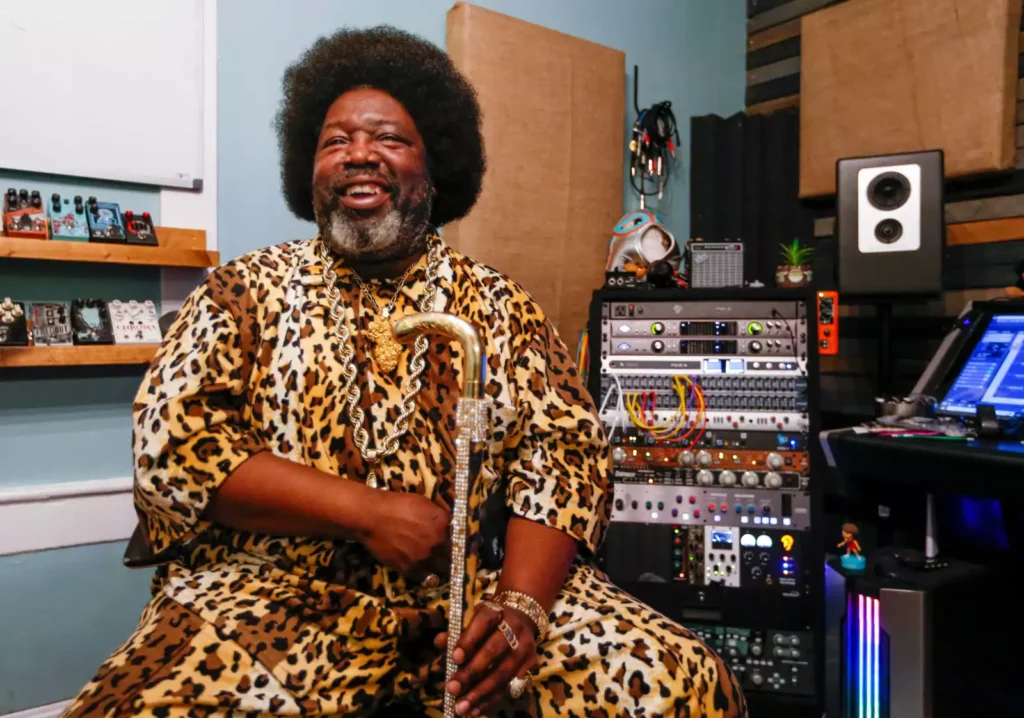
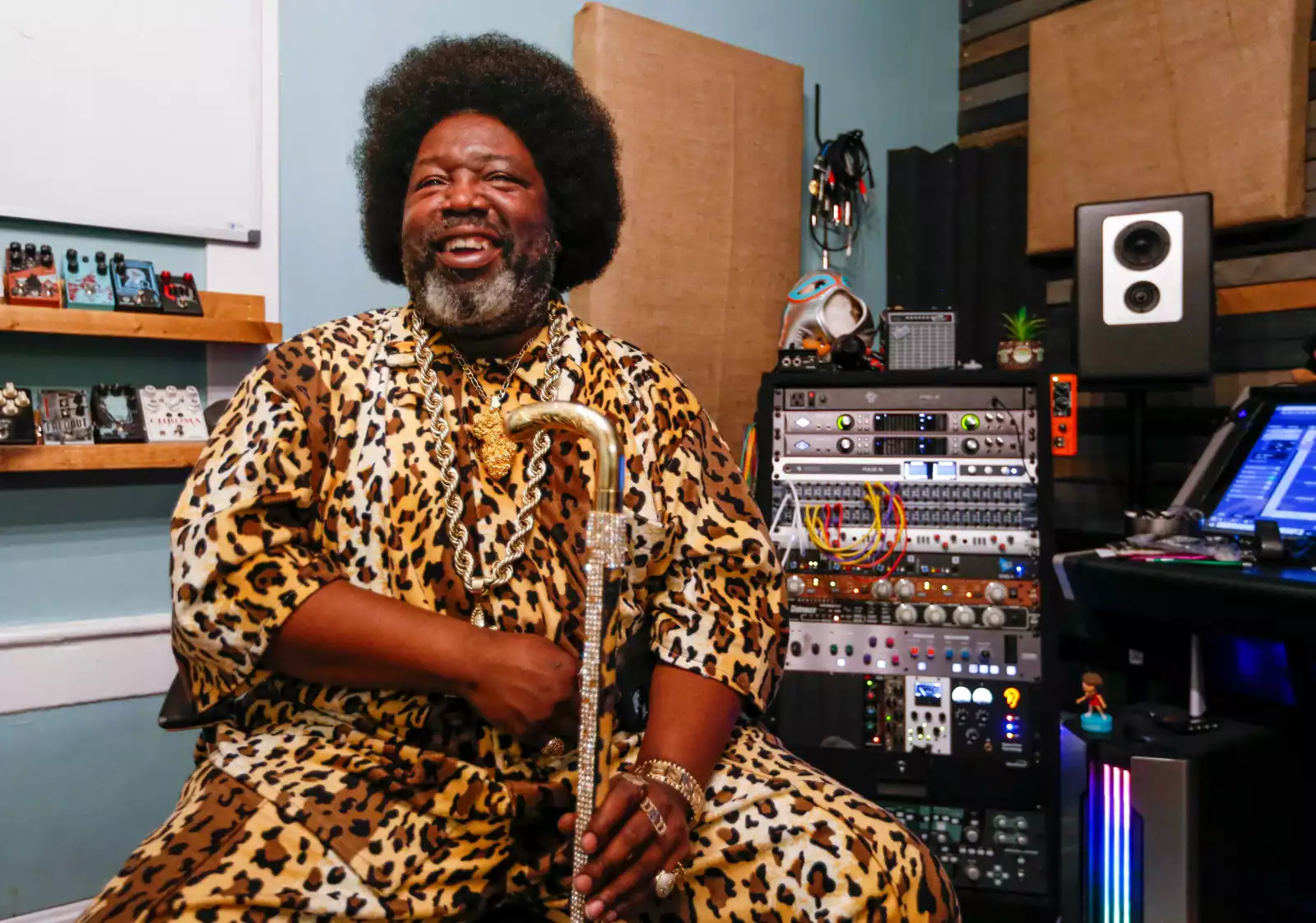
Afroman following a jury verdict in his favor in a defamation lawsuit stemming from the 2022 raid on his Ohio home.
Source: USA TODAY Network via Reuters Connect
The Record Begins at Home
The origin of the case traces back to August 2022, when deputies executed a warrant at Afroman’s home in Adams County, Ohio. The allegations were serious. The entry was forceful. Weapons were drawn. Rooms were searched.
Nothing was found.
No charges followed. No evidence supported the claims that justified the raid. What remained was not a case file—it was footage. Security cameras inside the home documented the entire sequence: the entry, the search, the movement through private space. Details that might have once disappeared into institutional silence were preserved in full.
And that is where the story changed.
Afroman did not treat the footage as documentation. He treated it as material.
For readers tracking the wider sonic history behind moments like this, explore the evolving archive through Digital Music or stream the broader culture directly through Amazon Music Prime.
Music as Counter-Narrative
The result was Lemon Pound Cake—a body of work built directly from the raid itself. The images were not hidden. They were scored, edited, and distributed. Officers became visible not through official reports, but through rhythm, repetition, and framing. What had been an assertion of authority was turned into a narrative that could be replayed, shared, and questioned.
It was not a legal response. It was a cultural one.
The officers involved saw it differently.
In 2023, several deputies filed a lawsuit alleging defamation and invasion of privacy. They argued that their inclusion in Afroman’s music videos and lyrics damaged their reputations and interfered with their ability to work. They sought nearly $4 million in damages and the removal of the content.
At the center of the case was a familiar question, now playing out in a modern context: can an artist use real events—and real people—as material without crossing into liability?
KMOB1003 | Creator Infrastructure
Build the voice. Control the message.
For creators turning lived experience into distribution, voice and control remain part of the infrastructure.

The First Amendment as Form
The answer, according to the jury, is yes.
But not without distinction.
The case hinged on the difference between fact and interpretation. Defamation requires false statements presented as truth. Music, particularly within hip-hop, has long operated differently. It exaggerates. It distorts. It compresses reality into something more immediate and more accessible. It is not a transcript—it is a lens.
That distinction held.
What the court ultimately protected was not the tone of the work, but the right to create it. The ability to take lived experience—especially one involving power—and shape it into something public.
For readers building a deeper reference library on speech, civil liberties, and creative power, explore the broader archive through Amazon Books.
The Visibility Problem
There is also the matter of visibility.
What might have remained a localized dispute became a national conversation the moment it entered the legal system. The lawsuit did not contain the story; it expanded it. Clips circulated. Streams increased. The audience grew.
This is not incidental. It is structural.
Attempts to suppress narrative in a digital environment tend to multiply it. The more force applied, the wider the distribution. In this case, the courtroom did not silence the work—it amplified it.
If the story moves through travel, touring, appearances, and the logistics of public visibility, the environment still matters. Explore the essentials of movement through Travel Accessories.
Who Owns the Footage
But the most consequential layer of this case is not about virality. It is about ownership.
The deputies argued that their likeness had been used without permission. Afroman’s defense rested on something more fundamental: the right to document what happens inside your own space and to speak on it. The footage existed because it was his home. The narrative existed because it was his experience.
That distinction matters more now than it ever has.
We are living in a time where nearly everything is recorded—body cameras, surveillance systems, mobile devices. The question is no longer whether events are captured. The question is who controls what those recordings mean once they exist.
This case offers an answer.
The subject of the footage is not automatically the author of its meaning.
What Afroman did was not just make a song. He edited the record.
If you’re tracking how digital tools continue to shape interpretation, authorship, and attention, the broader software layer lives inside Games & Apps.
The Final Cut
In court, the arguments touched on tone, exaggeration, and impact. Deputies spoke about how the videos affected their personal and professional lives. The defense pointed to the long-standing role of music as commentary—often sharp, often uncomfortable, rarely literal.
The jury did not validate every claim made in the music. They did something more precise. They recognized that interpretation, even when critical or satirical, is not the same as fabrication.
And that difference is where creative freedom lives.
Outside the courthouse, Afroman framed the verdict simply: he did not win—America did.
The statement is direct, but it holds.
Because the outcome reinforces something that extends beyond one artist or one case. It confirms that creative expression remains protected even when it challenges authority, even when it makes people uncomfortable, and even when it travels further than intended.
For KMOB1003, this moment sits inside a larger shift already in motion. Across industries, creators are moving away from being subjects within systems and toward becoming authors of their own narratives. We saw it in the restructuring of value in women’s sports. We saw it on the Oscars stage through visual authorship and presentation. And now we see it here, in a courtroom, where music carried the weight of testimony.
Different arenas. Same direction.
Control is no longer being requested. It is being exercised.
The question was never just whether Afroman could make a song about a raid. The question was whether he could decide what that moment meant after it was over.
This week, that decision remained his.
And in that decision, the First Amendment did not sit quietly in the background. It was used.


Where You Stay Matters When the Moment Comes
Global travel doesn’t remove risk—it changes where it happens. Stay in environments built for comfort, safety, and real-world readiness.

Global travel doesn’t remove risk—it changes where it happens. Stay in environments built for comfort, safety, and real-world readiness.