
KMOB1003 Global Protection Partner

KMOB1003 Intelligence | Heart Health
There are moments in culture that feel suspended in time. Not because of spectacle, but because of silence.
On January 2, 2023, that silence arrived on a football field.
Damar Hamlin stood up after what appeared to be a routine tackle, took a step forward, and collapsed. What followed was not just a medical emergency—it was a global pause. His heart had stopped. For several minutes, in front of millions watching live, the outcome was uncertain.
The moment that followed was not about football, but about survival—and the people trained to respond when it mattered most.
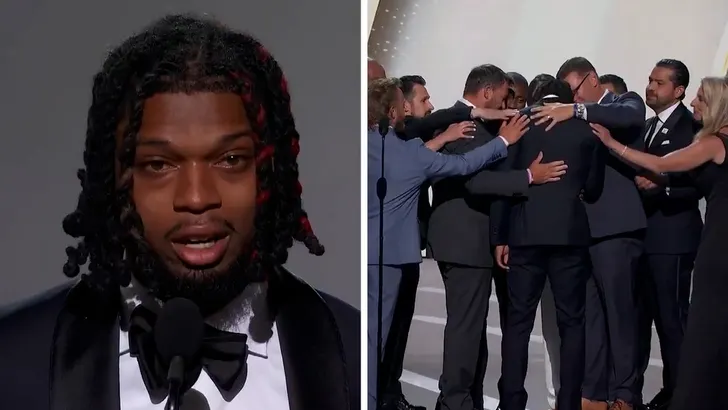
Damar Hamlin honors the Buffalo Bills training staff with the Pat Tillman Award following his on-field cardiac arrest.
Video: Courtesy of Instagram / @theresistanceapparelcompany.
What brought him back was not chance. It was readiness.
Medical personnel immediately administered CPR and used a defibrillator on the field. Their response was not improvised. It was practiced, precise, and immediate. Without it, the story ends differently.
What the world witnessed that night was not just recovery. It was the result of training meeting urgency in real time.
In the months that followed, Hamlin’s return and public appearances—including an emotional moment at the ESPYs where he honored the Buffalo Bills training staff—shifted the conversation. The focus moved beyond the incident itself and toward the infrastructure that made survival possible.
That shift matters.
Because most people will never find themselves in a stadium surrounded by medical professionals.
They will be at home.
The Reality Outside the Stadium
On a recent KMOB1003 Heart Health series, Dr. Anthony Fletcher, President of the Association of Black Cardiologists, made that point with clarity. CPR training, he explained, should not be limited to professionals or required only in certain states. It should be universal. Just as people are taught how to swim, they should be taught how to respond when a heart stops.
Most cardiac events do not happen in hospitals. They happen in living rooms, kitchens, and bedrooms. In those moments, the people present are not witnesses. They are the first responders.
That distinction changes everything.
KMOB1003 Heart Health Series: Dr. Anthony Fletcher on why CPR training belongs in every household.
Video: KMOB1003 Heart Health Podcast.
We often think of emergency response as something external—something that arrives. But in reality, the first response begins before help gets there. It begins with whoever is already in the room.
As Dr. Sandra Bruce Nichols, a heart transplant recipient, described that moment with sobering clarity, she collapsed without warning. Her daughter immediately recognized what was happening, called 911, and began CPR. By the time emergency services arrived, intervention was already underway.
That action created time.
And in cardiac events, time is the only currency that matters.
The lesson is not abstract. It is structural.
Damar Hamlin survived because the right people were in place with the right training at the right moment. That level of preparation is built into professional environments. It is expected. It is rehearsed.
But outside of those environments, preparedness becomes a choice.
KMOB1003 | Creator Infrastructure
Build the voice. Control the message.
Transform spoken insight into scalable content using AI voice technology.

For years, CPR has existed in a strange space within public awareness. It is widely recognized, often recommended, but rarely prioritized. People assume they will never need it, or that someone else will know what to do.
That assumption is where the risk lives.
Because when a cardiac event occurs, there is no time to search, to learn, or to hesitate. The window is immediate, and the outcome is determined in those first few minutes.
What Hamlin’s collapse did—beyond the shock and the headlines—was force a reconsideration of what readiness actually looks like. It exposed how dependent survival can be on the presence of someone trained to act without hesitation.
The NFL had that infrastructure.
Most homes do not.
That is where the conversation becomes personal.
Preparedness is not about fear. It is about alignment. It is about ensuring that the people closest to you are equipped with the knowledge to respond when it matters most.
Not eventually. Not after help arrives. Immediately.
The cardiologist’s message was simple, but it carries weight: everyone in your household should know CPR.
Not as a precaution. As a baseline.
Because the reality is clear. Most people will never experience a moment like the one that unfolded on that field. But the conditions that led to it—a sudden cardiac event, an unexpected collapse, the need for immediate response—exist everywhere.
In homes. In families. In everyday life.
The difference is not where it happens. The difference is whether someone is ready.
Damar Hamlin’s story did not end on that field. It became a reference point—a visible example of what is possible when preparation is present.
But it also raised a quieter question.
The Question That Remains
If that moment happened closer to home, would anyone be ready?


Global Stay Partner

Global travel doesn’t remove risk—it changes where it happens. Stay in environments built for comfort, safety, and real-world readiness.