
KMOB1003 Global Travel Partner
Champions move globally. Stay where performance meets precision.
KMOB1003 Global Intelligence | Narrative Stewardship
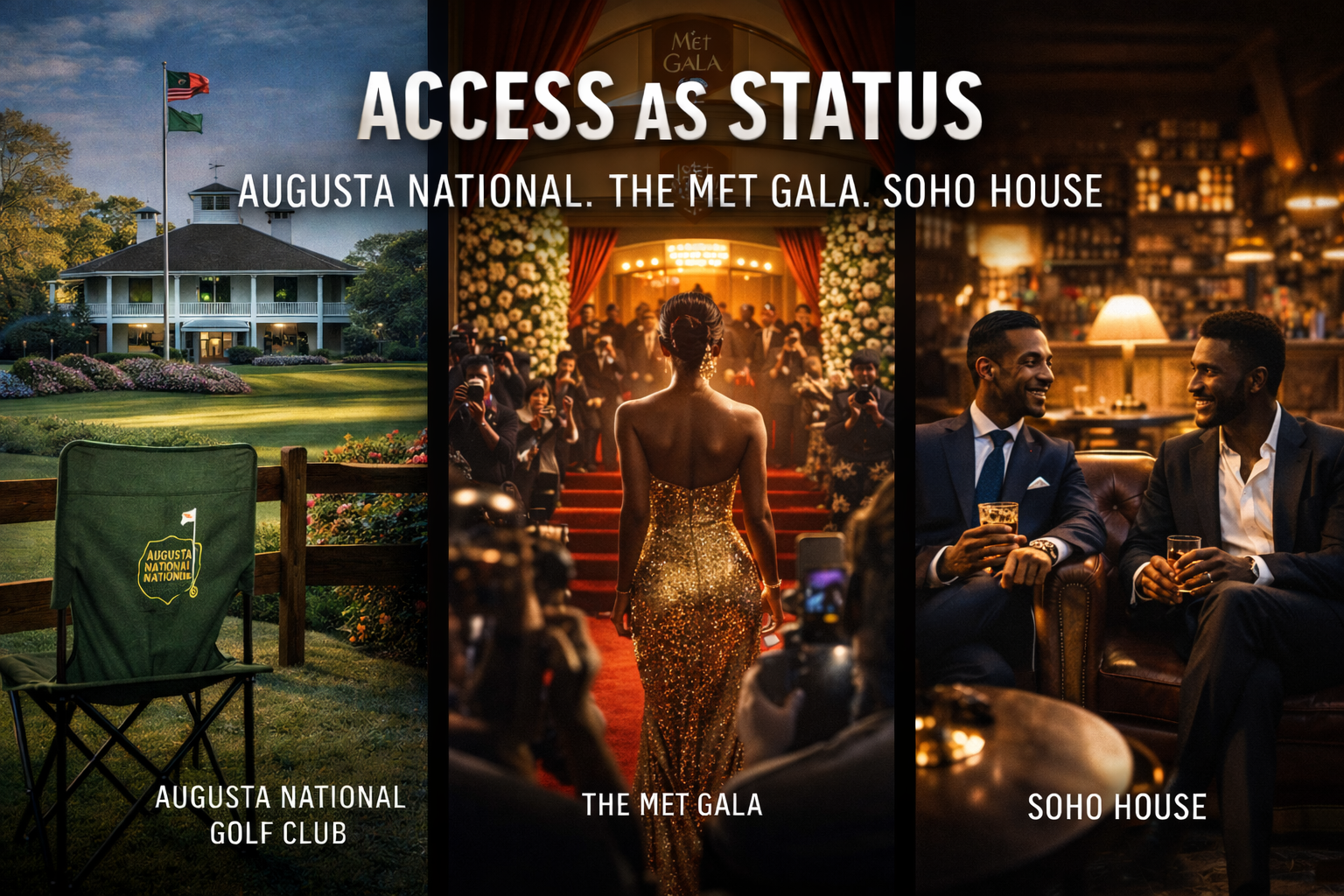
Why Institutional Gatekeeping Is the Real Luxury in 2026
In 2026, luxury is no longer about ownership.
It’s about entry.
You can buy the watch. You can lease the car. You can finance the image. But access? Access is controlled.
We are living in the era of managed proximity — where what appears public is often pre-filtered, sequenced, and selectively distributed. The language says “open.” The infrastructure says “curated.” And that distinction defines the decade.
The Myth of Public Access
The term “public on-sale” suggests democracy. Availability. Fairness.
But anyone who has attempted to secure tickets to a major global event understands the architecture behind the illusion. Presales. Priority windows. Corporate allotments. Algorithmic queue weighting. Tiered release structures.
By the time something becomes “public,” it has already been filtered. The same is true beyond ticketing.
Panels are open — but invitations circulate privately. Awards are celebrated — but campaigns are funded strategically. Platforms are accessible — but amplification is calibrated. The public rarely receives first access. It receives residual access. And in 2026, that sequencing matters more than ever.

Gatekeeping, Rebranded
Gatekeeping is not new. It has always existed in culture, media, politics, and commerce. What has changed is the interface. The velvet rope is now digital. The doorman is now algorithmic. The guest list is now data-driven.
Institutions no longer deny entry visibly. They optimize visibility quietly. Who receives early codes. Who trends organically. Who is verified. Who is credentialed. Who receives the phone call first.
Access is no longer about whether the door exists. It is about whether the system recognizes you. And recognition itself has become structural capital.
Access as Currency
In previous eras, status was signaled through acquisition. Objects. Addresses. Titles. In 2026, status is signaled through proximity.
Where you are allowed to be. When you are allowed to enter. How early you are acknowledged. Whether you are invited before the room fills. Influence is now measured less by what you own and more by the rooms you inhabit before they become crowded. Scarcity has moved from product to permission.
Connectivity as Status
But there is another layer emerging beneath access. Control. In a world where visibility is filtered and recognition is sequenced, the perimeter of power has shifted to the digital domain.
Connectivity is no longer convenience. It is leverage. Owning your digital infrastructure — through platforms like Bluehost — is not simply about launching a website. It is about owning your address in the digital economy. Algorithms can suppress reach. Platforms can recalibrate exposure. But a secured domain remains sovereign territory.
Likewise, protecting your digital footprint is no longer optional. It is strategic. Comprehensive cybersecurity bundles such as NordVPN Complete — integrating encrypted global VPN access, password management, secure cloud storage, advanced threat protection, and dark web monitoring — reflect a new form of quiet authority.
If access is curated, then infrastructure must be fortified. You may not control every room. But you can control your own architecture. And architecture determines longevity.
Data as Continuity
Access opens doors. Data sustains position. Relationship management systems and intelligent CRM platforms — such as ClearCRM — allow modern operators to convert moments of visibility into long-term continuity. In the access economy, data is not analytics. It is institutional memory.
Proximity without retention is noise. Infrastructure without intelligence is fragile. The modern advantage lies in integration — culture, connectivity, and continuity functioning as one system.
The Institutional Layer
Luxury brands once sold exclusivity through price. Institutions now sell exclusivity through filtration. Today, early platform access, curated event seating, algorithmic amplification, and invitation-only gatherings carry greater weight.
The distinction between presence and positioning defines modern hierarchy. In this environment, institutional intelligence — understanding how systems distribute opportunity — becomes more valuable than surface-level visibility.
The Illusion of Openness
We are surrounded by language that suggests accessibility: Open platforms. Open markets. Open calls. Open seats. But openness without infrastructure is performance.
The real advantage lies not in reacting to openings, but in understanding how openings are structured. Who gets notified first. Who gets filtered out. Who gets fast-tracked. Who gets deferred. Access is engineered long before it is announced.
The Cultural Implication
This is not merely about events or exclusivity. It is about how culture assigns legitimacy. Recognition is sequenced. Visibility is negotiated. And those who understand the architecture move differently.
They do not wait for public release. They study distribution. They do not chase optics. They analyze infrastructure. In 2026, the sophisticated participant does not ask, “Is it available?” They ask, “How is access structured?” That question reveals more than any invitation ever could.
The KMOB1003 Perspective
Smart audiences no longer just consume culture. They study its design. They recognize that entry is a system. That visibility is a pipeline. That recognition is calibrated. That infrastructure is leverage.
Status used to be visible. Now it is structural.
Access is the new status symbol. And most doors were never designed to open automatically.
