
KMOB1003 Editorial • december 4, 2025
The shift in music production is not new; it is merely accelerated. The rise of AI represents the final stage of a 150-year-long technological journey that has systematically stripped the gatekeepers of their power, giving the unfunded artist the keys to the studio.
This first part of our series documents the pivotal tools that changed music forever and explains why AI is the ultimate equalizer, removing the financial barriers to creating a global hit.
Part I: Can Music Technology Replace the Gatekeepers
The progression toward AI-driven music follows a clear trajectory. First, the separation of the artist from the listener began with the invention of recording technology. For instance, Thomas Edison’s phonograph in 1877 allowed sound to be captured and replayed, ending the era where music could only be a live event.
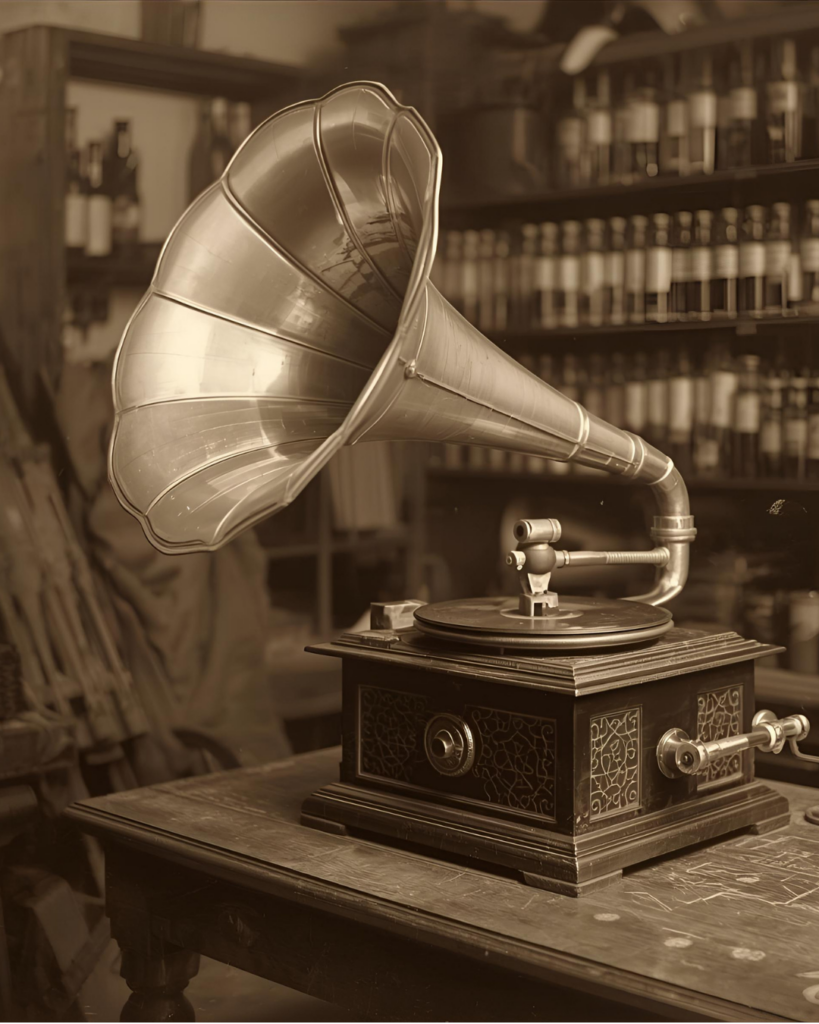
Image of Thomas Edison’s original phonograph KMOB|Canva
Later, Emile Berliner’s Gramophone introduced the flat disc format, which became the standard for recorded music.
Subsequently, the invention of the microphone and amplifier in the 1920s and 1930s removed the need for instruments to be physically loud, allowing softer instruments to dominate recordings. Furthermore, multitrack recording, pioneered by Les Paul, revolutionized composition by allowing producers to record different elements onto separate tracks.
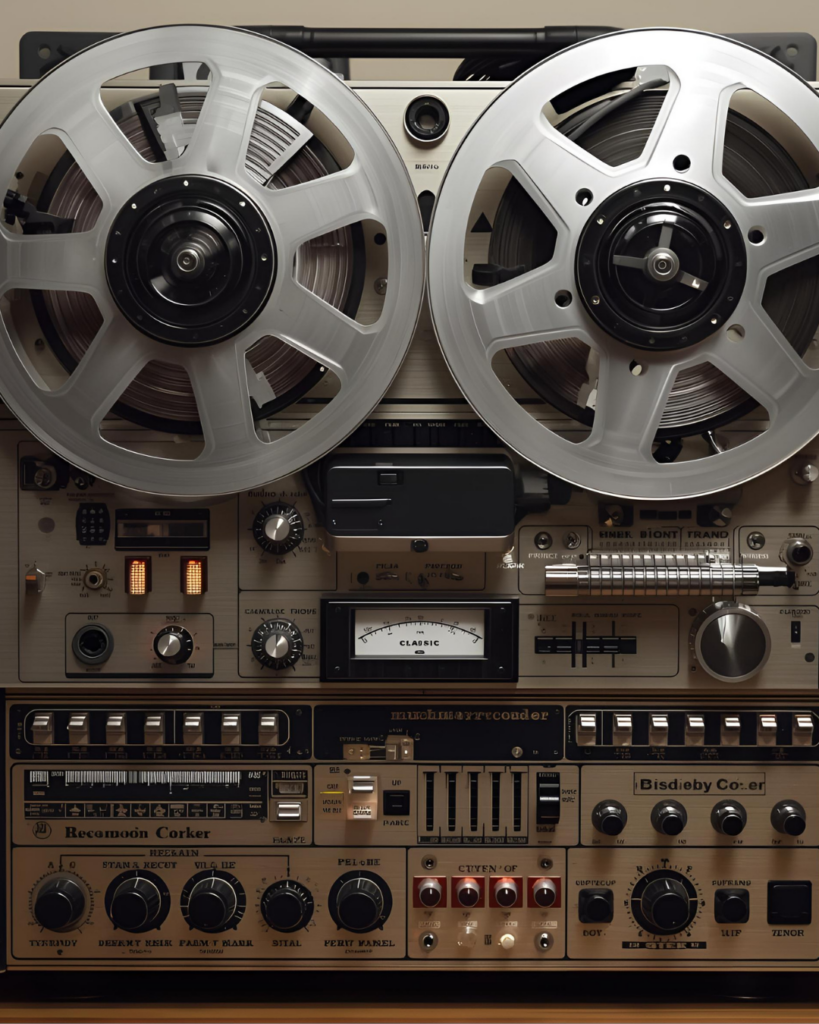
Image of a classic multitrack reel-to-reel tape recorder KMOB1003|Canva Image
The Digital Revolution: Power Shifts to the Producer
The true shift came in the 1980s with Digital Audio Workstations (DAWs) and MIDI (Musical Instrument Digital Interface). MIDI established a common language, allowing synthesizers, drum machines, and computers to communicate. Therefore, complex compositions and arrangements became feasible for a single person.
Consequently, DAWs like Pro Tools and Cubase gave musicians and producers software tools for precise recording, editing, and mixing, effectively dissolving the technical and financial power held by analog studios. By the 1990s, software synthesizers and samplers replaced costly hardware, making professional-grade production accessible in the bedroom. This greatly democratized the music business.
CURATED LUXURY AFFILIATE PICKS
 LAUNCH YOUR GLOBAL PODCAST
Capture high-quality, remote recordings with the world’s leading podcasting platform.
AI: The Ultimate Equalizer for the Unfunded Artist
Today, AI represents the final stage of this democratization. The biggest production barriers DIY musicians face—costly studio time and years of technical expertise—are being eliminated. AI tools automate complex tasks like sound design, beat-making, and mastering, making high-end production capabilities accessible to artists working from home with basic equipment.

KMOB1003|Canva Image
Specifically, AI mastering services cost a fraction of human engineers’ fees, and cloud-based processing eliminates the need for expensive computer hardware. Generative tools, such as Suno AI, act as a virtual producer’s sketchpad, allowing artists to instantly hear and iterate on ideas, saving time and money per experiment.
Therefore, AI is not replacing human soul, but accelerating, aiding, and enabling parts of production that were previously expensive or out of reach. This shift gives independent artists—especially those in the Black creative ecosystem—the speed and financial flexibility to punch far above their size.
CURATED LUXURY AFFILIATE PICKS
 PRODUCE YOUR NARRATIVE: AI Audio Power
Elevate your audio quality and narratives with AI voice and sound design by ElevenLabs.
KMOB Spotlight — dr. takeisha carr THE CULTURE DOCENT: Identity, Innovation & Leadership
KMOB1003 sometimes uses affiliate links, which may earn us a small commission if you make a purchase through them. This helps support our editorial mission.
KMOB1003’s Final Decree
AI is the ultimate equalizer, but it carries a historic warning. The tools are cheaper, faster, and more accessible than ever, allowing the creative entrepreneur to bypass the old guard entirely.
Part II: Next week, we dissect the dark side: the Authenticity Crisis—deepfakes, IP battles, and how major labels are trying to profit from the clone war.
Control the narrative. Define the legacy.
Where legends begin: Submit music
Where culture lives: Shop The KMOB Vault
